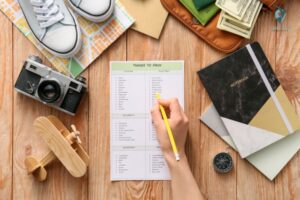

I’ve learned that “tips for traveling with carry-on only” can turn chaotic departures into calm beginnings—your gate becomes the start line, not a scramble. The moment wheels lift, you’ll notice how skipping checked baggage saves fees, time in lines, and the worry of lost luggage.
I pack a carry-on bag sized to the U.S. overhead sweet spot: 22 x 14 x 9 inches, plus a personal item that fits about 18 x 14 x 8 inches. Rolling clothes, using packing cubes, and wearing a bulky layer on the plane frees space for shoes and essentials.
I pick a suitcase or backpack that opens wide so outfits stay visible, and I stick to TSA’s 3-1-1 rule for liquids in a clear quart bag. If you want a quick packing list, see my compact guide at international travel packing list—it shows which items fit smartly and save room.
Key Takeaways
- Move faster: Carry-on travel cuts time at the airport.
- Right size: Use 22 x 14 x 9 for overhead compliance.
- Space hacks: Roll clothes, use packing cubes, wear bulk.
- Pack light: A personal item can hold doubles—tech & day gear.
- TSA-ready: Follow 3-1-1 to breeze through security.
Why carry-on only travel changes the whole trip

I love walking off a plane and skipping baggage claim—stepping outside in minutes feels like a tiny victory. It saves serious time; at busy hubs you can cut 30–45 minutes when you skip check-in lines.
Light luggage makes a big difference on cobblestones, ferries, and hostel stairs. Small bags move how I move—quick, nimble, and often hands-free if I choose a backpack.
Not checking bags changes the way I plan a trip. I book flexible connections, pick closer accommodation, and pivot when the weather or mood shifts. Budget airline fees shrink too—no surprise charges at the gate.
- Immediate exit: No wait at claim—more time exploring.
- Less to lose: Fewer things to misplace or delay.
- Fits better: Small setups slide into tight elevators & corners.
Arriving lighter makes the first hours part of the adventure—not a blur of logistics. That simple change rewrites the whole travel experience.
Choose the right light luggage for how you move
Match your bag to the route — that single choice saves time, strain, and surprises. I pick gear based on whether I’ll sprint through terminals or climb stairs on a bus transfer.
Suitcase, backpack, or duffel: which fits your route
I grab a suitcase when airports and paved walks dominate. Spinner wheels glide through long terminals and feel effortless over miles.
A backpack wins on uneven streets, ferries, and stairs — hands free and balanced. Duffels compress into tight overheads but tire my shoulders on long treks.
Carry-on size that actually fits overhead in the U.S.
I stick to the FAA-friendly 22 x 14 x 9 inches so my bag slides in without a fight. A personal item around 18 x 14 x 8 inches holds essentials and stays under the seat.
Weight realities across airlines and how to avoid fees
Rules vary: British Airways often allows 23 kg, while some carriers cap near 7 kg. When weighing is likely, I shift heavy items into my personal item until boards close.
Design details that save time in airports
- Quick-access pockets for passport & boarding pass.
- Laptop sleeve, interior compression, and a shoe divider to organize items fast.
- Example picks: Away spinners for terminals; Tortuga or Osprey for supportive backpacks.
Whichever option you choose, match luggage to the route — that choice shapes the whole day.
Dial in mobility: spinner wheels vs shoulders and stairs
When the route includes cobbles, stairs, and trams, my choice of bag decides how the day feels. I pick gear based on the real path between station and stay—never assume smooth surfaces.
Suitcases float through long terminals and car trips. A good spinner saves me serious time when gates stretch and walking ramps appear. Away spinners even handle some cobbled streets in Europe better than I expected.
Backpack days happen on old lanes, ferries, and crowded trams. Straps keep weight close to my body and free my hands for rails, tickets, and coffee. On stairs I feel steady; on uneven blocks I move faster.
- I roll a suitcase when terminals stretch forever—the smooth spin saves energy and time.
- On cobbles and stairs, a backpack keeps balance and leaves both hands free.
- Suitcases win in hotel hallways & cars; backpacks win the last uphill blocks.
- When a city mixes trams, ferries, and old lanes, I choose straps over wheels.
- I often pair a small backpack with a suitcase for flexible days in transit.
Final way to decide: sanity-check the route from station to stay. That quick scan tells which bags come along—and which ones stay home.
Build a packing system that shrinks your bag, not your options

I build a small system that packs more function into less space—so my bag feels roomy, not cramped. I keep things tactile: rolled tees that sit snug, cubes that form neat lanes, and a clear plan for what I need each day.
Rolling beats folding when space and wrinkles matter
Rolling reduces wrinkles and stacks efficiently. I roll tight—less air, fewer creases, and a tidy grid I can scan at a glance.
Rolled shirts and pants compress against each other, so bulky layers sit on top without crushing the rest. That makes quick outfit swaps simple on the road.
Packing cubes and compression bags for organized speed
Packing cubes turn a jumble into tidy drawers—Eagle Creek and Peak Design make durable options that last. I use compression cubes for sweaters and regular cubes for tees and shorts.
- I sort clothing by category—tops, bottoms, underwear—so repacking is fast.
- A slim cube near the opening holds sleepwear; a mesh cube shows what’s inside.
- I keep a flat laundry sleeve so worn items never touch clean ones.
This system trims decision fatigue and keeps energy for the trip. A few small tips—liquids & electronics on top, a pouch for in-flight comfort—go a long way.
Tips for traveling with carry-on only
The day before departure I run a quick fit-check so my gear behaves when I’m on the move. I pack, zip, and wear the bag for a short walk—if it strains, I remove an item.
Easy-reach layout: liquids, laptop, and travel documents go near the top for a fast security run. I keep meds, a pen, and a snack in the outer pocket so they’re ready in flight.
- I test-pack a few days ahead and edit until zippers glide.
- I weigh the setup on a bathroom scale when airline limits matter.
- I snap a photo of my packing list so I can rebuild it on the return leg.
- I charge devices overnight and pack one shared charger that has multiple ports.
- I fold a slim tote into the bag for market runs or beach days.
I also top up tiny decants and switch to solid toiletries when it helps. Then I pre-choose a layered travel outfit that slips off at security and sleeps early—organized bags make the travel day calm.
Create a capsule wardrobe that mixes, matches, and repeats
Choose a tight palette and a few adaptable layers — they work harder than a closet full of extras. I keep the selection visual and tactile: soft tees, a drapey layer, and a packable shell that shrugs off drizzle. This approach turns packing into a clear choice, not a chore.
Neutral layers that dress up or down without extra weight
I start with base colors—black, gray, navy—so every top meets every bottom without fights. One dress or a button-up shifts from day to dinner when I add a scarf or light layer. Repeat outfits proudly; views beat runway changes.
Smart fabrics: quick-dry, breathable, and odor-resistant
Merino and performance blends last longer between washes and dry overnight. Quick-dry tees and odor-resistant clothing stretch a week of wear with fewer loads. That keeps mornings simple and bags light.
Cold and rain add-ons that pack tiny but work hard
I pack a featherweight puffy like the Patagonia Nano Puff and a compact shell such as the Marmot PreCip. These items are tiny in my bag and huge on comfort when the weather flips.
- I bring 7-9 underwear and a couple of quick-dry pairs of socks.
- Leggings double for hikes & lounge days; shorts or chinos handle warm afternoons.
- Fabrics that breathe and dry overnight keep the rhythm of travel relaxed.
Wear the heaviest items on travel day
I put my heaviest shoes and jacket on the morning I leave. It clears internal space and gives me warmth on the plane.
Bulky boots, a thick sweater, or a puffy coat carry the bulk of the weight so the bag stays neat and under limit. If I get too warm, I sling the jacket over my arm or stow it in the overhead after I board.
I often tie a sweater at my waist to free a hand and keep the load steady. Small items—hat, gloves—clip to exterior loops or strap points instead of stuffing pockets.
- I fly in heavy shoes and a big coat—space saved, cabin comfort gained.
- I tuck valuables in interior jacket pockets for quick access when I need them.
- Bulky layers on my body ease scale anxiety at the gate and protect zippers from strain.
On chilly flights I’m already warm—no shivering under thin blankets. This simple move makes packing lighter and travel more relaxed.
Be ruthless with “must-haves” vs “nice-to-haves”
My packing rule is simple: if it doesn’t earn its way in, it doesn’t get a seat. I lay everything out and pull core items first — meds, documents, chargers, and the core layers I will actually wear.
Every thing must earn its place. I ask: will I use this three times on the trip? If not, it goes back. That single question trims most clutter fast.
I set a strict limit on just-in-case gear — one small pouch, no extras. I trim duplicate blacks or grays that do the same job. If I can buy or borrow it where I’m headed, it stays home.
- Health kit: bandages, painkillers, motion meds.
- Footwear: walking shoes and extra socks outrank another tee.
- Sun basics: sunscreen, hat, sunglasses.
The result? The bag feels lighter and I feel clearer. Less stuff frees headspace for the moments I came to find — the actual travel, not the inventory.
Make your personal item pull double duty
My go-to move is to turn the underseat pouch into a mini command center that saves time at every gate. I pick a personal item sized to slide beneath seats—about 18 x 14 x 8 inches. That size fits most U.S. planes and keeps essentials within reach.
Typical underseat dimensions and smart content layout
I keep the top pocket for passport, wallet, and a pen so airport moments stay smooth. The middle compartment holds a laptop in a padded sleeve, cords tucked into a small zip pouch, and earbuds loose for quick grabs.
Side stretch pockets hold a water bottle upright and cut spill risk. I stash a light layer and snacks on top so I don’t dig while mid-aisle. Heavier items sit closest to my back to balance the load and ease strain on my hand.
Daypack options that slide onto a suitcase handle
I choose a backpack or slim daypack with a trolley sleeve so it rides the suitcase. Examples that work: Tortuga laptop backpacks and the Away Everywhere Bag. As a day bag, it carries a camera, small kit, and compact umbrella without bulk.
- Fit target: 18 x 14 x 8 inches—underseat friendly.
- Top pocket: passport, wallet, pen—fast access at the airport.
- Middle: laptop sleeve, cords in a pouch, earbuds ready.
- Side: water bottle pocket; trolley sleeve to free your hands.
Toiletries without TSA drama
A clear quart bag and a few solid swaps make airport lines feel calm instead of frantic. I pack purposefully so security is quick and I still feel fresh on the other side.
TSA 3-1-1 done right, every single time
Liquids and gels must be 3.4 oz or less, all inside one quart-size clear bag. I keep that bag at the top of my pack so it slides into the bin without a search.
Solid swaps: shampoo bars, deodorant, and sunscreen options
Solid shampoo bars and bar soap replace two bottles and last for weeks. A solid deodorant saves liquid space and keeps me confident on long flights.
I do carry a small travel sunscreen I trust. If I run out, I restock at my destination—no need to haul a full bottle through security.
What to bring vs what to buy when you land
I decant only what I’ll use and bring hard-to-find items for my skin. Basics like soap, a mini hairbrush, lip balm, and a dental kit live in my personal item.
- Quick rule: quart bag on top—pull it early at the airport.
- Decant small amounts; skip full-size “just in case” bottles.
- My carry-on bag smells like lavender soap, not a spilled bottle.
Plan for laundry so a week’s clothes last for weeks
I treat washing like part of the itinerary—one small routine that saves hours later. A single, simple plan keeps my bag light and my days free.
Laundromats, hotel washers, and quick sink washes
Hotel laundry is easy but often costly. In many countries local laundromats are cheaper and faster.
I aim for one laundry stop each week and pick accommodation near a laundromat when I can. Drop-off services that wash and fold are pure bliss on long legs of a trip.
Quick-dry pieces and a tiny clothesline that earns its keep
I pack quick-dry underwear and tees so a sink wash and a night on a line does the job. If a room lacks a dryer, I spin out water in a towel and hang items on an elastic line.
A small zip bag holds detergent tabs and a sink stopper. A backpack hook or shower rod becomes a mini drying rack in seconds.
- Routine: block an hour—read or map the next route while clothes dry.
- Organize: packing cubes split clean from worn items to avoid odors.
- Backup: keep one emergency outfit dry-packed so you’re never stuck.
Footwear that goes farther with fewer pairs

Shoes shape the day more than most items—pick pairs that earn space and you’ll move lighter. I favor choices that work across streets, trails, and dinners.
The two-to-three pair strategy by trip type
I aim for two or three reliable pairs shoes. One versatile sneaker covers long days and casual dining.
Second, a sturdy sandal or a light hiker handles heat and water. A simple dress shoe or flat rounds things out when nights need polish.
Pack shoes low, stuff the gaps, protect clean clothes
Shoes ride at the bottom of the bag for balance. I stuff socks and underwear into each shoe to reclaim hidden space and keep shape.
I protect soles with shower caps and nest shoes inside a small bag or a cube. Packing cubes keep dusty soles away from clean outfits.
- Baseline: two to three shoes—sneakers, sandals, and a dress pair when needed.
- Hiking swap: use light hikers and skip the dress pair; wear hikers on the plane to save room.
- Example trio: Allbirds Tree Dashers, Teva sandals, and simple flats cover most trips.
- Space hacks: shoes low, soles in shower caps, socks and underwear inside.
- Style tip: neutral colors let one pair work day-to-night—avoid heels that earn only a single use.
Pack in layers: heaviest first, essentials on top
I pack in deliberate layers so the bag stands firm and the top opens like a glove compartment. Start heavy: shoes, jeans, and a compact jacket form a stable base that keeps everything else from shifting.
Next, add mid-weight pieces to lock that structure. Sweaters and a mid-layer sit on the base, creating a platform. Light clothing—tees, shorts, or a thin dress—fills gaps and keeps things tidy.
Essentials ride on top: liquids, meds, earplugs, and a spare tee go near the opening for quick access. That layout makes security pulls fast and repacking almost automatic when I land.
- I keep a flat pouch at the very top for cables—no cable tumbleweeds.
- Small pouches act like drawers; their size stops items from drifting.
- Fragile things tuck into the center, wrapped by soft layers for protection.
Done this way, the bag stands upright, doesn’t bulge, and zips without a wrestling match. It saves a little time and keeps clothing neat—my preferred way to travel light and smart.
Know airline rules so your bag always boards
I check the carrier’s size chart before I book—no guessing at the gate. A bag that fits the posted dimensions avoids last-minute swaps and surprise fees.
I carry a main bag at 22 x 14 x 9 inches and a personal item near 18 x 14 x 8 inches. That combo covers most U.S. carriers and speeds boarding.
Mind the small limits that matter: many airlines enforce a conservative weight limit, and budget carriers tighten rules faster than majors. I plan to stay well under any strict limit.
- Liquids stay 3.4 oz or less, inside one quart bag—no loose bottles.
- No sharp tools over 7 inches, no flammables, and check lithium battery rules before packing.
- If weight looks tight, I move dense items into my personal item at the gate.
I save a short packing list and the airline page in my phone the day before. That small move keeps my luggage with me and the travel day on schedule.
Go light on gadgets and heavy on battery life
I pare electronics down to what will earn daily use. A smaller stack means less bulk, fewer cords, and one less thing to worry about at the gate.
Laptop, tablet, or just a phone: choose for this trip
I match the screen to the mission — phone for maps and photos, a tablet if I want movies, and a laptop only when real work calls. Many trips run fine with an e-reader and a phone; leaving extra cameras or backup drives at home cuts weight fast.
Cord control: universal plugs, shared chargers, and backups
- One multi-port charger powers phone, tablet, and headphones without a nest of bricks.
- A compact power bank keeps devices alive between outlets — battery life buys freedom on long days.
- A small universal adapter replaces several plugs and fits a tiny cube.
- I keep my laptop near the top of the bag for quick security checks and café work sessions.
- Cords live in a slim pouch so I don’t fish mid-flight; essential items stay in my personal item.
Short rule: if a gadget won’t earn daily use on most trips, it stays home. I back up to cloud nightly and skip extra drives — lighter bags, easier days.
Share gear and split weight when you’re not solo
When two people share gear, packing becomes a team game instead of a solo scramble. I plan who brings what early—then we both carry less and move faster.
We cut duplicates by sharing one toiletries set, one adapter kit, and one first-aid pouch. I usually carry the medical kit; my partner takes the power bar. That simple swap trims overall weight and keeps the load balanced.
We also split by comfort—who likes a backpack versus wheels decides which bag holds the denser items. If both of us bring laptops, we share a single multi-port charger so cords don’t take extra seats.
- One toiletries set & one adapter—two bags, half the duplicates.
- First-aid with me; tech power bar with them—clear roles, less fuss.
- Shared outfits, split snacks, and a joint checklist to avoid last-minute runs.
The goal is simple: lighter bags and happier travel days. Good coordination keeps the trip smooth—and gives both of us more energy to explore.
When a checked bag actually makes sense
There are clear moments when a suitcase beats squeezing everything into carry space. I choose checked luggage when bulky gear or fragile items rule the day. That keeps stress low and travel time smooth.
Think ski trips or pro photo shoots—some trips demand gear that won’t compress. Many carriers and some countries enforce a strict size or weight limit on cabins. Oversized items risk gate-check fees or damage if stuffed on board.
- I check a suitcase for skis, formalwear, or bulky gifts—special trips deserve sane packing.
- If compressing equipment isn’t possible, I protect it in rugged luggage rather than gamble on a gate check.
- Example: winter across several countries with layers, boots, and a ski bag often justifies checking.
- I still keep essentials and one outfit in my carry-on—delays happen, so I stay prepared.
I compare fees vs convenience. If a prepaid checked option saves hassle, I book it and return to lighter days when the itinerary relaxes.
Conclusion
A small, intentional kit can change a whole trip—try it and notice the difference on day one.
Pack with intention: make a tiny packing list, slide a couple of packing cubes into your bag, and choose the two or three pairs shoes you’ll actually wear. Wear the bulkiest layer on the plane so space stays for the essentials.
Keep your laptop only if the trip needs it. Keep important items at hand so security and gates stay calm. Use this content as a checklist now, then refine after a week on the road.
These tips stack up—each small change frees more energy for the places you came to see. Close the zip, breathe, and step into a lighter travel moment.