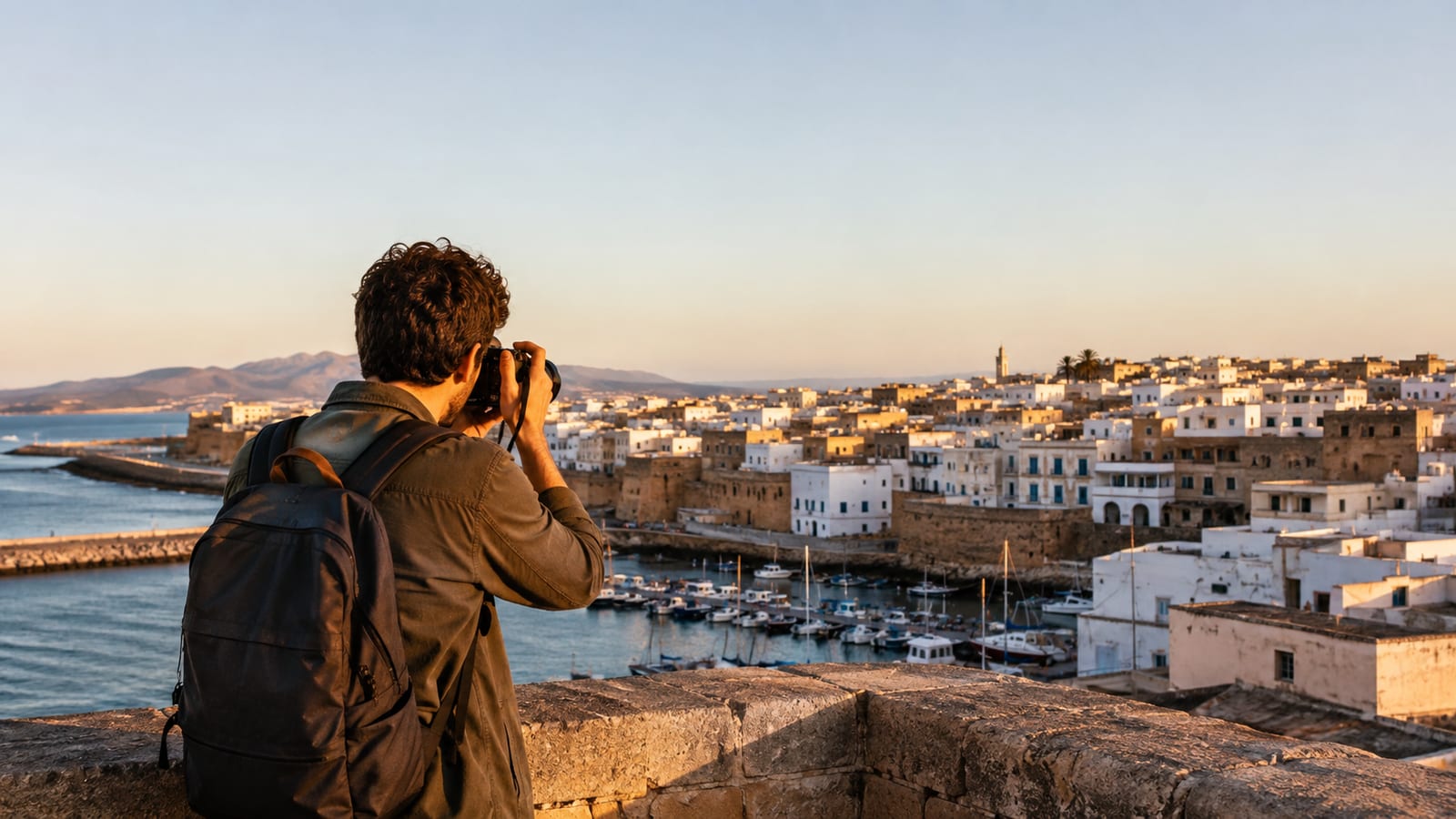
The best photo spots in Casablanca are Hassan II Mosque, Park Marina, the Old Medina, Central Market, and the Ain Diab tidal pools. Shoot sunset from Park Marina, then move to the mosque plaza for blue hour. That pairing gives you the photograph that actually says Casablanca. Skip generic downtown viewpoints unless you want trams, shopfronts, and working-city street life.
Last updated: 2026-08-11
The overall shortlist
Hassan II Mosque is the essential stop. Park Marina gives you its best sunset counterpoint, while the Old Medina and Central Market show the city people actually live in.
Ain Diab is worth the trip when the tide is low. However, it gives you rough Atlantic foregrounds, not a neat skyline panorama.
The mosque is the clear overall pick, but it shouldn’t be your only frame. Pair its open geometry with the medina’s worn doors, market movement, or the coast’s broken reflections. You’ll leave with photographs that show Casablanca rather than one polished landmark.
| Photo spot | Best for | Best light | My verdict |
|---|---|---|---|
| Hassan II Mosque plaza | Symmetry, scale, tile details, minaret views | Blue hour | The clear overall pick |
| Park Marina | Mosque and waterfront compositions | Sunset | Worth it, especially before blue hour |
| Old Medina | Doors, shopfronts, gestures, layered street scenes | Morning | The best street photography stop |
| Central Market | Fish, flowers, merchants, movement | Morning | Strong, busy, and easy to combine with downtown |
| Ain Diab Corniche and tidal pools | Rocks, reflections, waves, Atlantic weather | Low tide or softer evening light | Worth it in the right conditions |
| Place des Nations Unies | Trams, geometry, colonial-era facades | Late afternoon | A quick stop, not a full shoot |
| Parc de la Ligue Arabe | Palms, shade, quiet portraits | Morning or late afternoon | Free and pleasant, but optional |
If you have time for only two places, choose the mosque and the Old Medina. You’ll come away with one grand architectural frame and a set of smaller street photographs that feel less staged.
Hassan II Mosque is the one Casablanca photo stop you shouldn’t miss
The mosque gives Casablanca what many large cities lack: one building that holds its own against the sky, sea, and open space around it. The vast plaza lets you move without forcing the same frame everyone else takes.
Start far back and use the paving lines to pull the eye toward the minaret. Then move closer for carved plaster, green tiles, doors, arches, and reflected light on the stone. The wide frame proves scale, but the details keep the shoot from turning into twenty versions of one postcard.
Midday is the weak option. The open plaza becomes bright and flat, while pale stone throws glare back into the lens. Blue hour is slower and kinder. The sky deepens, the building lights begin to register, and people crossing the forecourt add scale without taking over.
The mosque stands on Boulevard Moulay Youssef, Casablanca 20000, Morocco. Non-Muslim visitors must join an official guided tour to enter the interior, but the outside remains the main photographic reason to come.
The guided interior tour costs 140 Moroccan dirham per foreign adult. From September 16 to March 14, tours run Saturday to Thursday at 09h00, 10h00, 11h00, 12h00, and 15h. Friday tours run at 09h00, 10h00, and 15h.
During Ramadan, the posted schedule changes. Tours run Saturday to Thursday at 09h00, 10h00, 11h00, and 14h15, with Friday visits at 09h00 and 14h00. Check the official Hassan II Mosque website before going because religious events and seasonal changes can affect access.
The interior is worth paying for if you care about craft and architecture. If you only want the defining Casablanca photograph, keep your money for transport and work the plaza properly.
Where should you stand for the best Hassan II Mosque views?
Your position decides whether the mosque looks orderly, enormous, or tied to the Atlantic. These three viewpoints do different jobs.
The mosque plaza gives you symmetry
Stand well back in the forecourt for the cleanest architectural frame. Keep the camera level so the minaret doesn’t lean, then use the paving pattern rather than an ultra-wide lens to create depth.
The central approach works for formal symmetry. However, shift toward either side if the main axis is crowded. A slightly uneven frame with one clear figure often feels more alive than a perfectly empty plaza.
Closer to the building, stop chasing the entire mosque. Frame one doorway, a run of arches, or tile against pale stone. These smaller photographs usually handle harsh light better than the broad facade.
Park Marina gives you scale at sunset
Park Marina is the better position when you want water, sky, and a mosque that feels monumental rather than decorative. The distance separates the minaret from the foreground clutter and gives sunset color room to work.
Arrive before the sun drops. Look for railings, curves in the promenade, boats, and people along the water. However, don’t fill the frame with marina furniture just because it’s there. The mosque still needs to be the reason for the photograph.
This is the place I’d choose for sunset. Afterward, move toward the plaza for the cooler blue-hour frame.
The nearby seafront gives you Atlantic weather
The seafront beside the mosque is less orderly. Spray, wet stone, clouds, and waves make the scene feel exposed, which suits Casablanca better than a polished reflection sometimes does.
Still, watch the edges. Sea walls, scattered barriers, and parked vehicles can break an otherwise clean composition. Move a few steps before changing lenses. The cleaner frame is often close by.
The right light for the mosque, marina, and coast
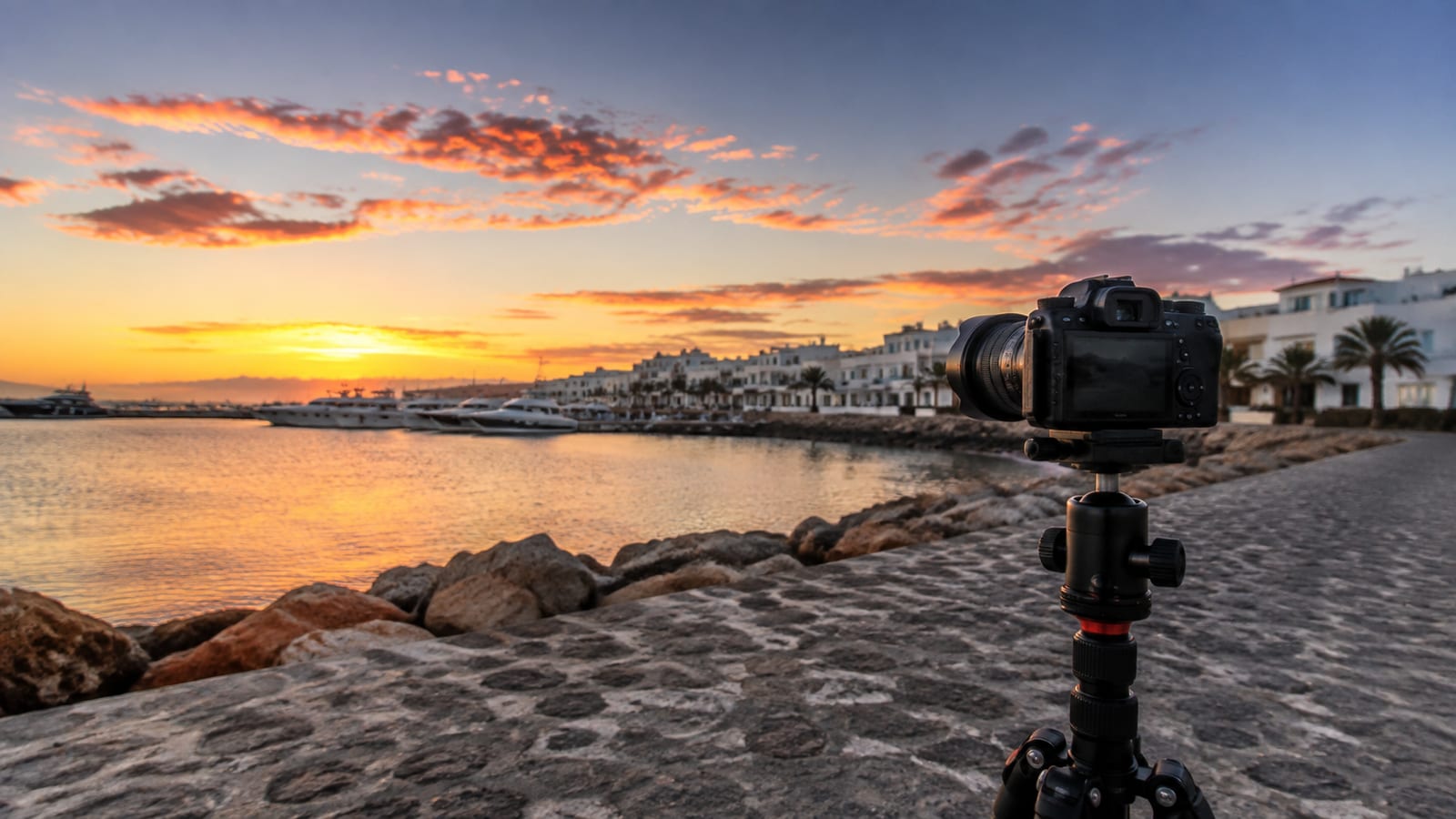
Blue hour belongs to the mosque plaza. Sunset belongs to Park Marina. Low tide belongs to the Ain Diab pools.
Photograph the Old Medina and Central Market in the morning, when shutters are lifting and deliveries are still moving. Save the coast for later unless the tide dictates otherwise.
Atlantic haze can soften the minaret and drain contrast from distant waterfront frames. That isn’t always a failure. Expose for the sky, keep the mosque as a strong shape, and let the haze show the weather rather than trying to remove every trace of it.
Wind is the larger nuisance. It throws spray onto the lens and makes a light tripod less useful than expected. Carry a dry lens cloth and check the front element after every move along the water.
Calmer morning light works well for the market, medina doors, and quiet portraits. Meanwhile, late light gives downtown facades more shape, especially around Place des Nations Unies.
Ain Diab works when the tide is low
Ain Diab is worth it at low tide, but only if you want a rough coastal frame. Skip it if you’re expecting an open panorama of Casablanca behind mirror-flat water.
The pools work as foreground. Look for one clean patch of reflected sky, then place the rocks or coast beyond it. Get low enough to make the pool matter, but don’t step onto slick stone just to gain a minor change in angle.
Clouds help here. So do waves, broken reflections, and darker water. The scene is stronger when it looks like the Atlantic rather than a tidy hotel brochure.
Check a local tide forecast on the day you go. If the water is high, shoot the Corniche promenade and surf instead of hunting for pools that aren’t visible.
Ain Diab also sits away from the central morning route. I’d include it on a full photo day, then continue toward Park Marina and Hassan II Mosque as the light falls. On a short visit, the mosque and medina give you more for your time.
The strongest street photo locations
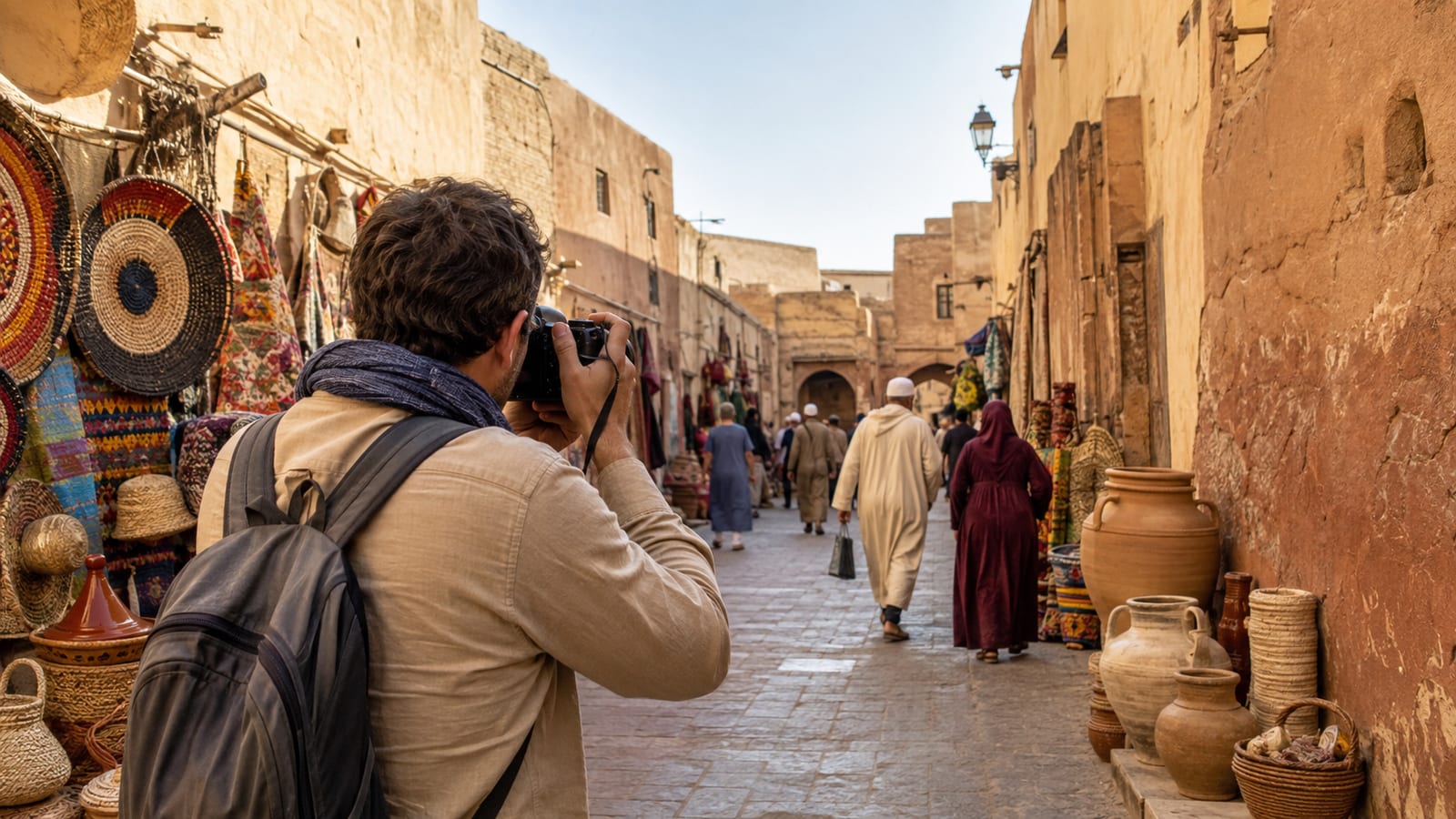
The Old Medina is best for intimate street photographs. Central Market is better for energy, color, and clear daily routines. Both beat wandering downtown and hoping something happens.
The Old Medina rewards attention to small details
The Old Medina isn’t the place for grand monuments. Its payoff comes from worn doors, painted signs, stacked goods, shafts of light, and people pausing at shop counters.
Morning works because the lanes are active without feeling crushed. I look down the street before lifting the camera. A handcart, doorway, or person entering a strip of light gives the frame a reason to exist.
Don’t rush through searching for a famous corner. Take the quieter lane, then wait near a shopfront without blocking it. The scene often gathers on its own.
If you’re also visiting northern Morocco, the street layers are tighter and more enclosed in the best photo spots in Fez. Casablanca’s medina feels looser and more tied to the modern city around it.
Central Market gives you movement
Central Market is the stronger choice for fish counters, flowers, stacked produce, merchants, and hands at work. It opens daily, typically around 7:00 AM to around 7:00 PM, though individual stalls may keep their own rhythm.
Start outside. The entrances, café tables, delivery activity, and surrounding facades help explain where the close market scenes belong. Then move inside and work slowly.
A normal or small camera is easier here than a large rig. The aisles are busy, and a long lens can make you look as if you’re hiding across the room. Buy something small, step aside, and ask before making a close portrait.
For a break afterward, the nearby choices in this guide to Casablanca cafés and coffee are more useful than sitting with your camera bag in the busiest market aisle.
Photograph people respectfully in the medina and market
Ask before making a close portrait. A smile, a greeting, and a small gesture toward the camera are usually clear enough, even when you don’t share a language.
If someone says no or turns away, lower the camera. Don’t bargain, explain, or try again from farther down the lane. The photograph isn’t owed to you.
Candid street scenes need judgment. A person crossing a broad frame is different from pushing a lens into someone’s face while they work. Keep enough distance to show context, and don’t photograph people in a vulnerable or private moment.
Shopkeepers deserve the same respect. Ask before photographing a stall at close range, especially if one person fills the frame. Buying something doesn’t buy permission, but it does stop the interaction feeling purely extractive.
Religious spaces need extra care. Don’t block an entrance, photograph people during prayer, or treat modest dress as an optional detail. You’re a guest with a camera, not a press pass.
Downtown stops worth your time
Place des Nations Unies is worth a short stop for trams and city movement. Parc de la Ligue Arabe is useful for palms, shade, and quieter portraits. Neither should displace the mosque, market, or medina on a short trip.
Place des Nations Unies works when the city is moving
The square gives you curved tram lines, crossing figures, traffic, signs, and colonial-era facades. I’d work from the edge rather than standing in the middle of the flow.
Wait for a tram to enter the curve, then include people or a building behind it. Without that second layer, you have a transport photograph that could belong to almost any city.
The square is also a practical link between the Old Medina and the wider centre. Hassan II Mosque is about two kilometers away, or roughly a 20-minute walk. That makes the square useful, even if the photographs don’t always justify a long stay.
Parc de la Ligue Arabe is a quiet reset
The park covers 30 acres and opens daily from 8:30 a.m. to 7:00 p.m. Admission is completely free.
Rows of palms make clean frames, while benches and paths suit unhurried portraits. Stone arches from the demolished Portuguese Prison of Anfa were reused to support pergolas, which gives you a more specific subject than another palm-lined walkway.
Still, don’t build your day around the park. Go if the midday streets feel harsh, you need shade, or you’re already nearby. Otherwise, continue to the coast.
The smartest one-day Casablanca photo route
Start at Central Market in the morning, then walk toward the Old Medina while shops and streets are active. Continue through Place des Nations Unies and stop only if the trams and light are working.
If you need a break, grab a coffee or walk through Parc de la Ligue Arabe. However, don’t let lunch consume the best coastal light.
Take a taxi to Ain Diab if the tide is low. Work the pools and Corniche, then continue along the coast toward Park Marina for sunset. Finish at Hassan II Mosque plaza as the sky turns blue and the building lights become visible.
If the tide is wrong, skip Ain Diab. Spend longer in the medina, then move directly toward the marina and mosque. That version cuts transport and gives you more time to find a clean plaza composition.
The best photo spots in Casablanca fit into one day, but only if you stop treating every square as equally important. Market, medina, coast, marina, mosque. That is enough.
Access, safety, and camera gear
Mosque access is controlled, and the interior isn’t open for casual wandering by non-Muslim visitors. Join an official tour, dress modestly, and arrive before the listed time rather than expecting the group to wait.
Outside, stay clear of doors and prayer routes. If security asks you to move a tripod or stop shooting from a position, pack it away and shift. An argument won’t improve the frame.
Casablanca is a working city, so treat your camera as you would in any busy centre. Keep the bag closed, carry it in front in crowded lanes, and avoid changing lenses in the middle of a tram stop.
A small kit works best:
- A wide or standard zoom for the mosque and streets
- A small telephoto for marina layers and distant details
- A lens cloth for Atlantic spray
- A hood for side light and blowing mist
- A plain bag that closes fully
- A light rain cover when the coast turns wet
Tripods are most useful on the open mosque plaza, but discretion matters. Set up away from doors and foot traffic, make the frame, then move on. In markets and medina lanes, handheld shooting is faster and less intrusive.
After dark, use an official taxi or transport arranged by your accommodation if you’re carrying a full camera bag. Keep the plan calm and simple. Know where you’re going before you leave the waterfront.
Finally, don’t assume drone access is allowed because you saw an aerial photograph online. Morocco has strict controls around unmanned aircraft and sensitive sites. Verify the rules with the relevant authorities before flying, importing, or packing a drone.
FAQ
Can I use a tripod at Hassan II Mosque?
A small tripod may be tolerated in open parts of the plaza, but security staff decide what is acceptable on the day. Keep away from entrances and busy walking lines. If asked to stop, fold it and continue handheld.
Is Casablanca good for photography when it rains?
Yes. Wet plaza stone can add reflections near the mosque, while covered market areas keep street photography possible. Bring a cloth because Atlantic mist and rain leave marks on the lens faster than you notice them.
Can I photograph inside Hassan II Mosque?
Photography rules can change during guided visits, and access may be limited in certain areas. Ask the guide before raising the camera. Avoid flash, tripods, and photographing worshippers unless clear permission has been given.
Is Essaouira better than Casablanca for coastal photography?
Essaouira gives you old walls, fishing boats, and a smaller historic centre. Casablanca gives you a monumental mosque, harder urban lines, and a busier Atlantic edge. If the coast is your main subject, compare these photo spots in Essaouira before choosing.
Where should I store camera gear between shoots?
Use a hotel safe or locked luggage storage rather than carrying every lens all day. In cafés, keep the bag between your feet or against a wall, not hanging from the back of a chair. Make the gear boring to take, then get back to the city.