Skip the Old Town chains near the main square and walk five minutes to the specialty belt around Obchodná Street. That is where the best cafes and coffee in Bratislava actually live. The good ones pull espresso as clean as anything in Vienna for less money. Café Kút is my non-negotiable first stop. After that, the rule is simple: keep wandering one street back from the crowd and you will keep finding better cups.
Last updated: 2026-07-25
Which are the best cafes and coffee spots in Bratislava?
Here is my ranked shortlist, with a fast verdict on each so you can decide in seconds. I have grouped them by what they do best, not by which is fanciest.
| Café | Best for | My verdict |
|---|---|---|
| Café Kút | Serious espresso | Worth the queue, the gold standard |
| Rezy a Káva | Single-origin pour-overs | The city's best filter coffee |
| Urban House | Latte art, long sit-downs | Worth it if you want to linger |
| Café Verne | Old-world room and pastries | A reliable classic, not a novelty |
| Artisan | Solo work | Best all-rounder for a laptop day |
| Zbrojník | Buying beans to take home | Go here for retail, not a long stay |
| Panna & Vlk | Friendly staff, guest roasters | Tucked away near the castle, worth the climb |
Café Kút is tiny and takes coffee seriously. The queue moves slow because they do not rush a shot. Order an espresso, drink it standing if you have to, and you will understand why locals put up with the wait.
Rezy a Káva does the best pour-overs I have found here. The single-origin menu rotates with the season, so ask what landed this week. Sit at the counter and watch them weigh the dose.
Urban House near the Old Town is where I go when I want an hour, not a quick hit. The baristas treat milk texture like it matters, and the flat whites show it. Grab the window seat if it is free.
What makes Bratislava's coffee scene different from Vienna or Prague?
Bratislava kept things small, and that is its whole advantage. There is no Starbucks in the historic core, so independent shops never had to fight a chain for the good corners. The coffee tradition here runs back to the 17th century, when coffeehouses were where writers and politicians argued for hours. That habit of sitting and talking never fully died.
Vienna sells you the grand marble room. Prague sells you the crowds. Bratislava gives you the compact version of both, at a lower price, without the queue at the door. You can walk the whole specialty belt in a morning.
The specialty coffee crowd got here later than in Berlin or Oslo, and it shows in a good way. The scene is young, hungry, and not yet expensive. If you have café-hopped through the Baltics, the feel is close to what I found writing about the cafes and coffee in Vilnius: small rooms, careful baristas, prices that still make sense.
Where do Bratislava's best cafes source and roast their beans?
Look for a bag that names the farm, the country, and the roast date. The better Bratislava shops roast in-house or buy from small regional roasters across Slovakia, Czechia, and Austria. That is the signal you want, not a vague "premium blend" label with no origin on it.
Rezy a Káva builds its whole menu around single-origin beans that change through the year. Ask which country is on the grinder today and you will usually get a real answer, plus the flavor notes to expect. Many spots list Ethiopian and Colombian lots because those forgive a lot and taste bright.
Panna & Vlk runs a guest-roaster program that rotates beans from small producers you will not see elsewhere in the city. That is the one to hit if you want variety in a single week. When you read a bag, skip anything without a roast date. Coffee older than a month has lost the point.
Which cafe suits the way you want to spend your time?
Match the room to the plan, and nobody ends up fidgeting in the wrong seat. Here is how I sort them.
- Solo work: Artisan has natural light, decent Wi-Fi, and a kitchen that goes past a sad croissant. Caffe4U is another laptop-friendly spot with comfortable seating built for a long working session.
- A quiet coffee alone: Café Kút, standing at the counter, in and out in ten minutes.
- A date or a slow catch-up: Urban House, for the sit-down and the light.
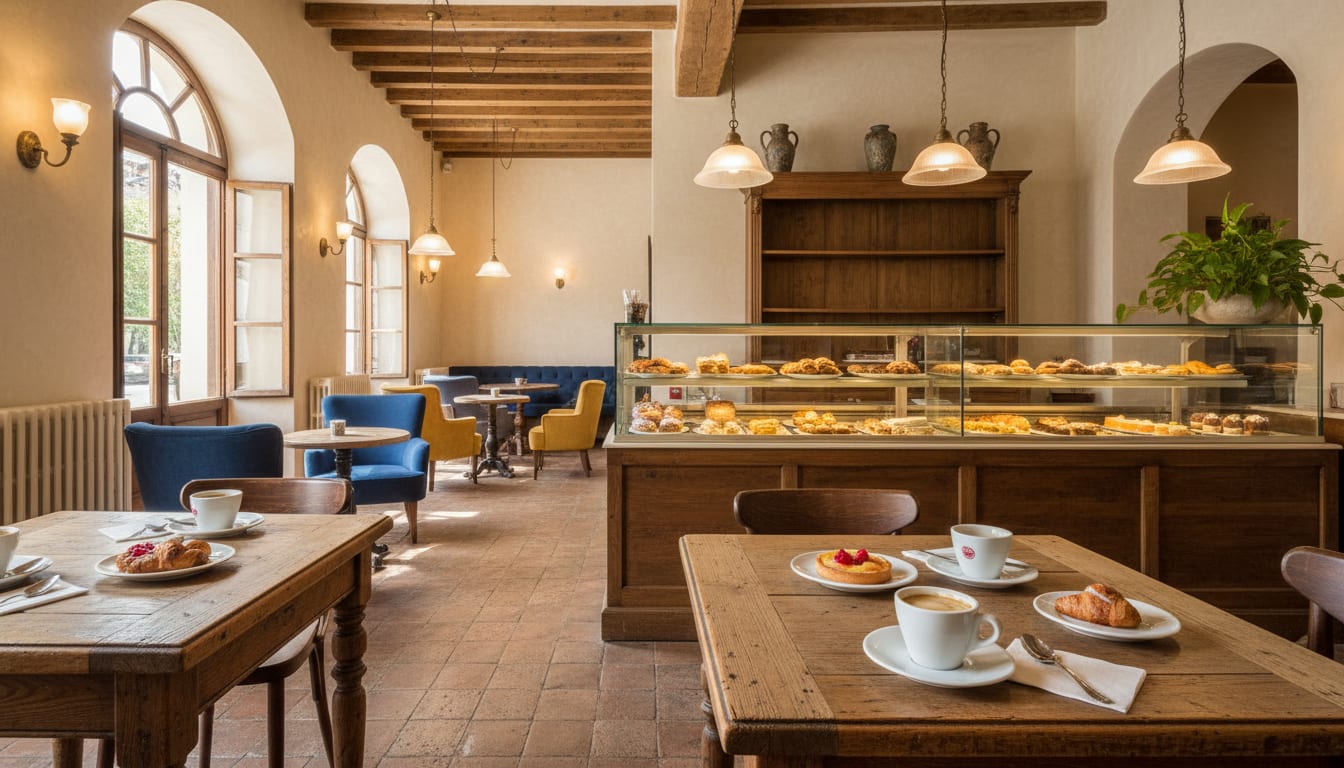
- An old-world hour with a book: Café Verne, which does the historic-room feeling without turning it into a museum.
- A small group: Urban House again, or any of the Obchodná spots with room to spread out.
For working, get there before mid-morning. The good tables near the windows go first, and once they fill, you are stuck against a wall with your screen glaring. If a place is loud enough that you cannot hear your own call, it is not a work café that day. Move on.
Where should you eat as well as drink coffee?
Eat at Café Verne and Artisan, and treat most other spots as coffee-first. Verne takes pastries seriously, and its espresso is pulled with proper technique rather than as an afterthought to the cake. Artisan runs a real kitchen, so a working lunch there is not a compromise.
Plenty of specialty places do coffee brilliantly and food barely at all. That is fine if you know it going in. A dry muffin under glass is not lunch, so plan your meal around a café that actually cooks. When in doubt, ask what is made in-house that morning.
If you want one full food-and-coffee stop, Artisan is the safer bet for a laptop day, while Verne wins on atmosphere and baked goods. Do not expect either to be cheap by Slovak standards, but both earn the spend.
How good is the barista craft, and where should a coffee nerd go first?
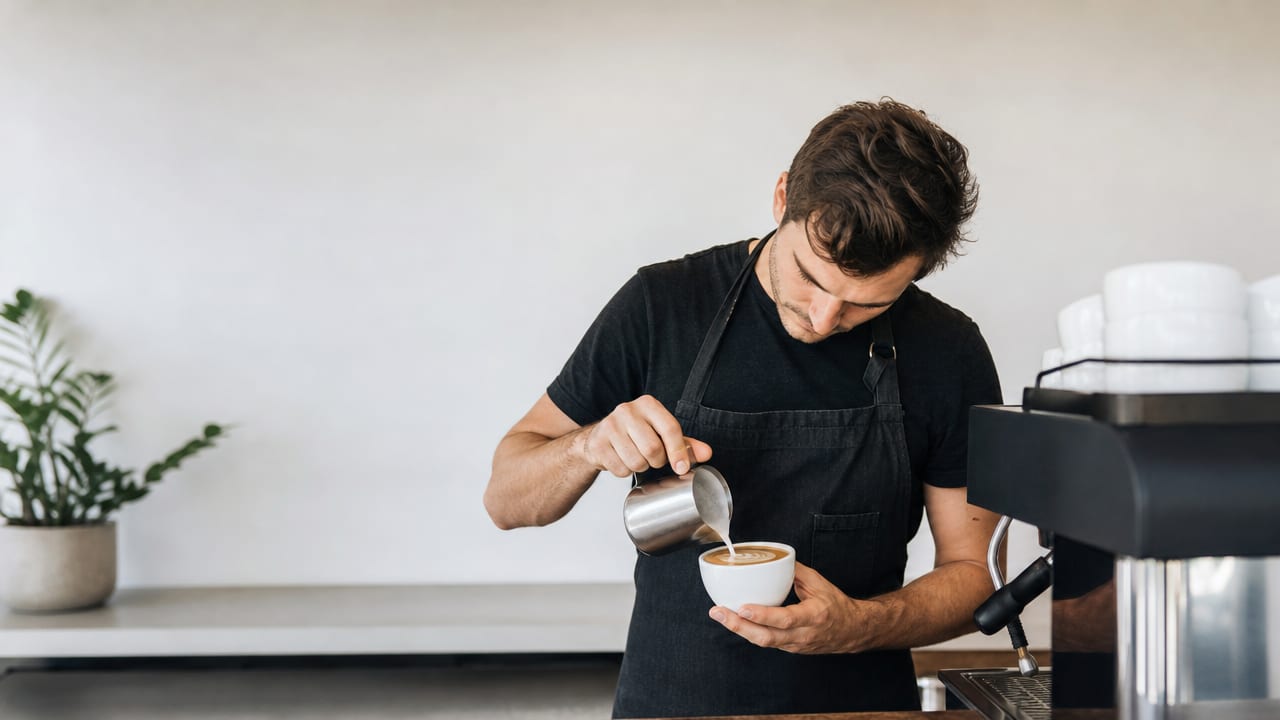
Go to Café Kút first, then Rezy a Káva. Kút's shots are dialed in tight, with none of the sour, under-pulled espresso you get at tourist spots that never touch their grinder. Rezy a Káva is where the filter and pour-over skill shows, because a bad pour-over hides nothing.
Urban House is the place for latte art if that is your thing. The rosettas are clean and the milk is textured properly, not scalded into a hiss of foam. That takes practice, and you can taste the difference.
If you care about brewing method variety, ask before you order. The best spots run espresso, pour-over, and often an AeroPress or batch brew, and a good barista will tell you which suits the beans that day. A shop that only knows one method is not wrong, just narrow.
Where can you buy coffee beans and gifts to bring home?
Zbrojník is the best place to buy retail bags you can actually fly home with. The shelf carries locally roasted coffee with clear origins and roast dates, which is exactly what you want in a gift. Grab whole beans over pre-ground, because ground coffee goes flat before you land.
Rezy a Káva and Panna & Vlk also sell bags of what they are brewing, so if a cup wins you over, take that same coffee home. Ask them to leave it whole. Skip the tourist-shop tins with a picture of the castle on the front. Those are decoration, not coffee, and you will regret the shelf space.
For a gift that survives the trip, a sealed bag of fresh single-origin beats any novelty mug. Pack it in the middle of your bag so it does not get crushed.
What do locals know about these cafes that tourists miss?
The good coffee sits one street back from the packed square, near Obchodná and up toward the castle district. Tourists cluster around the main Old Town square and pay more for worse. Walk a few blocks in any direction and the price drops while the quality climbs.
Carry a little cash. Most specialty spots take cards now, but a small courtyard café or a counter-only place may still prefer coins, and it saves an awkward moment. Cafés here open later than you might expect, often around nine, so an early riser should plan a slow start.
Panna & Vlk sits near the castle, which means a short uphill walk that filters out the crowd. That climb is the whole reason the staff have time to chat and the guest beans are interesting. If you have wandered the cafés of the Baltics or the Balkans, like the ones I mapped in Tallinn's coffee scene, the instinct is the same: take the quiet exit and follow it.
FAQ
Is Bratislava expensive for coffee compared to Western Europe?
No. A specialty coffee here usually costs less than the same cup in Vienna or Amsterdam, and the quality holds up. You can café-hop for a full day without it hurting, which is not true in most Western capitals.
Do I need to speak Slovak to order?
No. Baristas in the specialty spots almost all speak English, and menus often list flavor notes in English too. Learn "dobrý deň" for hello and "ďakujem" for thank you. It is polite, and it changes how people treat you.
How walkable is the café scene?
Very. The historic center is compact, and you can reach most of my picks on foot in under fifteen minutes from one another. Wear comfortable shoes, because a few streets are steep and cobbled, especially heading up toward the castle.
When should I go to avoid the crowds?
Mid-morning on a weekday, once the cafés open but before the lunch rush. Weekends fill the popular rooms fast, and the best window seats vanish first. If a place is packed, take the quiet exit and try the next street over.
Are there vegetarian or plant-based options?
Yes, at most specialty cafés. Oat and soy milk are standard, and kitchens like Artisan's usually have a vegetarian plate or two. Ask about the day's food rather than assuming, since smaller spots change what they make.
Related on this blog
Related: Best Cafes in Belgrade: D59B and Dorćol Specialty Scene