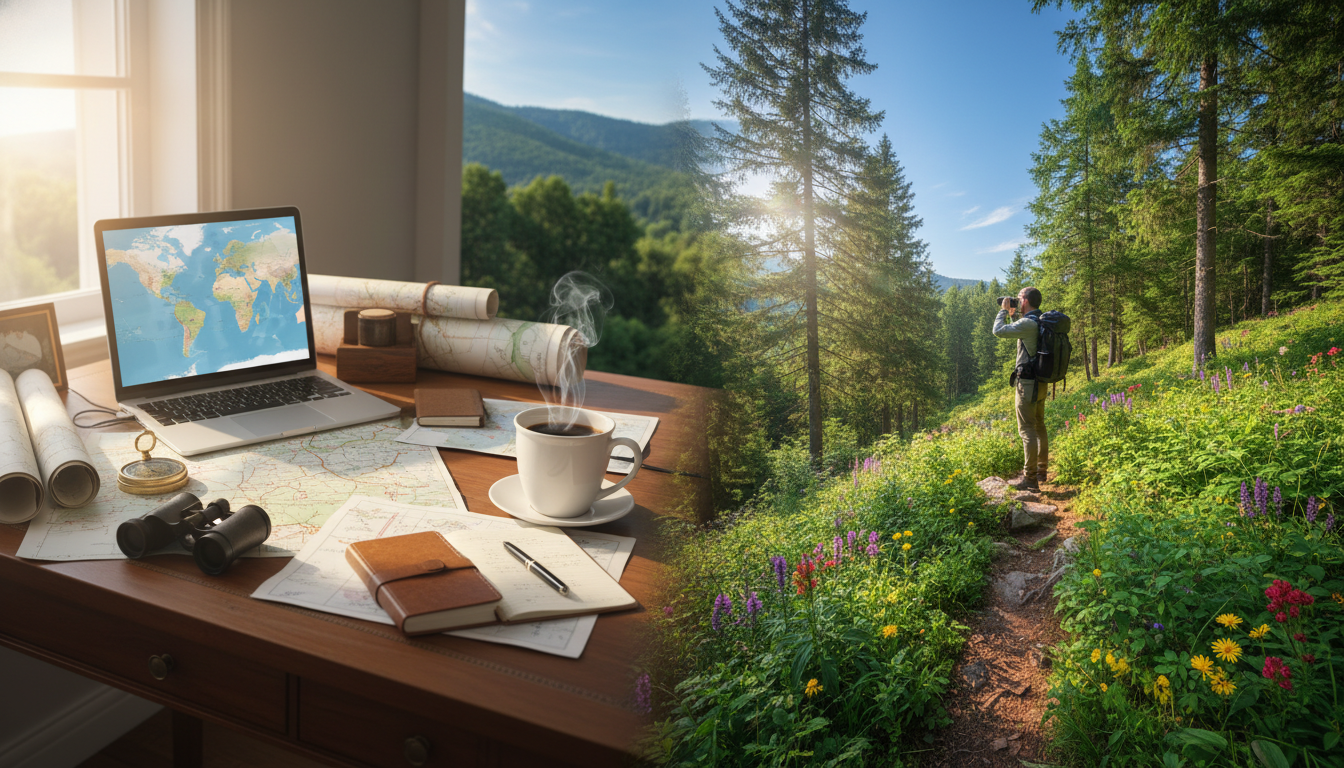
Have you ever returned from a journey feeling more drained than inspired? That hollow sensation often stems from a simple, overlooked tension: travel days vs exploration days. Most adventurers don’t realize these are fundamentally different experiences.
One involves frantic movement, while the other is about deep discovery. The distinction transforms a trip from checking boxes into collecting moments that reshape your story.
Imagine the contrast. It’s the difference between collapsing in a generic hotel room and savoring a local brew as a neighborhood wakes up. Both involve moving through the world, but they feel worlds apart.
This isn’t about pacing. It’s about designing a smarter journey. You’ll learn to recognize when to push forward and when to sink temporary roots. The goal is awareness, giving you the tools for intentional choices about your precious time abroad.
Key Takeaways
- Moving between places and truly discovering them are distinct experiences with different rhythms.
- Confusing constant movement for meaningful engagement often leads to post-trip exhaustion.
- Intentional planning separates logistical travel from immersive exploration, enhancing both.
- A personal lens, like a hobby or interest, makes deep cultural connection more approachable.
- The journey itself becomes as valuable as the destination when this balance is struck.
- Practical frameworks help ensure movement enhances your experience rather than diminishing it.
- The aim is not a perfect itinerary but greater awareness to make conscious choices.
Decoding Travel Days vs Exploration Days
We often lump all our time abroad into one category, but the texture of each day varies wildly. Recognizing this rhythm is the first step toward a richer journey.
Understanding the Difference in Experience
One type of day is logistical. It smells like recycled airplane air and tastes of hurried terminal coffee. The goal is simple: move from point A to B.
The other type prioritizes depth. It carries the aroma of sizzling street food and the complex flavor of a dish you can’t yet name. Here, the goal is immersion.
You can have a trip with zero logistical movement yet still miss true discovery. A week at a resort is comfortable, but it rarely punctures the bubble to reveal a place’s authentic spirit.
Breaking Down Key Concepts
Transit days aren’t inferior. They’re the necessary connective tissue of any multi-destination adventure. Problems arise when a whole itinerary feels like perpetual motion.
The key is planning with awareness. Don’t expect a deep cultural exchange on a heavy movement day. Instead, protect your energy for immersion later. Simple morning routines can make transit smoother.
True exploration requires a little vulnerability. It means feeling temporarily lost or out of place. That slight discomfort is often where the magic hides.
Finding the Balance Between Routine and Adventure
Many wanderers swing between two extremes. They either over-schedule every moment or wing it completely.
Both paths often lead to the same tourist traps. The secret lies in a personal exploration lens.
This lens is a specific passion that filters your journey. It makes choices clearer and experiences richer.
Injecting Local Culture and Flavor
Let a food lens guide your way. It might lead from a Michelin star to a family-run shop where pasta is made by hand.
A photography lens creates natural exploration. Chasing golden hour light shows you neighborhoods at dawn.
Even niche interests like architecture create a built-in framework. They give structure without rigidity, guiding without constraining.
Visit a vibrant night market for a sensory overload. It compresses local flavors and social rhythms into one unforgettable experience.
Your lens shouldn’t become a limitation. Think of it as a doorway, not a tunnel.
It allows spontaneous detours while preventing aimless wandering. Finding it takes a little experimentation.
Look for the things that excite you at home. Your traveling style abroad often follows.
Any passion can open up the world. Surfing, bird watching, or even board games become your impetus.
This focused way you experience places transforms generic trips. They become chances to learn and grow.
Integrating simple daily routines can support this balanced approach perfectly.
Planning a Smoother Travel Experience
Think of your trip’s rhythm like a great story, with peaks of adventure and valleys of calm movement.
Intentional design turns exhausting logistics into a seamless backdrop for your best moments.

Smart Scheduling for Maximum Enjoyment
Cluster your necessary movement into a single logistical chunk. This prevents the exhausting whiplash of constant packing and re-orientation.
Seasoned wanderers often swear by the three-night rule. It allows for an arrival day, a full discovery day, and a calm departure.
Front-load major bookings to eliminate decision fatigue. Then, let spontaneous anchor days, like a reserved food tour, give structure without rigidity.
Practical Tips for Avoiding Burnout
Sustainable journeys need built-in recovery. Here’s how to preserve your energy.
- Resist treating a two-week trip like a frantic weekend. The pace must allow for a strategic long rest.
- Plan deliberate low-key days after intense movement. A quiet morning in a café can be a productive stillness.
- Accept that some time feels “wasted.” This rest lets you truly savor the stillness later.
- Tackle complex navigation or early flights first. Your energy is highest before fatigue accumulates.
This approach saves a lot of stress. It fills the time between highlights with purposeful calm, not frantic checking.
Embracing the Unexpected: Random Encounters & Hidden Gems
A trip’s true soul reveals itself not in the guidebook highlights, but in the unscripted moments between them. These chance encounters and discovered corners hold the raw, authentic pulse of a place.
Turning Surprises into Memorable Moments
Reframe a missed train from a crisis into a gift. It might force an overnight stay in a village you’d never book. That’s where you find the family-run tavern with the unforgettable stew.
Say yes to the local’s invitation for tea. Accepting that ride from a friendly stranger requires vulnerability. This trust often unlocks doors to experiences no tour company can provide.
The best stories spring from these derailments. A closed museum pushes you toward an unknown neighborhood. Following intriguing music down a narrow alleyway becomes the thing you remember most.
Leveraging Spontaneity for Deep Exploration
Not every random event needs to be a major detour. Some add simple flavor, like street musicians or sudden rain. Others become legendary, like a spontaneous invitation to a family meal.
Build buffer time into your schedule specifically for these tangents. This freedom lets you pursue curiosity without stress. It turns potential annoyances into pure opportunity.
Experienced wanderers develop a sharp intuition for which encounters to embrace. They read situations, trust their gut, and politely decline others. This skill protects you while opening up the world.
One spontaneous choice has a compound effect. A café recommendation leads to a conversation. That chat leads to an invitation you couldn’t plan. Cultivating this openness rewards you with moments that can’t be Googled.
Drawing on Real Travel and Gaming Mechanics
What if the secret to a smoother trip was hidden in the rulebooks of fantasy roleplaying games? Tabletop systems have spent decades refining how to manage a journey. Their distilled wisdom applies perfectly to your own adventures.
Lessons from D&D Exploration Mechanics
D&D’s core rules make a brilliant distinction. Is the game about the dungeon, or about getting there? This gives you permission to skip grinding details when movement isn’t the story.
Its pace rules create a classic trade-off. Moving fast means you might miss subtle clues and hidden gems. Going slow reveals more but stretches your time. Players also naturally take on roles like navigator or forager.
Your group does the same thing with maps and restaurant research. These aren’t just game mechanics. They’re frameworks for shared responsibility.
Insights from The One Ring Journeys
The One Ring system understands that terrain changes everything. A good road is easy, but daunting wilderness slows pcs to a crawl. Sound familiar from hectic cities versus remote trails?
Its genius is the accumulating Fatigue rules. Consecutive tough days without proper rest wear you down. This makes safe havens like Rivendell incredibly precious.
These games treat the journey itself as the adventure. Not every encounter needs to be a dramatic combat. Sometimes, steady progress and managing resources are the most important checks you make.
Utilizing Systems for Slow Pace and Long Rests
There’s a hidden economy of attention on every journey, where moving slowly pays the highest dividends. The ‘maximize everything’ mentality often leaves you seeing more but experiencing less.
Balancing Speed with the Need to Recharge
A slower pace paradoxically yields richer experiences. Your attention becomes available for noticing details and following genuine curiosity.
Choose a train over a flight when time permits. Stay a week in one city instead of three nights in three. Walk neighborhoods instead of taking taxis everywhere.

This slow pace literally changes what you see. You notice architectural details and the elderly man selling flowers on the same corner each morning.
Most wanderers ignore accumulating fatigue until they’re too exhausted to enjoy their trip. Identify your personal ‘Rivendell’ for a proper long rest.
For every three high-intensity days, schedule one low-key day for laundry and rest. Building recovery into plans is a strategy, not laziness.
Accept that a slower pace means covering less ground but experiencing more depth. Fresh adventurers remember more than exhausted ones.
Your neighborhood café or regular shop provides crucial structure. These temporary routines create a ‘home base’ feeling in the world.
Adapting Exploration for Different Travel Lenses
Your personal passion can become the ultimate map for discovering a place’s hidden layers. This lens transforms simple movement into purposeful discovery, filtering the overwhelming noise of any destination.
Finding Your Unique Lens for Exploration
Reflect on what energizes you at home. Your best stories often spring from these innate interests. That reflection becomes a crucial part of designing your journey.
Your lens might evolve mid-trip when unexpected fascinations emerge. This flexibility strengthens your entire framework. It allows for spontaneous detours while maintaining clear direction.
On one hand, you’ve seen a lot of recommendations for any city. Your personal lens helps prioritize what truly aligns with your interests. It creates clear criteria to combat decision fatigue.
From Surfing Waves to Urban Wandering
Surfing opens remote corners of the world, from lonely breaks to crystal tubes. The search for waves builds exploration directly into the culture.
An urban running lens reveals cities at dawn. You find parks where locals exercise and waterfront paths still quiet. It provides natural conversation starters with fellow enthusiasts.
Other powerful lenses include:
- Textile enthusiasts tracking traditional weaving villages
- Music lovers following jazz clubs or fado houses to decode culture
- History buffs tracing specific eras across countries
A pottery interest leads to studio visits, not just tourist shops. You learn about regional clay and firing techniques from artisans themselves. These connections form a deeper part of understanding a place.
Your lens turns generic tourism into a personal quest. It makes the daunting task of engaging with the world beautifully approachable.
Striking the Right Travel-Exploration Balance
Imagine your energy and attention as a finite currency, spent with every choice you make on the road. This isn’t about hit points or spell slots. Your real resources are time, stamina, money, and emotional bandwidth.
Every hour spent on logistics is an hour not spent in deep discovery. Each dollar on transport is a dollar unavailable for a memorable meal. That’s the fundamental trade-off.
Resource Management and Time Allocation
Visualize your trip as a pie chart. Consciously decide what percentage goes to movement, immersion, and rest. This makes invisible choices visible and intentional.
Your team naturally falls into roles, mirroring a gaming party. Someone researches, another navigates. Acknowledging this order of operations reduces friction dramatically.
Your personal character—introversion, energy levels—should guide resource allocation. Generic advice often fails here. A spontaneous side trip has hidden costs in exhaustion and schedule disruption.
With multiple players, priorities differ. Negotiation is key. Ensure everyone’s exploration lens gets attention, taking turns as a part of the journey.
Remember diminishing returns. The fifteenth temple offers less value than the first three. Chase depth, not completionism.
A practical framework helps. Start with a rough budget: 40% discovery, 30% movement, 20% recharge, 10% buffer. This structure fights the tyranny of “we should do everything” and honors your real limits.
Innovative Tactics for Travel Days
Applying a simple framework of checks and choices makes the ‘getting there’ as rewarding as the arrival. It transforms logistical segments from blank spaces into canvases for subtle discovery.
Creative Strategies to Enhance the Journey
Adapt a streamlined exploration system built on threes. You manage three core checks: navigation for route success, stealth for avoiding crowds, and perception for spotting opportunities.
Your party naturally takes on roles. The navigator researches, the scout probes ahead, and the hunter finds sustenance. This shared ownership prevents one person from bearing all the planning stress.
Frame your encounters along the way. Quick events add local flavor. Hostile encounters are unavoidable challenges. Optional explorations are detours you choose to pursue or skip.
Modulate your pace with intention. Move fast through mundane segments, but slow down when curiosity beckons. This conscious rhythm turns every transit into a series of meaningful choices.
Even a missed train becomes a memorable combat encounter that teaches resilience. Finding sizzling skewers from a market vendor is your reward for a successful perception check. The rules aren’t rigid—they’re a lens for designing better journeys.
Conclusion
At its heart, every great adventure is a balance between moving through the world and letting it move through you. The key isn’t to avoid movement but to distinguish it from meaningful discovery.
Frameworks like gaming rules or resource management aren’t rigid systems. They simply make invisible choices visible. Your implementation will look unique.
These ideas grant permission to rest, go slow, and skip things. Understanding your mode—transit versus immersion—lets you set the right pace. It transforms a journey from exhausting to enriching.
Trips planned with this awareness create deeper memories. You have the energy to be truly present. Success isn’t measured by stamps collected but by moments of genuine connection.
Your next trip is a chance to design intentionally. Embrace the balance. Move with purpose, explore with curiosity, and let each way you experience a place teach you about the explorer you’re becoming.
FAQ
What exactly is the difference between a travel day and an exploration day?
A travel day is primarily about moving from one location to another, involving logistics like transit and check-ins. An exploration day is dedicated to immersion, where you engage deeply with a destination’s culture, history, and atmosphere, prioritizing discovery over distance.
How can I avoid feeling burned out while on a long trip?
Smart scheduling is key. Intentionally plan for a slower pace after a demanding journey. Consider these periods as essential “long rests” for your mind and body. Build in downtime to simply wander a local market or enjoy a leisurely coffee, allowing experiences to resonate.
How do I find authentic local culture instead of just tourist spots?
A> Shift your focus from checklist sites to sensory experiences. Visit a neighborhood bakery in the morning, observe daily life in a public square, or browse a small, family-run shop. These moments of local flavor often provide a richer, more meaningful connection to a place.
Should I leave room for spontaneity in my itinerary?
Absolutely. Some of the most memorable moments arise from unplanned “random encounters.” Leave a few hours unscheduled to follow a local recommendation, explore an intriguing side street, or accept a last-minute invitation. This flexibility transforms a good trip into a great story.
Can concepts from games like Dungeons & Dragons really improve my travel planning?
Yes, by adopting a different mindset. Games like D&D teach the value of a balanced party and managing resources. Apply this by planning for different types of days—some for energetic adventure, others for replenishment. Think of your stamina and curiosity as vital stats to manage wisely.
How do I find my personal travel style or "lens"?
Your unique lens is shaped by your passions. Are you drawn to architectural history, coastal surfing, or culinary arts? Identify what truly captivates you and let that theme guide your choices. This focus creates a cohesive and personally fulfilling journey, whether you’re in Rome or Rio.
What’s one innovative tactic to make a long journey more enjoyable?
Treat the journey itself as a chapter of your adventure. Listen to a podcast about your destination, strike up a conversation with a fellow traveler, or keep a small journal. These creative strategies turn transit time into an engaging part of the narrative, not just a gap to endure.