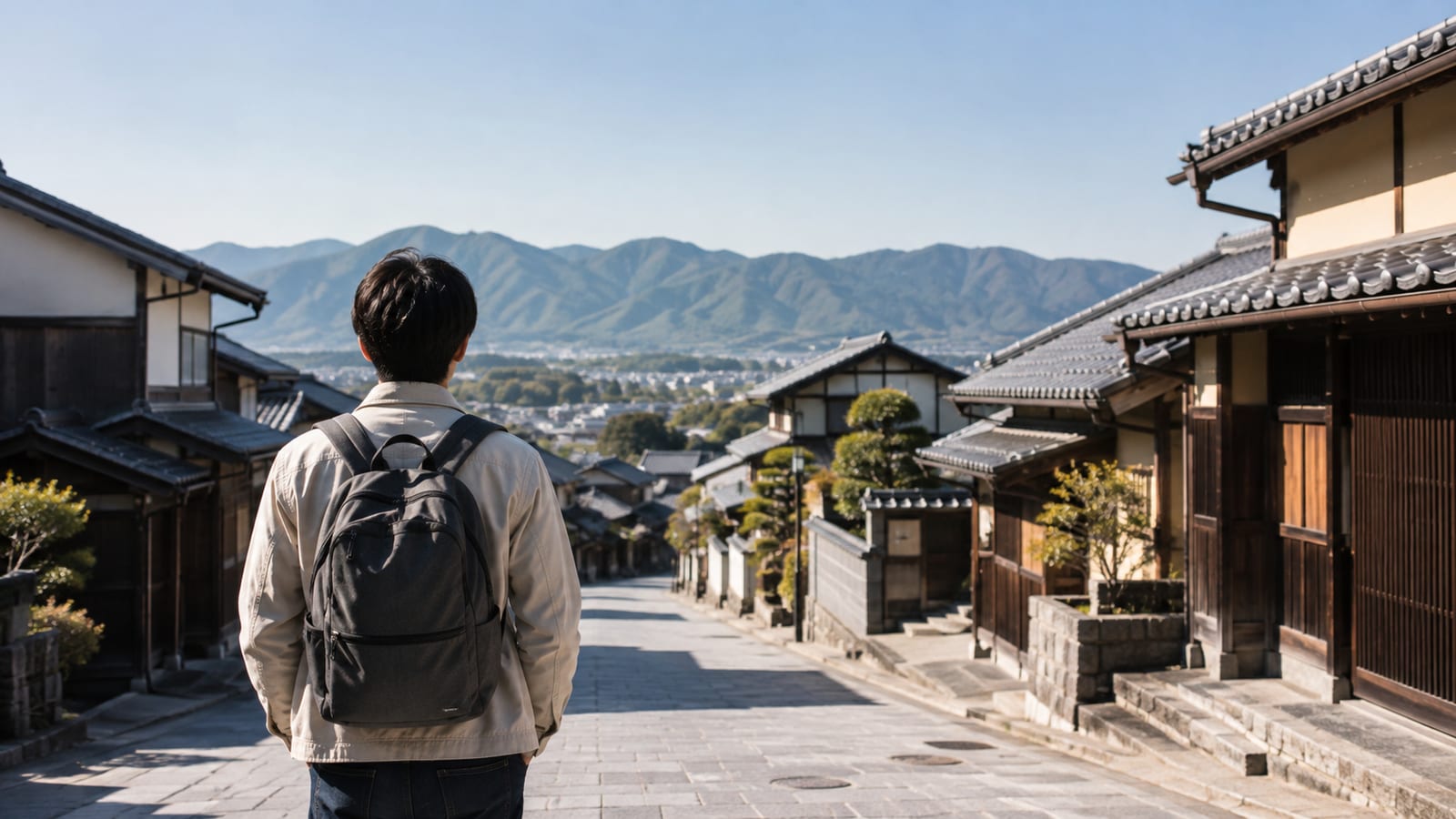
The right first Japan itinerary moves from Tokyo to Matsumoto, Takayama, Kyoto, and Osaka, with Hiroshima and Miyajima only if you have extra time. Skip the national rail pass unless the long-distance fares justify it. You get big-city noise, mountain towns, old streets, and enough empty space to notice where you are.
The classic Tokyo-Kyoto-Osaka route works, but it leaves Japan’s smaller places on the table. You don’t need to chase every corner of the country on your first visit. You need a route that gives you one clear city, one regional stop, and enough time to recover from the train station maze.
What should a Japan Travel Guide: First-Timer's Itinerary beyond the rail pass include?
For a first trip of around ten days, this is the route I’d book:
- Tokyo for three days.
- Matsumoto for one day.
- Takayama for two days.
- Kyoto for three days.
- Osaka for one day.
- Hiroshima and Miyajima only if you have extra time.
This route works because each stop feels different. Tokyo gives you scale, Matsumoto gives you a castle town, Takayama slows the pace, and Kyoto brings temples and old lanes without asking you to spend the whole trip there.
The wrong turn is treating Japan like a checklist. You’ll spend your best hours dragging luggage between stations, then wonder why the country felt rushed.
1. Choose the route before you choose the rail pass
Build the trip around places you want to experience, not around the map of train lines. Then check each long journey on the Japan Rail Pass site before buying anything.
A national pass can make sense if you’re covering several expensive long-distance journeys close together. It isn’t automatically cheaper because you’re visiting Japan. For a route with only one or two major train rides, individual tickets and local transport may be simpler.
I’d also avoid changing hotels every night. Book Tokyo first, then decide whether Matsumoto and Takayama fit your pace. If you arrive tired, a quiet morning in one place will help more than another station transfer.
Use an electronic fare card for local trains, subways, and buses where accepted. Keep a little cash for smaller restaurants, rural buses, and ticket machines that don’t take cards. Load your route into your phone before leaving the hotel, but keep the station name written down too. Japanese stations can have several exits, and the wrong one can put you on an entirely different street.
2. Start in Tokyo without trying to conquer it
Tokyo needs neighborhoods, not a giant sightseeing sweep. Stay near a station with useful connections, then give each day one main area.
Spend your first day around Asakusa and Ueno. Walk near Sensō-ji early, when the lanes are quieter, then continue toward the market streets and park. In the afternoon, sit somewhere with a window and let the city move around you. That first day should help you learn the trains and your local streets.
On the second day, choose Shibuya and Harajuku. See the crossing, but don’t confuse standing in a crowd with understanding Tokyo. Walk into the side streets, find a small lunch counter, and leave before the area starts to feel like a shopping mall.
For a slower third day, choose Yanaka, Kiyosumi-Shirakawa, or another neighborhood that doesn’t demand a full itinerary. Tokyo in seven days gives you more room for these slower areas, but you don’t need a week to get a useful first read on the city.
teamLab Borderless is in Azabudai Hills, Tokyo, and it can fill a large part of your day. It was selected as one of TIME’s “World's Greatest Places 2024,” and Mori Building Digital Art Museum: Epson teamLab Borderless had approximately 1.69 million annual visitors in 2025. Book ahead through the official site, and don’t place it between three distant neighborhoods. The travel time will drain the fun out of it.
3. Use Matsumoto as the break between city and mountains
Matsumoto earns its place because it changes the rhythm of the trip. After Tokyo, you get a smaller center, mountain views, and a castle you can see without spending the whole day in transit.
Visit Matsumoto Castle early, then walk through the old streets near the center. The castle’s dark wooden exterior looks good from outside, but the inside has steep stairs and narrow floors. Wear shoes you can remove easily, and don’t take a large bag if you can avoid it.
The individual admission fee for children ages 6 to 15 at Matsumoto Castle is 400 yen. Check the official Matsumoto Castle information before you go for current opening details and access notes.
After the castle, slow down. Grab a coffee, browse the small shops, and eat lunch before deciding whether you need another sight. Matsumoto isn’t a place to fill with random attractions. One strong visit and a quiet afternoon is enough.
You can also use Matsumoto as a practical overnight stop before Takayama. That avoids turning the mountain section into one long, tiring transfer.
4. Give Takayama two days, not one rushed afternoon
Takayama is where the route starts to feel less like a standard first-time circuit. The old town is compact, but the nearby Hida Folk Village and morning markets need time.
Walk the old town early, before the tour groups arrive. Look for the timber buildings, small food shops, and side streets away from the busiest lanes. Try the local beef if it fits your budget, but don’t turn one famous dish into your only reason to be there.
Visit the Hida Folk Village on the day with the clearest weather. The Hida Folk Village closes at 5 p.m. on weekdays, so don’t leave it until the end of the day. Its houses and open-air layout make more sense when you have time to look at the construction instead of racing through for photographs.
The downside is transport. Takayama is not as easy to improvise as Tokyo or Kyoto, and buses can shape your day. Check the return route before leaving town. If you miss the last useful connection, the village will still be there, but your evening plan may not be.
Use the second day for a slow market visit, a local museum, or a short walk outside the center. Rain is manageable here if you keep an indoor option ready. A long lunch beats standing under an umbrella pretending the weather is part of the plan.
5. Arrive in Kyoto with fewer promises
Kyoto is best when you stop trying to see every temple. Pick one eastern or northern area each day, then leave room for food, rest, and the small streets between major sites.
Start with an early visit to Fushimi Inari if it’s on your list. Walk beyond the first crowded gates, but turn back when the path stops being enjoyable. You don’t win anything by treating the mountain like a personal endurance test.
Spend another day around Higashiyama and Gion. Go early, dress respectfully, and avoid blocking narrow lanes for photographs. If you see a private entrance or a sign asking visitors not to enter, take it seriously. Kyoto residents are still living there after your train leaves.
For a quieter day, use the ideas in quiet Kyoto streets and local stops as a starting point. Choose one area, walk on foot, and stop when you find a bakery, garden, or small temple that holds your attention.
Kyoto’s main failure is crowding. The city can leave you tired before lunch if every stop involves a queue. Go early, take a break in the afternoon, and return to the streets later when the light softens.
6. Keep Osaka simple and eat where people are already eating
Osaka works well at the end because it’s casual and easy to leave from. Stay near a useful train line, then spend your time around one food district instead of crossing the city for every recommendation.
Walk through Dotonbori once, preferably after dark, but don’t make it your entire Osaka experience. The bright signs are fun for a while. The crowds and chain restaurants get old quickly.
For dinner, look for a small place with a short menu and people waiting quietly inside. Try takoyaki or okonomiyaki, but don’t assume the busiest shop serves the best version. A line can mean quality, or it can mean a famous sign and a good social media photo.
If you’re choosing between the two cities for more nights, compare Kyoto and Osaka for your travel style. Kyoto suits slower mornings and historic streets. Osaka suits food, nightlife, and easier evenings.
You can finish with a half-day in Osaka before your departure, but leave more time than you think for the airport transfer. Japanese transport is reliable. Your ability to find the correct platform while carrying luggage is the less reliable part.
7. Add Hiroshima only when the route has room
Hiroshima and Miyajima are strong additions, but they’re not a free extra. Adding them to a tight itinerary can turn Kyoto and Osaka into hotel changes with meals attached.
Give Hiroshima time for the Peace Memorial Park and museum. Go slowly, and don’t treat the visit as another attraction to clear before lunch. The city’s history still shapes the place, and the museum deserves your full attention.
Miyajima adds a different setting with shrine grounds, water, and forested hills. Check the ferry plan before leaving Hiroshima, then keep your evening flexible. Weather can change the feel of the island, and that’s a reason to leave space rather than a reason to panic.
If you have only enough time for a rushed visit, skip it. Return on a longer trip when you can stay overnight or give the area a full day.
8. Handle transport like a series of small decisions
Don’t try to memorize Japan’s transport system before landing. Learn the type of ride in front of you, then make the next small decision.
| Trip type | Best approach |
|---|---|
| Tokyo subway or local train | Use an electronic fare card where accepted |
| Long-distance city transfer | Compare individual tickets with the rail pass |
| Mountain-town connection | Check the bus or limited train schedule ahead |
| Busy route | Reserve a seat when the booking system allows it |
| Hotel-to-hotel travel | Send large luggage ahead if that service is available |
A shinkansen is Japan’s high-speed train. It’s fast and comfortable, but it doesn’t remove the need to find the right station entrance or platform.
For the Tokyo to Matsumoto section, check the route before your travel day. For Matsumoto to Takayama, check both the train and bus options. Rural connections can run less often, and the last departure matters more than the first one.
Keep your passport and booking details in one pouch. Save hotel names in Japanese characters. When you need directions, show the address instead of trying to pronounce a long place name from memory.
9. Book the parts that can ruin the day
Reserve the places that sell out or run on fixed schedules. Leave ordinary walks, cafés, markets, and neighborhood wandering open.
Book your first hotel before flying. I’d also reserve Takayama accommodation early if you’re traveling during a busy season, because the town has fewer rooms than Tokyo or Osaka.
Reserve popular timed attractions, including teamLab Borderless. Don’t build a full day around an attraction without checking its entry time, location, and cancellation rules.
For meals, book only the restaurants you care about most. Japan has plenty of excellent food that doesn’t require a famous reservation. A short handwritten menu and a full counter often tell you more than a polished tourist page.
Pack for stairs, platforms, and walking. Small luggage works better than a large suitcase, especially when you’re moving through crowded stations. If you bring a big case, use a luggage-forwarding service where possible instead of dragging it through every transfer.
10. Follow local rules without making a performance of it
Learn how to say hello, thank you, and excuse me. You don’t need perfect Japanese. You do need to show that you’re paying attention.
Keep your voice low on trains. Don’t eat on ordinary commuter services unless others are doing it. Stand to one side on escalators and follow the station signs, even when the crowd seems to be doing something else.
At temples and shrines, follow the posted rules. Some areas prohibit photographs, and some ask you to remove shoes. Don’t touch objects just because they’re nearby, and don’t turn a prayer space into a backdrop.
Tipping isn’t expected in most everyday situations. If you’re unsure, watch what other customers do or ask politely. A quiet thank-you is better than leaving money behind and confusing the staff.
When you eat, avoid ordering more than you can finish. Small restaurants may have limited space and tight menus. Order what you’ll eat, keep your bag out of the walkway, and let the next person use the counter.
11. Build weather into the itinerary from the start
Rain doesn’t ruin this route, but it changes which stop deserves the day. Use Tokyo museums, covered markets, long lunches, and café time when the forecast turns. In Kyoto, move temples earlier and keep an indoor stop for the afternoon.
Mountain towns need more flexibility. The view from a rural bus window may disappear in heavy rain, while the old streets and museums remain useful. Don’t force a scenic plan that depends on clear weather.
Carry a small umbrella or buy one locally when needed. Wear shoes that can handle wet pavement. Then check the next day’s plan before bed and move outdoor stops around while you still have choices.
12. Take this first-timer's Japan itinerary at a human pace
The best version of this route has one main plan each day. Everything else is extra.
You’ll still see Tokyo’s scale, Matsumoto’s castle, Takayama’s old streets, Kyoto’s temples, and Osaka’s food districts. You’ll also have time to stop for coffee, take the wrong quiet street, and find your way back without treating it as a failure.
The rail pass is only one transport option. The real upgrade is knowing where you’re going next and refusing to cram three places into a day because a map makes them look close.
Before you book anything else, choose your first two nights in Tokyo and mark the one neighborhood you want to walk on your first morning.
FAQ
Is Japan suitable for a first solo trip?
Yes. Start in a major city, book your first nights, and learn the station signs before adding smaller towns. Solo dining is common, so a counter seat at dinner won’t turn into a social test.
Should I stay in ryokans on a first visit?
Book one if you want the room, meals, and quiet routine to shape part of the trip. Skip it if you only feel obliged. Floor bedding, shared baths, and fixed meal times suit some travelers and wear others out.
Can I use credit cards throughout Japan?
Use cards in cities, but don’t rely on them everywhere. Smaller businesses and rural transport may prefer cash, so carry some yen and a backup payment method before you leave the main urban areas.
What should I do if I miss a train connection?
Go to the station counter or check the official app for the next departure. Then show staff your hotel address if the route has several changes. In a smaller town, the final bus matters more than saving face over a missed train.
Is it rude to eat while walking in Japan?
The rule changes by place, so don’t assume a busy food street gives you permission everywhere. In crowded shopping lanes and quiet temple areas, step aside before eating. Posted signs and the people around you give the clearest answer.