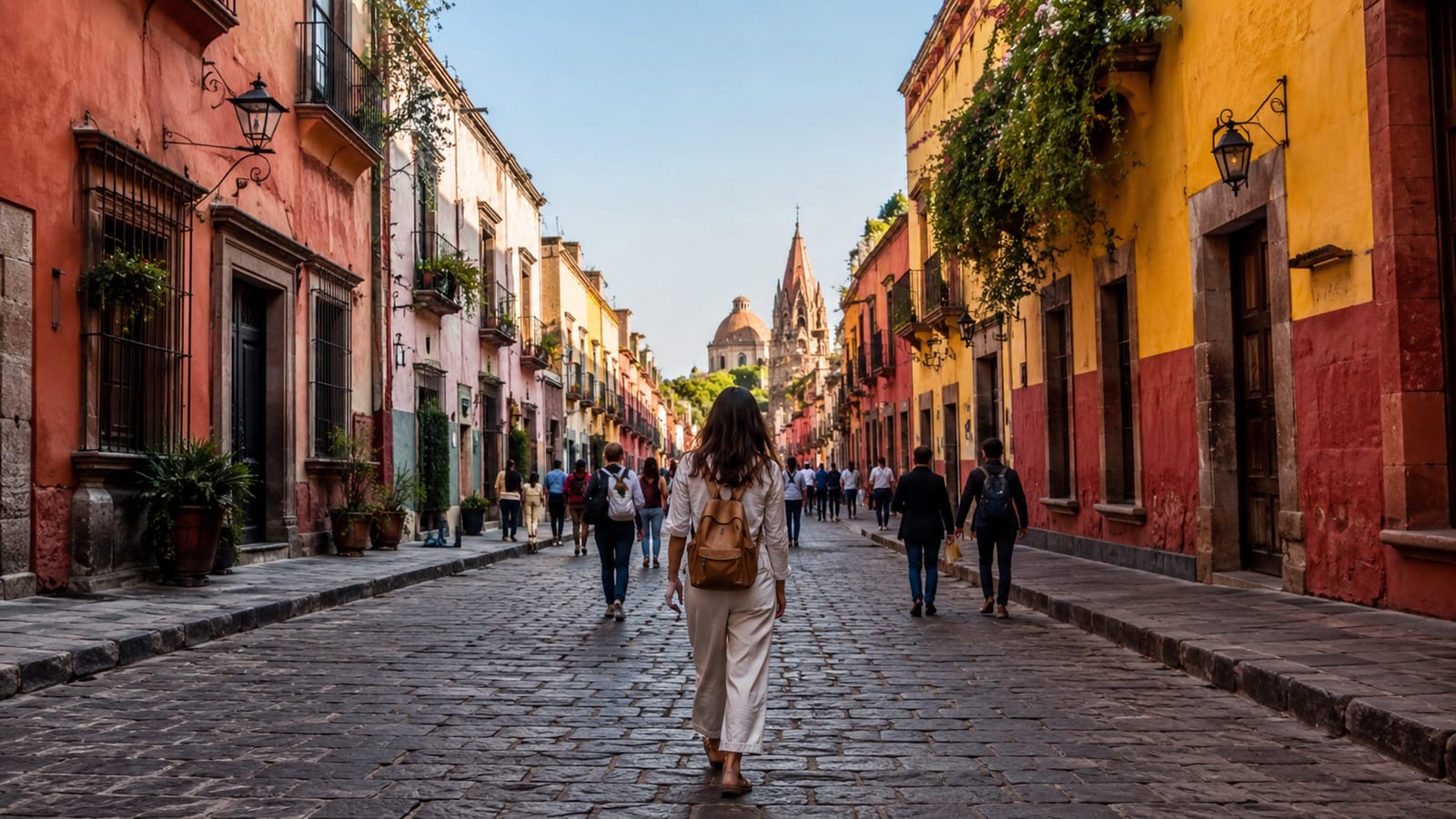
Start with Old Québec on foot. The best things to do in Quebec City are to walk the walled city, see Château Frontenac, follow the fortifications, eat French-Canadian food, and then leave the historic core for Montmorency Falls and the neighborhoods beyond it. Give the city three days if you can. Use one day for Old Québec, one for culture and food, and one for a seasonal outing or nearby attraction.
Québec City rewards a slower plan. The old streets are compact, but the hills are not gentle, and winter weather can turn a short walk into a proper outing. You’ll have a better time seeing fewer places well than collecting landmarks from a car.
What are the very best things to do in Quebec City?
These are the experiences I’d put first:
- Walk Old Québec, including Place Royale and Petit-Champlain.
- Follow the city walls and continue to Dufferin Terrace.
- See Château Frontenac from the river side, the terrace, and the lower streets.
- Visit the Musée de la civilisation for Québec history and culture.
- Eat through the city’s bakeries, markets, cheese counters, cider, and neighborhood restaurants.
- Walk Saint-Jean-Baptiste and Saint-Roch for a less polished view of daily life.
- Visit Montmorency Falls on a three-day trip.
- Choose skating, festivals, parks, or river walks according to the season.
The first three belong together. They show you why Québec City feels different from most North American cities. The museums, food, and neighborhoods keep the visit from becoming a long photo stop around one famous hotel.
Why should you start in Old Québec?
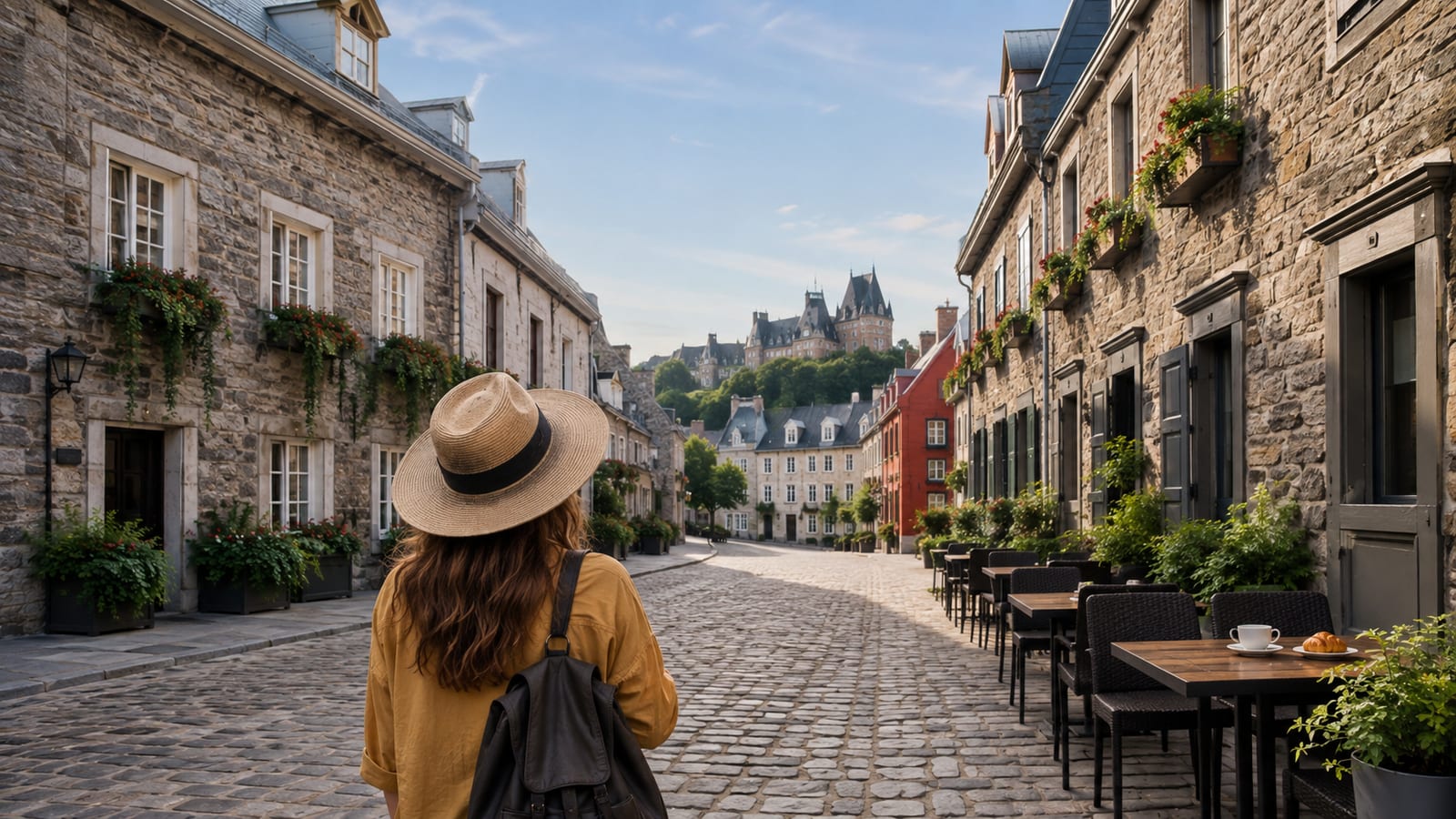
Old Québec is the city’s essential experience because it works best on foot. The streets narrow, rise, and open suddenly onto squares or river views. You’ll understand the place faster by walking it than by reading a plaque from behind a tour-bus window.
Start near Place Royale in Old Québec City. This is where the city feels most connected to its early trading and religious history, but it can also feel staged when the crowds arrive. Go early, or return late in the day when the square quiets down and the stone buildings catch the softer light.
From there, walk toward Petit-Champlain. The lower streets are attractive, but the steep route back up is the part people forget to mention. Wear shoes with a real sole, and use the Old Québec Funicular if your knees, luggage, or winter ice make the climb a poor idea.
The small detail I like most is how quickly the city changes once you leave the busiest lane. Turn into a side street, stop at a café, and watch who is actually using the neighborhood. Some places are built for visitors and some still serve the people who live nearby. You can tell within a few minutes.
Prioritize these parts of the walk:
| Area | What to look for | Best way to use it |
|---|---|---|
| Place Royale | Historic buildings and the square | Go early, then continue toward the river |
| Petit-Champlain | Shops, narrow lanes, and steep streets | Visit before peak crowds or after dinner |
| Upper Old Québec | Churches, cafés, and quiet lanes | Wander without trying to cover every street |
| River viewpoints | Open views and changing light | Stop when the city begins to feel crowded |
Don’t spend the whole day inside the lower district. Walk back uphill through the upper town, then pause for coffee before continuing. Old Québec is small enough to cross, but it isn’t flat enough to rush.
How do the city walls and UNESCO heritage shape the visit?
Vieux-Québec is a UNESCO World Heritage Site, and the walls explain why the historic district feels more like a fortified capital than a regular old town. The gates, stone defenses, artillery positions, and tight street plan still shape how you move through it.
Start at one of the upper gates and walk along the fortifications before dropping into the streets below. You’ll see the city from above, then understand the same slope from inside the walls. That change in viewpoint matters more than memorizing dates.
The walls are also a useful antidote to postcard thinking. Québec City wasn’t built as a pretty backdrop for weekend photos. Its defenses controlled movement, protected the settlement, and left the upper town with a layout that still affects traffic and walking routes.
Continue toward the area around Château Frontenac and Dufferin Terrace. If you still have energy, follow the wall farther through the upper city rather than heading straight back to the main square. You’ll pass quieter stretches where the stonework and gates make more sense than they do in a crowded group.
Read the UNESCO description of Vieux-Québec before you go if you want the larger context. You don’t need a history degree. You just need to know what the walls were doing there.
What should you know before visiting Château Frontenac?
Château Frontenac is a 5-star hotel, but you don’t need to stay there to enjoy the landmark. See it from the outside first, especially from the lower streets and the river side. The building makes more sense when you see how it dominates the upper city rather than when you stand directly beneath its postcard façade.
Fairmont Le Château Frontenac has stood for more than 125 years. That long presence is part of the point. The hotel is not just a decorative building near the river. It became one of the city’s visual anchors, and nearly every walk through Old Québec eventually bends back toward it.
Walk across Place Dufferin, then continue along Dufferin Terrace for the river overlook. The terrace gives you room to stop, which the narrow streets often don’t. In summer, it’s a good place to slow down. In winter, wind can make the same view unpleasant, so keep the stop short and move indoors when your hands go numb.
A guided interior visit is worthwhile if you care about the hotel’s history, design, and public rooms. Skip it if you only want the famous exterior. You’ll still get the main experience by walking around the building and seeing how it sits above the river.
Don’t confuse the hotel with the whole city. Château Frontenac is the landmark, not the destination. Give it part of a walking route, then keep going.
How can you experience French-Canadian culture and living history?
Québec City is more interesting when you stop treating it as a European-looking set. Its French-Canadian culture shows up in food, language, church interiors, museums, markets, music, and the pace of ordinary public life.
The Musée de la civilisation is the best first museum for most visitors. Its exhibitions make Québec culture and history easier to approach than a room full of isolated objects. It’s also a reliable choice when rain, snow, or heavy heat makes outdoor sightseeing less appealing.
For art, choose the Musée national des beaux-arts du Québec in Battlefields Park. The collection gives you a different read on Québec than the old streets do. You’ll see how artists have handled landscape, religion, identity, and modern life instead of simply walking through the setting.
Battlefields Park covers 254 acres, so don’t treat it as a tiny patch of grass between attractions. Bring time for a proper walk. The Plains of Abraham is Canada’s first national historic park, and the open space gives the city a needed break from stone walls and busy lanes.
Churches and historic squares deserve more than a quick photograph. Step inside when the doors are open, lower your voice, and look at how the building is still used. If a service is happening, wait or come back later. You’re visiting a living place, not an empty museum.
I also like staying at Le Monastère des Augustines as part of a cultural visit, even if you don’t make it your base. Its setting connects the city’s religious history with present-day quiet, reflection, and care. Check the current visitor arrangements before building a full plan around it.
For a deeper history walk, choose a guide who explains what happened in a street or square and why it still matters. The good version makes the city easier to read afterward. The bad version recites names while you stare at the guide’s flag.
If you enjoy building trips around cultural details, you may also like this guide to cultural experiences in Essaouira. The cities are different, but both reward attention to daily life over landmark collecting.
Where should you eat in Québec City?
Plan your meals as part of the visit, not as fuel between attractions. Québec City gives you a strong mix of French-Canadian classics, bakeries, local cheese, cider, markets, and newer restaurants. You’ll miss much of it if every meal happens beside the busiest square.
Try a food crawl across the day. Start with a bakery, stop for cheese or a market snack, and save one meal for a neighborhood restaurant away from the most crowded tourist route. Add cider or another local drink if that suits you, but don’t turn the meal into a tasting assignment.
Look for French-Canadian dishes that feel connected to the region rather than menus written for visitors who want a generic version of Canada. Poutine has its place, but eating only poutine is like visiting Paris and surviving on croissants. Enjoy the famous thing, then order something else.
Saint-Jean-Baptiste and Saint-Roch are better hunting grounds for independent restaurants, bars, cafés, and shops than the most polished parts of Old Québec. Saint-Roch has a more lived-in, urban feel. Saint-Jean-Baptiste is easy to combine with an upper-town walk.
Reserve ahead for sought-after restaurants, especially on busy weekends and during festivals. Still, leave one meal open. A packed food schedule makes you less likely to stop at the small bakery or café that catches your eye in the rain.
Markets are useful even when you’re not cooking. Walk through, buy a local snack, and notice what people are carrying home. That tells you more than a restaurant menu translated into five languages.
Here is what I do: I book one dinner, choose one food neighborhood, and keep the other meals flexible. You’ll eat better with room for a detour.
Which neighborhoods beyond Old Québec are worth walking?
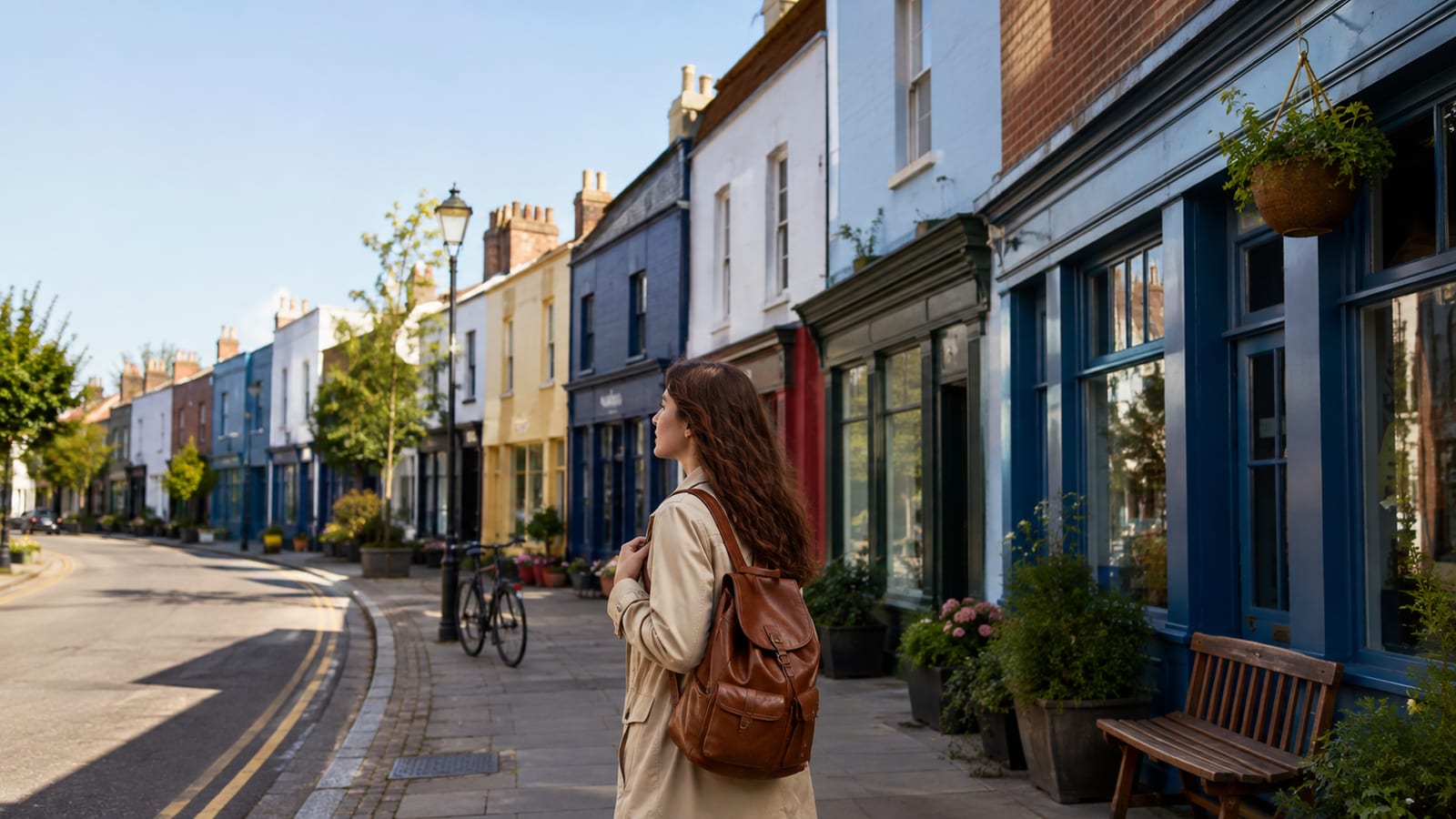
Old Québec shows the city’s history, but the neighborhoods show how people live there now. You don’t need to visit all of them. Choose one or two and give each a proper walk.
Saint-Jean-Baptiste
Saint-Jean-Baptiste is the easiest first step beyond the historic core. Walk its commercial streets for independent shops, cafés, bars, and restaurants, then follow a quieter side street when the main route gets busy.
The neighborhood feels local without being difficult to reach. It’s a good place for a late lunch or evening meal after Old Québec starts to feel repetitive.
Saint-Roch
Saint-Roch has a more modern and rough-edged character. It’s a better fit if you want bars, cafés, small shops, and restaurants without the old-city presentation.
Some blocks feel livelier than others, especially at night. I’d go with a specific restaurant or café in mind, then wander nearby rather than assuming every street will deliver a discovery.
Montcalm
Montcalm works well with the museums and Battlefields Park. It has a calmer residential feel, along with restaurants, shops, and cafés that make a good break from the stone streets.
Use it on the day you visit the Musée national des beaux-arts du Québec. That keeps the day centered in one part of town instead of sending you back and forth.
Limoilou
Limoilou is farther from the postcard center and gives you a more ordinary city walk. Look for neighborhood dining, local shops, and streets where the buildings aren’t arranged for sightseeing.
Skip it if you only have one day. Visit when you have a third day and want to see how Québec City feels away from its historic stage.
What can you do in Québec City in a weekend?
Two days are enough for a good first visit if you stop trying to see everything. Keep the first day in Old Québec and use the second for culture, food, and one neighborhood.
Day one: Old Québec on foot
Start with a walking route through Place Royale and Petit-Champlain. Continue uphill, using the Old Québec Funicular if the climb doesn’t suit you, then walk toward Château Frontenac.
After that, follow the fortifications and spend time on Dufferin Terrace. Stop for lunch away from the busiest square, then return to the streets you liked most. The second pass is often better because you’re no longer trying to orient yourself.
In the evening, eat in Saint-Jean-Baptiste or Saint-Roch. You’ll get a better meal and a clearer sense of the city by leaving the historic core for dinner.
Day two: culture and a local neighborhood
Start at the Musée de la civilisation if the weather is poor or you want a strong introduction to Québec history. Otherwise, walk through Battlefields Park and visit the Musée national des beaux-arts du Québec.
Have lunch in Montcalm or Saint-Jean-Baptiste. Then choose one focused activity, such as a church visit, a market walk, or a longer neighborhood wander.
Keep the evening open for a restaurant reservation, a bar, or a final walk along the upper streets. Don’t add Montmorency Falls to this day unless you’re willing to cut the city itself short.
How should you spend three days in Québec City?
Three days gives Québec City room to breathe. The third day should add one nearby attraction or seasonal plan, not another pile of sights.
| Day | Main plan | Why it works |
|---|---|---|
| One | Old Québec, Place Royale, Petit-Champlain, Château Frontenac, and Dufferin Terrace | You learn the city’s shape first |
| Two | Museums, Battlefields Park, food, and Saint-Jean-Baptiste or Saint-Roch | You see culture and daily life beyond the postcard |
| Three | Montmorency Falls or a seasonal outing | You add nature without rushing the historic core |
Montmorency Falls is the right nearby choice for many visitors. It’s an easy-to-reach natural attraction outside the center, and the change from stone streets to open water gives the trip some balance.
Check transport and current access before you go. Weather can affect paths, viewpoints, and the amount of time you’ll want to stay outside. If conditions are poor, use the day for a museum, market, long lunch, and a neighborhood you skipped earlier.
If you’re planning several city breaks, my three-day Paris itinerary follows the same rule: give each day one clear area or purpose. Québec City needs that discipline even more because the hills make backtracking tiring.
What are the best summer activities in Québec City?
Summer is the easiest season for long walks, but it’s also when the busiest sights fill up fastest. Start major outdoor stops early, then use the long daylight for terraces, parks, and riverfront time.
Walk the fortifications before the streets heat up. Continue to Dufferin Terrace, then find a café or shaded park instead of forcing another landmark into the morning. The best summer days have pauses built into them.
Spend time in Battlefields Park and around the Plains of Abraham. The open space feels different from Old Québec’s tight streets, and it gives children room to move if you’re traveling as a family. You don’t need to turn every outing into a paid attraction.
Use terraces for dinner or a late drink, but reserve ahead for popular places. Festivals can make the city lively and fun, but they also fill hotels, restaurants, and sidewalks. Check the event calendar before you assume a quiet weekend is waiting.
A riverfront walk works well near the end of the day, when the light changes across the water. Montmorency Falls also earns its place in a summer plan. For another outing, choose a nearby park or island only if you’re staying long enough to avoid rushing back through the city.
Summer’s main downside is the crowd. Go early, eat later, and don’t judge the whole city by the busiest hour around Château Frontenac.
What are the best winter activities in Québec City?
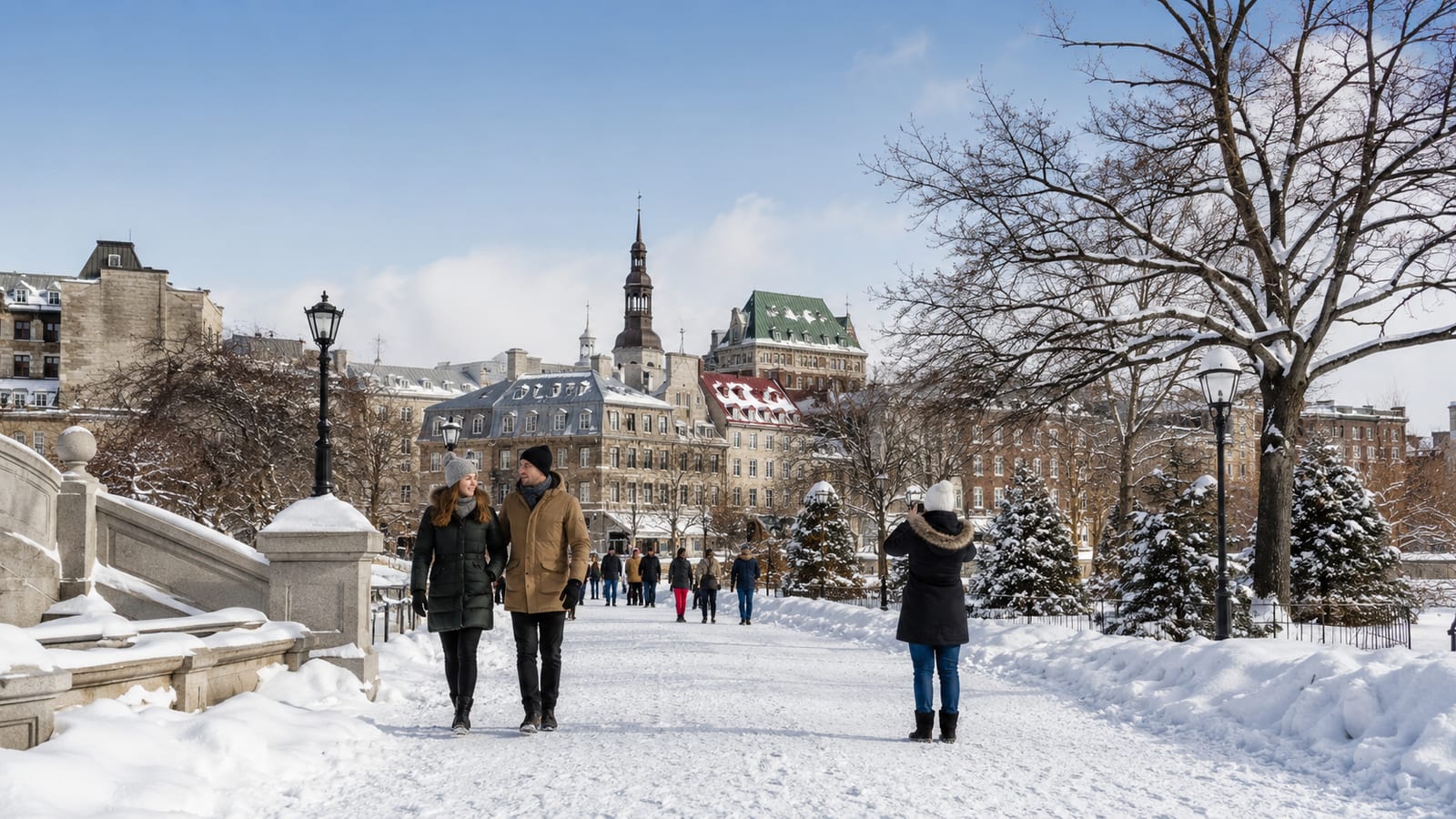
Winter Québec City is worth choosing if you’re prepared to be outside. Snowy streets, skating, winter festivals, and warm cafés create a distinct version of the city, but cold-weather sightseeing is not improved by pretending you’re wearing regular city shoes.
Start with a short outdoor walk through Old Québec. See the gates, the walls, Petit-Champlain, and Château Frontenac while the snow is fresh. Then go inside for a museum, church, café, or long meal before the weather turns the route into a test of patience.
Skating is a good winter choice because it gives you a clear activity rather than another cold walk with no purpose. Winter festivals can also make the season feel social instead of merely frozen. Check current dates and access before you plan the day around either one.
Wear warm layers, gloves, and waterproof footwear with traction. Keep a second indoor option ready for every outdoor plan. When the forecast changes, that isn’t failure. It’s the point where you move to the museum and save your fingers.
The Musée de la civilisation is especially useful in winter because it gives you a substantial indoor stop without abandoning the city’s history. Follow it with a bakery or neighborhood restaurant rather than trying to stay outside until dinner.
Winter light can be excellent around the walls and river overlooks. Still, wind changes the calculation quickly. Take the view, then go somewhere warm.
What mistakes should you avoid in Québec City?
The most common mistake is treating Old Québec like a driving destination. Parking, narrow streets, hills, and pedestrian areas make a car more trouble than help for the historic core. Leave the car behind while you explore the city, then use transport for an outing such as Montmorency Falls.
Another mistake is underestimating the terrain. A route that looks short on a map may include stairs, steep streets, or an uphill return. Plan your day around neighborhoods, and don’t book a late dinner across town after a full day on foot.
Don’t spend every meal in the most visible square. Those restaurants rely on passing visitors, and the setting can do too much of the selling. Walk into Saint-Jean-Baptiste or Saint-Roch and look for a place with local diners and a shorter menu.
Trying to cover every attraction also weakens the trip. You don’t need several day trips on a short stay. Montmorency Falls is enough for many three-day visits, especially when the alternative is losing half a day to transfers.
Weather deserves a plan, not panic. Bring an indoor backup, check access before leaving, and accept that rain or snow may change the order of your day.
Finally, don’t treat French as a barrier. Learn a few greetings, try them first, and continue in English if needed. People can tell the difference between a visitor making an effort and a visitor demanding that the city perform for them.
FAQ
Is Québec City good for a solo trip?
Yes. Old Québec is easy to explore alone, and cafés, museums, walking routes, and neighborhood restaurants give you natural places to spend time without a group. Book your first lodging nights, learn the route back, and leave space for slow wandering.
How many days do you need in Québec City?
Two days cover the main historic sights and one cultural or food-focused plan. Three days are better because you can add Montmorency Falls or a seasonal outing without cutting Old Québec short.
Can you visit Québec City without speaking French?
Yes, especially in the main visitor areas. Still, learn a few French greetings and use them before switching languages. That small effort makes everyday interactions easier and more respectful.
Is Québec City suitable for children?
It can be, if you balance historic walks with open spaces and clear activities. Battlefields Park, the river views, museums, and Montmorency Falls give children breaks from narrow streets and church interiors.
Should you stay inside Old Québec?
Stay there if you want to step outside into the historic streets each morning. Choose Saint-Jean-Baptiste, Saint-Roch, or Montcalm if you prefer more local dining and a less curated setting. The right choice depends on whether convenience or neighborhood life matters more to you.