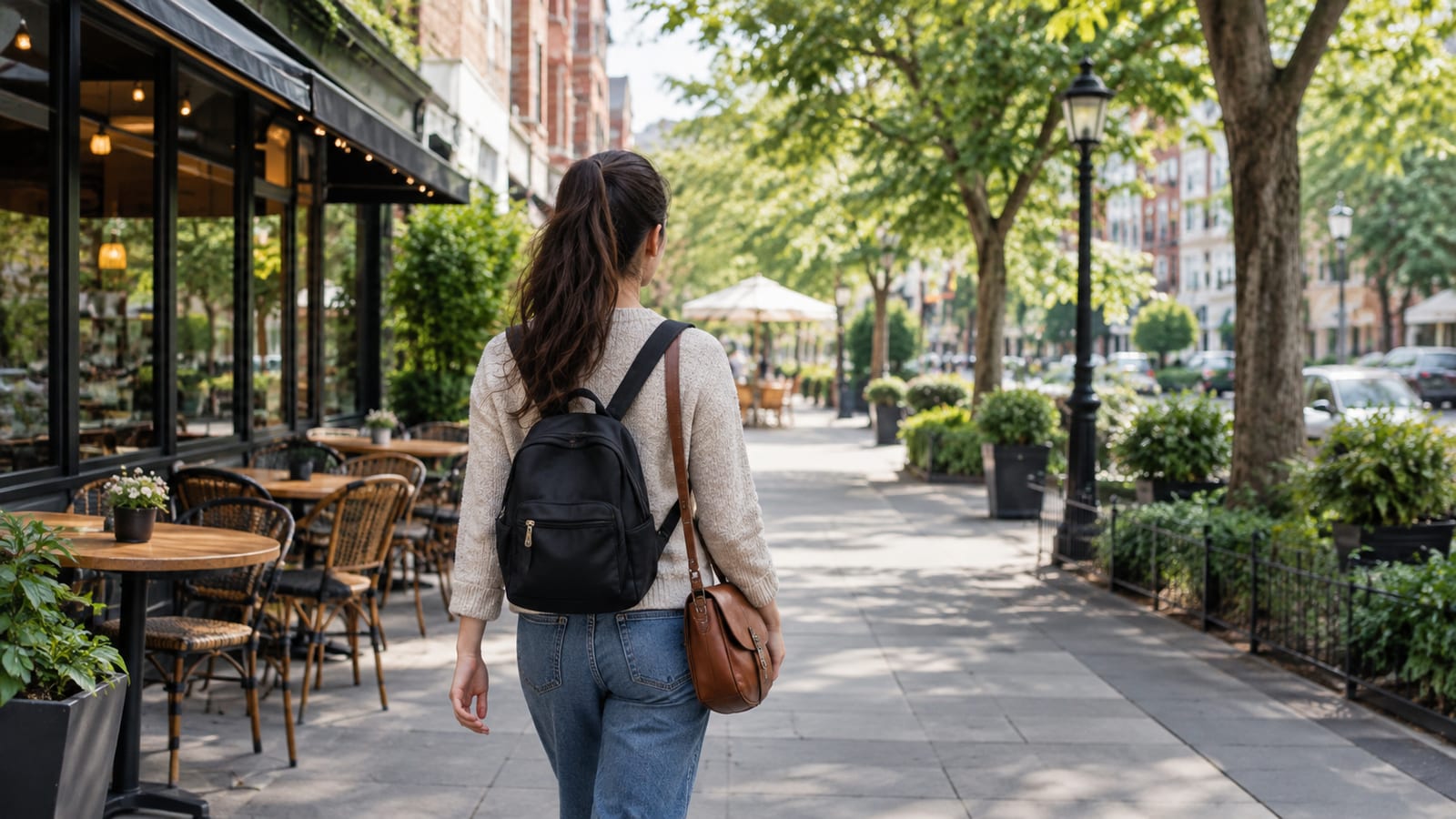
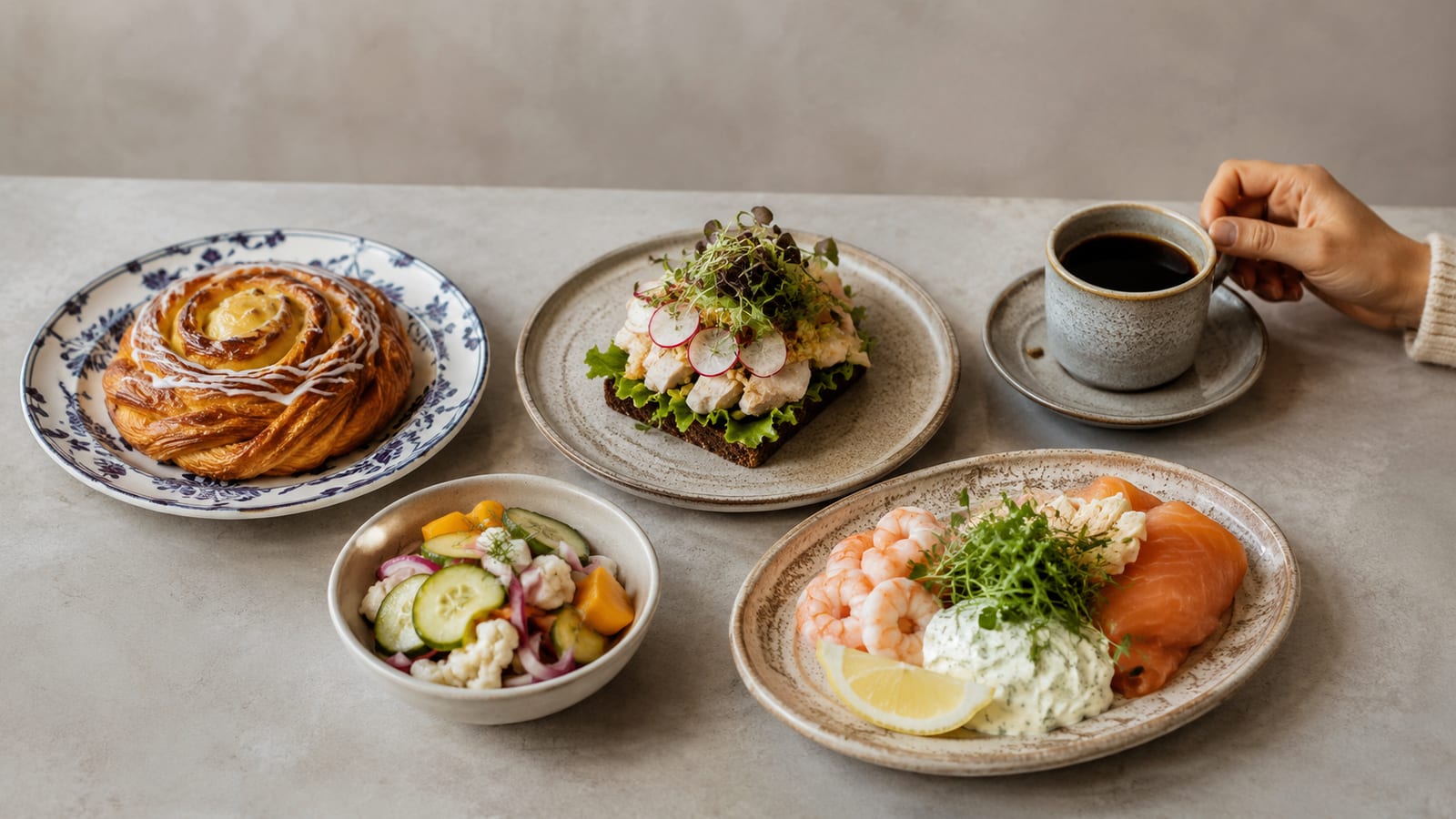
Copenhagen eats better at eight in the morning than at nine at night. Start with a cardamom bun from Juno the Bakery, book one traditional smørrebrød lunch at Restaurant Schønnemann, graze Torvehallerne when you're between neighbourhoods, and keep dinners loose: a wine bar, tacos at Hija de Sanchez, or sourdough pizza at Bæst. The long tasting menu is optional, and only worth it if the cooking itself genuinely excites you.
Last updated: 2026-08-01
How should you approach copenhagen food without overplanning every meal?
Give yourself one anchor booking a day and leave the other two meals open. That single rule fixes most of what goes wrong with eating out here. You get the meal you came for, and you still have room to follow a smell down a side street.
Here is the plan I'd run on a three or four day trip:
- Book your one classic Danish lunch first, ideally on a weekday. It's the hardest thing to get on a whim and the easiest to enjoy.
- Pick one bakery per morning and walk to it. Breakfast is the cheapest good meal in the city.
- Leave dinners open on at least two nights. Wine bars and pizza places take walk-ins if you show up early.
- Decide on the tasting menu now or drop it. Half-deciding means you spend the trip refreshing a booking page.
- Keep one indoor lunch spot in your notes for the day it rains sideways, because it will.
Because Copenhagen is flat and small, most of this happens on foot. Two neighbourhoods a day is plenty. Chase a headline restaurant in Vesterbro at noon and another in Østerbro at seven, and you've spent your afternoon on a bike seat instead of at a table.
My picks at a glance
| Place | Best for | My call |
|---|---|---|
| Juno the Bakery | Cardamom buns, early | Worth the queue if you're there before it builds |
| Restaurant Schønnemann | Traditional smørrebrød lunch | Book it, and go hungry |
| Prolog Coffee Bar | Carefully brewed coffee | Go for the coffee, not the photo |
| Torvehallerne | Easy no-booking lunch | Reliable, rarely exciting |
| Hija de Sanchez | Tacos | The break you'll want by day three |
| Bæst | Sourdough pizza and charcuterie | Best relaxed dinner on this list |
| Barr | Nordic comfort food, sit-down | Special without the marathon menu |
What to eat in Copenhagen first, and in what order
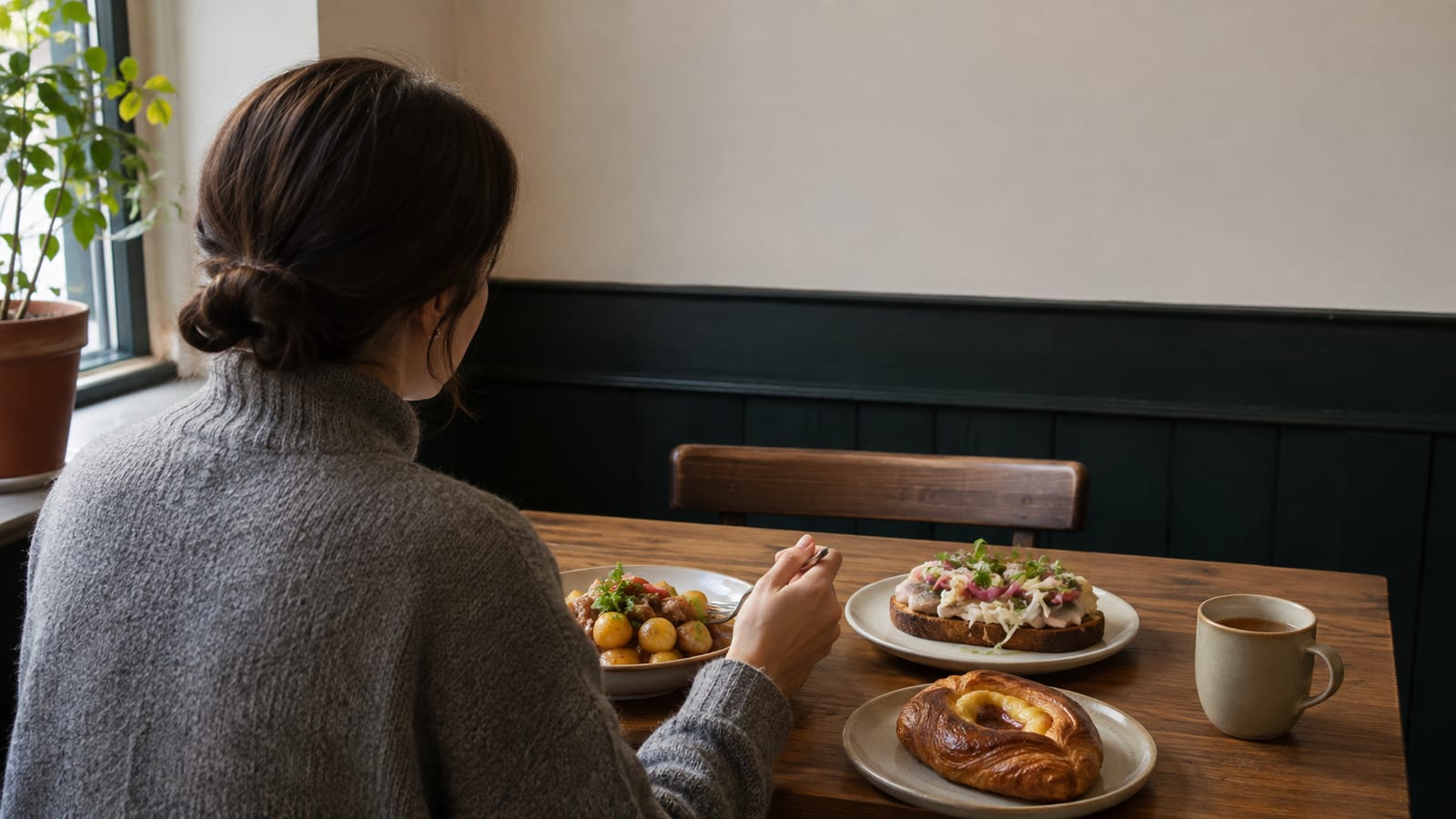
Begin with a cardamom bun before you think about restaurants. Danish baking is the thing this city does better than almost anywhere, and it costs less than a museum ticket. A good bun is layered, chewy and a bit sticky at the base, never fluffy and sweet like a supermarket pastry.
Then work through smørrebrød, seasonal Danish cooking, and something from the water. Herring, plaice, cold-smoked salmon and shrimp all show up on menus in ways that make sense here.
Finish with a proper cinnamon snail or a kanelstang, ideally in the afternoon when the trays get refilled. Skip the frosted, folded thing sold as a "Danish" abroad. That version doesn't really exist here, and the locals find it funny that we named it after them.
Danish lunch is the meal actually worth booking
Smørrebrød is lunch food, so eat it at lunch. Ordering it at dinner in a tourist-facing room is how people end up paying more for a worse version. This is open rye bread with a serious topping on it, and the good places only open in the middle of the day.
Restaurant Schønnemann is the one I'd book for the full traditional version. It's old, cramped in a good way, and unapologetic about doing things the way it always has. Order two or three pieces rather than five, and put herring first, then fish or meat, then cheese.
Drink snaps if you're curious, beer if you're not. One glass of snaps is a story; three is a lost afternoon. If you like small, layered plates ordered in sequence, you'll recognise the rhythm from pintxo bars in Bilbao, just colder and quieter.
The downside is honest: this style of lunch isn't cheap, and portions are small by design. Budget it as your one sit-down splurge of the day and eat lightly beforehand.
Where to go for breakfast, coffee and pastries
Build your mornings around one bakery and one coffee bar, then walk between them. Juno the Bakery in Østerbro, at Århusgade 48, is the cardamom bun everyone talks about, and for once the reputation holds up. It opens at 7.30 Tuesday through Saturday and runs until 18.00, with a shorter Sunday until 16.00. Mondays it stays shut.
Go in the first hour. The queue grows through the morning and the best pastries sell out early, so arriving at ten and complaining about the wait is a self-inflicted problem.
For coffee, Prolog Coffee Bar is my reliable stop. The brewing is careful, the staff will tell you what's in the cup, and nobody's designing the room for photographs. If you plan your days around good filter coffee, you'll find the same instincts at work in the cafés of Tallinn.
One warning about brunch. Copenhagen does an enormous, expensive weekend spread that's mostly fine and rarely memorable. A bun and a flat white costs a fraction of it and tastes better.
How do you find the places locals would actually go back to?
Look at who's eating at lunch on a weekday. Rooms full of people from nearby offices are a stronger signal than any list, including this one. Tourists eat late and linger; locals eat fast and leave.
Short menus are the other cue. A handwritten list of a few dishes means someone is cooking to what arrived that week. A laminated menu in four languages means someone is cooking to foot traffic.
Neighbourhoods matter more than addresses. Walk into Nørrebro along Jægersborggade, or into Vesterbro behind the meatpacking district, and the density of small kitchens goes up while prices come down. Anything with a canal view and a sandwich board out front is priced for the view.
Wine bars are the quiet win. Many pour natural wine and put out a handful of small plates, which makes a fine light dinner with no booking and no ceremony.
Eating well without spending like it's a special occasion
Bakeries, food halls and lunch specials will carry you comfortably. Torvehallerne, at Frederiksborggade 21 in København K, is the practical middle: rows of stalls serving smørrebrød, fish or a good sandwich with no reservation. It opens 10 to 19 Monday through Friday, and 10 to 18 at the weekend.
I'd call Torvehallerne useful rather than thrilling. It's a dependable lunch when you're between places, and it's genuinely good for buying cheese, bread and fruit to eat by the water.
Reffen is the street food option out on Refshaleøen, and it works best as a group meal when everyone wants something different. It's seasonal: the 2025 season opened on 20 March, so check the current dates before you build an evening around it. Treat it as one fun night rather than your answer to where to eat in Copenhagen.
Other ways the money stretches: lunch menus at restaurants that get expensive after dark, takeaway from a bakery counter, and supermarket rye bread with proper butter for a park breakfast. Tap water is free and good, so ask for it.
When reservations are tight, here's what I do
Take the early slot nobody wants. The first sitting of the evening is the one that books last, and eating early in a northern city in summer costs you nothing when the light holds so late.
- Sit at the bar. Many kitchens keep counter seats for walk-ins and won't advertise it.
- Check the booking page the same morning. Cancellations land hours ahead, not weeks.
- Switch to lunch. A place with a long dinner wait often has quiet weekday tables.
- Call. Danish restaurants answer the phone, and online systems don't always show everything.
- Have a backup within a few minutes' walk, ideally a wine bar or pizza place.
Turning up hungry with no plan at eight on a Saturday is the one reliable way to eat badly here. However, two minutes of thinking at four in the afternoon prevents it.
Good food in Copenhagen beyond the Danish classics
By day three you'll want something that isn't bread and butter. Hija de Sanchez does the tacos I'd point you to, with masa treated as seriously as anything in a Nordic kitchen. It's a real break from pickled fish, and the queue moves.
Bæst is my pick for a relaxed, high-quality dinner. Sourdough pizza, house-made charcuterie, Danish dairy and organic produce, and none of the hush of a fine dining room. Book if you can, but go early if you can't.
Copenhagen also does vegetable-led cooking well, and not as an afterthought. Plenty of kitchens build a menu around roots, brassicas and grains, then use meat as seasoning. As a result, if your travel eating tends to run heavy, this city treats you gently.
For a comparison on how a food city handles casual eating versus formal, the Lisbon food guide covers a place that solved the same problem very differently.
Is a New Nordic tasting menu worth your money?
Only if the cooking itself is what excites you, not the reservation. The New Nordic Kitchen Manifesto, published by the Nordic Council of Ministers, reshaped how this whole region cooks, and its influence now sits in ordinary bistros and bakeries as much as in the famous rooms.
So the question isn't whether the food is good. It's what the evening costs you in time. At Geranium, for example, the meal takes a minimum of three hours with wine or beverage pairings, which is your whole night on a trip where you also wanted to walk around.
Barr is the compromise I'd recommend. Polished Nordic comfort cooking, larger plates, no marathon, and you leave able to do something afterwards. It feels like an occasion without asking you to organise the trip around it.
If you do want the full experience, book as far ahead as you can and treat it as an evening's entertainment. Paying top prices for formality you don't enjoy is a bad trade. Booking it for the story is worse.
What I'd skip
Canal-side restaurants with picture menus and a person waving you in. The location is doing all the work, the kitchen is doing none of it, and you can eat better five minutes inland for less.
I'd also skip the generic hotel-style brunch, the "Danish" pastry aimed at visitors, and any place advertising a Nordic tasting menu at a suspiciously reasonable price. Real New Nordic cooking is labour-intensive and priced accordingly.
One more: treating a food hall as the whole story. It's a convenient lunch, not the city's cooking. The best meals here happen in small rooms with short menus, run by people who'll be there again tomorrow. Denmark's official tourism organisation, VisitCopenhagen, is a reasonable place to check current opening hours before you set off, since small kitchens close for holidays without much warning.
FAQ
Do I need to tip in Copenhagen restaurants?
No. Service is included in the listed price and staff are paid properly. Rounding up a little after a good meal is fine, but nobody expects a percentage and nobody will chase you for it.
Can I get by without cash?
Yes, and you should assume you'll need a card. Denmark runs almost entirely on cards and phone payments, and plenty of small places don't take notes at all. Bringing a pile of kroner from home is unnecessary.
What about the hot dog stands?
The pølsevogn is real, cheap and mostly good. A ristet hotdog with crispy onions and remoulade is the classic order, and it's the most useful thing in the city late at night. Don't expect a highlight, but it beats a sad kebab at midnight.
Is tap water free?
It is, and it's excellent. Ask for postevand and you'll get a jug without a charge in almost every restaurant. Bottled water is one of the easier ways to waste money here.
When is the best time of year to eat here?
Late spring through early autumn gives you the widest choice, outdoor seating and the seasonal produce Danish kitchens build menus around. Winter is quieter and colder. Still, it's the best season for long indoor lunches, and tables are far easier to get.