To plan a South America backpacking route, pick one spine and travel it in one direction. That is most of the planning done. For a first Andean trip, run Colombia, Ecuador, Peru and Bolivia, then drop into northern Chile or northwest Argentina. Want Patagonia and big cities instead? Take Chile, Argentina and Uruguay. Give Brazil its own coastal route rather than wedging it between two others. Then plan around the season in the toughest place, hand every land border a full day, and leave empty days between the stops you have already paid for.
How do you plan a South America backpacking route?
Start with your time, the season, your money, and how often you're willing to repack a bag. Country collecting is the mistake I see most. Collect eight flags and you'll remember bus stations and hostel lockers, while Cusco, Valparaíso and Salento blur into one tired afternoon.
Do these eight things before you book anything.
- Pick one end of the continent. Colombia, Brazil, Chile or Argentina. Don't start from a scattered list of cheap flights.
- Choose a spine. The Andes, the Southern Cone, or the Brazilian coast. One of them, not a mix.
- Check the weather where it matters most. Patagonia, the high Andes, the Amazon. Cities bend around those; those don't bend around cities.
- Mark every border. A thin line on the map can be a full bus day, a ferry, or a flight you haven't bought.
- Give the big stops room. If you can't stay long enough to unpack and wander, cut the stop.
- Pull expensive detours out separately. The Galápagos, a jungle lodge, Patagonia in high season. Each one bends the whole budget.
- Keep arrival days empty. Borders run late, mountain roads close, and night buses rarely give you real sleep.
- Book only the fixed points. First bed, hard-to-get treks, the one flight you truly need. Leave ordinary city beds loose.
Here is what I do. I write the route as a straight list, then circle every place that makes me double back. Most circles get cut. The map looks less impressive after that, and the trip gets better.
The route shapes that actually work
Take the Andes for a first trip. Spanish carries you across the borders, the overland links are well worn, and the landscape changes without a flight every week. Brazil is the exception. It deserves its own route instead of a squeezed week between Peru and Argentina.
| Route | Main stops | Best for | The catch |
|---|---|---|---|
| Northern Andes | Colombia, Ecuador, Peru | Cities, hiking, ruins, easy onward travel | Long mountain bus rides pile up |
| Full Andean spine | Colombia, Ecuador, Peru, Bolivia, northern Chile, northwest Argentina | A long overland trip with real variety | Altitude and distance punish a rushed plan |
| Southern Cone | Central Chile, Patagonia, Argentina, Uruguay | Hiking, wine country, cities, cool air | Patagonia lifts transport and bed costs |
| Brazilian coast | Rio de Janeiro, Paraty, São Paulo, southern Brazil | Beaches, food, nightlife, Portuguese practice | Brazil's scale punishes casual detours |
| The Guianas | Guyana, Suriname, French Guiana, northern Brazil | Wildlife, river travel, almost no hostel trail | Thin transport, and prices that aren't backpacker prices |
If your map mixes three of these, you haven't made the hard cuts yet. Choose the line you can travel on foot, by bus and by ferry. The other side of the continent will still be there next time.
Country by country: where each one fits
Colombia, Ecuador and Venezuela
Colombia is the cleanest place to start in the north. Begin in Bogotá for the museums, the cool air and the onward buses. Then take Medellín or Salento before you head south. Keeping both usually buys you another long night on a bus.
Coming down from Central America? Three days in Panama City makes a good pause before you fly on. Don't plan Panama into northern Colombia as an overland hop, because that road doesn't exist.
The Caribbean coast is the tempting detour. Cartagena and Santa Marta pull you hard in the wrong direction if Ecuador is next, so treat that coast as a separate branch. Want both the coast and the Andes? Then give Colombia real weeks, not a chain of night buses.
Ecuador looks small enough to squeeze into ten days. Skip that habit. Quito, Cotopaxi, Baños and Cuenca already sit in a tidy north-to-south line, and each one moves you closer to Peru.
The Galápagos needs its own money and its own bookings. Decide early, then cut something else to pay for it. Spare cash and spare days never turn up halfway through a trip.
Venezuela asks for more certainty than a loose backpacking route can give. Border rules, transport, cash access and official advice all shift. I'd leave it off a first trip unless you have current local information and a clear plan for getting in and out.
Peru and Bolivia
Peru rewards anyone willing to slow down. Lima, Arequipa, Cusco and the Sacred Valley can fill a whole trip on their own. Huaraz gives you serious mountain country, but it sits north of Lima, so treat it as its own branch.
Machu Picchu gets the photos. Cusco's altitude sets the schedule. Don't land and march onto a hard trek because a booking calendar told you to. Keep two unclaimed days first, and use them to walk, eat and see how your body behaves.
Bolivia is the joint that holds the Andean spine together. La Paz is high and crowded, so Sucre gives you a softer landing. Potosí carries hard history, and it deserves more than a bus-change stop.
Salar de Uyuni sits in Bolivia's Potosí Department and falls naturally into place before northern Chile. Hostel posters make the crossing look tidy. In practice the driver, the vehicle, the sleeping arrangements and the border handoff matter far more than the sales photo.
Ask who's driving, where you sleep, what food is included, and where immigration actually happens. Confirm where they drop you in Chile too. A vague answer before you pay becomes your problem out near the border.
Chile and Argentina
Chile looks easy because it's narrow. The distances kill that idea fast. Atacama, Santiago, Valparaíso and Patagonia sit a long way apart, so pick the section your route can reach.
Parque Nacional Torres del Paine lies in Chile's Magallanes and Chilean Antarctica Region, and it needs planning months out in the busy hiking season. The park is exposed and pricey, and one rough weather window flattens a schedule with no spare days in it.
If Patagonia is the point, build the whole trip around it. Don't drag hiking kit and Patagonia money through four countries for one rushed stop.
Argentina works in sections too. Salta and Jujuy link neatly with Bolivia and northern Chile. Mendoza fits an Andean line, while Buenos Aires and Patagonia belong to a longer southern plan.
Don't tack Buenos Aires onto the northwest just because the map has white space there. Check the real bus or flight first. Argentina turns tidy lines into full days in transit.
Uruguay and Paraguay
Uruguay is an easy breath after Buenos Aires. Colonia del Sacramento and Montevideo pair well, and the Atlantic coast suits a slower summer. Be ready for the prices, because it stings after Bolivia or northern Argentina.
Go for the quiet streets, the long lunches and the short travel days. Skip it if you only want one more stamp before doubling back.
Paraguay sits off the usual loop. That's a fine reason to go, but it doesn't make the buses better. Asunción, Encarnación and the Jesuit mission sites can bridge Argentina and southern Brazil.
Hostel networks and tourist transport are thinner, so find your next bus before you arrive, not after. Go because Paraguay itself interests you. It won't improve an Andean route that already works.
Brazil and the coast
Brazil needs a decision, not a sampler. Rio de Janeiro, Paraty, Ilha Grande and São Paulo will fill a coastal trip without the northeast, the Amazon or the south. Portuguese also resets your daily rhythm after months of Spanish, which is fun for about a week and then just work.
Pick one region first. If beach time is the draw, read up on the best beaches in Brazil before you build a route around the loudest names. Some need two awkward transfers, and a quieter stretch may sit right on your road.
The Amazon is a separate branch. Manaus is not a quick inland detour from Rio, and an organized jungle stay carries a real cost. Add it because you want the forest enough to rearrange everything else.
Guyana, Suriname and French Guiana
Guyana doesn't fit the cheap hostel-and-bus plan. Georgetown gives you an English-speaking base, but the waterfalls, savanna and rainforest all lie well beyond it. Reaching them usually means arranged transport, so price that before you put Guyana on the map.
Suriname starts in Paramaribo. Going inland from there tends to mean boats, small planes or organized trips. Dutch is the official language, though you'll hear plenty of others on the street.
Work out how you'll leave before you book the journey in. Hoping the hostel will sort your next leg is a weak plan anywhere transport is thin.
French Guiana is a French territory rather than an independent country. Cayenne and Kourou fit an overland northeast route. Border schedules and onward transport need checking, and the prices feel sharp after the neighbors.
This corner is worth it when rivers, wildlife and slow logistics are the reason you came. Leave it out of a first Peru-to-Chile trip. That detour is too big to pretend otherwise.
Plan around the place that can't bend
Choose your season for the least flexible place on the route. Patagonia, high Andean treks and remote jungle trips have narrow weather windows. Bogotá, Lima and Buenos Aires will take you almost any month.
In the high Andes, the dry season usually brings clearer trails and colder nights. In wetter months, cloud, mud and road closures eat mountain plans. So leave slack around any trek you care about.
Patagonia opens up in its warm season. That's also when the crowds arrive, prices climb and the wind gets genuinely rude. Shoulder weeks can be lovely, though services thin out and trail conditions turn quickly.
The Amazon has no single good month. Higher water opens up travel by boat, and lower water opens up trails. Heat, insects, smoke and river levels all vary by region, so ask the actual town or lodge you're heading for.
Brazil complicates it further, because north and south don't share a weather pattern. Plan the region, not the flag.
Build the budget country by country
One daily number for the whole continent is close to useless. Bolivia and much of Peru are forgiving. Patagonia, Uruguay, the Galápagos, jungle lodges and long Brazilian hops will chew through the same money in half the time.
Transport is the line people always underestimate. A night bus saves you a hostel bed, sure, but repeated long hauls cost real money and real energy. Flights get expensive fast when you're buying them to rescue an overfilled route.
Split the money into four pots:
- Daily food and beds
- Long-distance transport
- Treks, tours and park fees
- An emergency reserve you don't raid for drinks or upgrades
Cash works differently in each country. Some machines charge fees, some cap withdrawals, and some towns barely take cards. Carry a backup card somewhere separate and withdraw before remote stretches.
Don't build the budget around the cheapest bed on the booking screen. A central room with a kitchen saves you taxis and meals. The bargain out past the ring road carries a real cost by dinner time.
Give every land border a full day
The common Andean crossings are manageable, and they still aren't like changing city buses. Check that the crossing is open, whether your nationality needs anything in advance, and where your bus completes immigration.
Rumichaca connects Colombia and Ecuador. Farther south, people cross between Ecuador and Peru, then between Peru and Bolivia near Lake Titicaca or at other approved posts. Rules and operating hours change, so confirm the exact crossing before you leave the last city.
The Uyuni route into Chile is often bundled with a salt flats tour. Ask straight out whether the company takes you all the way to San Pedro de Atacama or leaves you swapping vehicles near the border.
Chile and Argentina share several Andean passes. Weather closes the high ones even when your departure city looks fine, so don't put a non-refundable flight the morning after a mountain border.
Argentina and Uruguay link up by ferry or bus. Brazil's land borders are useful, though the drive after immigration is often far longer than the map suggests.
Keep this lot where you can reach it without opening the big bag:
- Passport
- Entry record or digital confirmation
- Proof of onward travel, if it gets asked for
- Your accommodation address
- Some local cash
- An offline copy of your insurance details
Never let your passport ride in the luggage hold. Border staff often clear the bus while the bags stay underneath.
Visas, vaccines and insurance
Visa rules depend on your passport, your route and how long you stay. Don't take another backpacker's answer from a hostel kitchen. Check each country's own immigration or embassy page, then check again a week before you travel.
The IATA Travel Centre is useful for the passport, visa and health documents airlines check. The relevant embassy still has the final word.
Yellow fever rules can hang on where you've recently been, not only where you're going. Read the World Health Organization travel advice and talk to a travel health professional about your actual route. Do it early, because some vaccines and tablets need weeks of lead time.
Buy insurance that covers what you'll really do. Plenty of policies quietly exclude high-altitude trekking, remote evacuation, motorbikes and organized adventure sports. Read the exclusions rather than trusting the word "backpacking" on the front page.
Keep digital copies of your passport, policy, prescriptions and bookings. Store them somewhere you can reach without your phone.
Staying safe while you're on your own
Most solo travel trouble starts with a tired arrival, a dead phone or a bad transport choice. Make those moments boring. Arrive in daylight when you can, save the hostel address offline, and use the transport your accommodation recommends.
On buses, keep the small bag on your body. No passport, phone or wallet in the overhead rack. Use the locker the moment you check in, before you head out to grab a coffee.
Street sense beats looking tough. If a block empties out, turn around. If someone makes a loud scene next to your bag, grab the bag first and work out the story later.
Altitude gets the same calm treatment. Rest, drink water, and don't book a hard trek for the day after you reach a high city. If symptoms turn serious, go down and get help instead of trying to save the itinerary.
Traveling solo doesn't mean solving everything alone. Ask hostel staff which taxi app they use, which streets to avoid after dark, and whether the terminal is fine at night. Current local advice beats a confident forum post from years ago.
Pack for layers and rough pavement
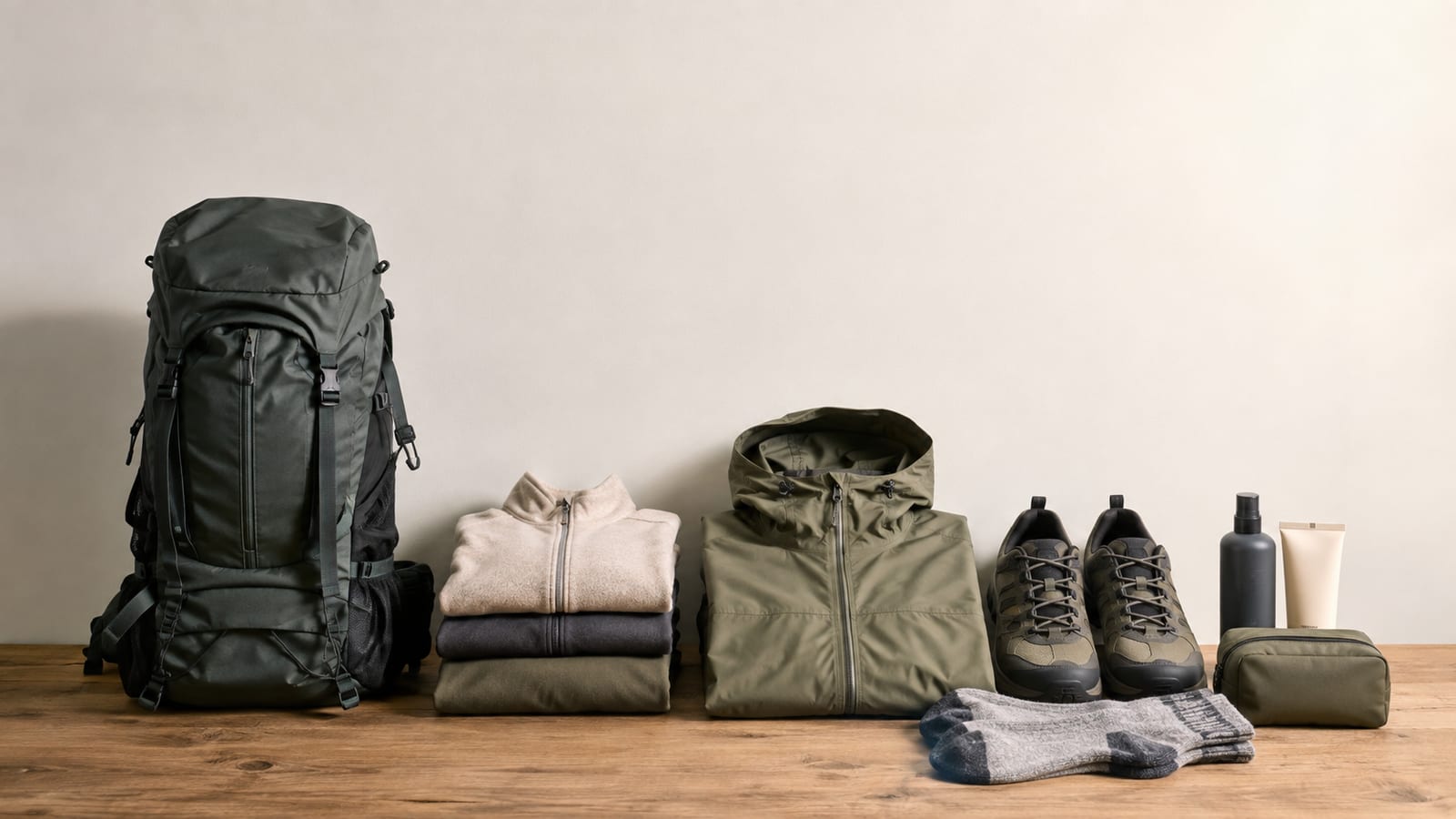
A huge pack taxes you every time you climb hostel stairs or turn sideways in a bus aisle. Pack for layers, laundry and uneven streets.
Bring clothes that dry overnight. Add a warm layer for altitude, light rain protection, shoes you can walk all day in, and sun cover. Patagonia asks for proper hiking kit, so rent it there rather than hauling camping gear across a continent for one possible trek.
Your day bag holds passport, water, warm layer and electronics. The main pack should be light enough to lift onto a bus roof without help.
Small things that earn their space:
- A combination padlock
- A reusable water bottle
- A plug adapter
- A power bank
- Basic medicine you already know how to use
- A cloth bag for food and laundry
- Offline maps
- Copies of your key documents
Leave the clever travel gadgets at home unless they fix a problem you already have. Packing cubes won't shrink an oversized wardrobe.
The mistakes that wreck a route
Treating every capital as compulsory is the first one. Brasília, Quito and Santiago each matter for their own reasons, and none of them earns a slot just by being a capital. Go because it fits the line, or because you actually want to be there.
Saving all your flexibility for the wrong things is the second. Famous treks, remote lodges and peak Patagonia need commitment. An ordinary hostel bed in a big city almost never does.
Copying a stranger's pace is the third. Some people love night buses and two-day stops. Others need a quiet morning, a proper lunch and time to wander well off the main square.
Traveling beyond the headline attractions only works if your schedule has gaps in it. Without them you'll see the terminal and the famous square, then leave.
Last one: don't use flights to hold together a route that never worked on land. One well-placed flight can skip a dull crossing. If you're booking flight after flight to rescue the plan, split the plan in two.
What should you book first?
Book the hardest fixed thing first, then build outward from it. That's usually a Patagonia trek, a Galápagos flight, a remote lodge, or the bed waiting for you after a long international flight.
Then check the transport on both sides of it. Make sure you can reach that booking without a fragile chain of borders, buses and same-day connections. Reserve your first couple of nights, and stop there.
Open a map today, pick one spine, and delete the farthest detour on it. That's the first real step.
Meta description: Pick one spine, cut the backtracking, and plan South America country by country.
FAQ
Can I backpack South America without Spanish?
You can, and basic Spanish still makes transport, food and small emergencies far smoother. Learn greetings, numbers, directions and the phrases for booking a bed or asking about a bus. Add a little Portuguese for Brazil rather than assuming Spanish will carry you.
Do I need to bring camping gear?
Usually not. Many popular hikes have refuges, rental gear or guided packages waiting at the trailhead. Rent the specialist stuff nearby unless camping is genuinely the point of your route.
Local SIM card or eSIM?
An embedded SIM, or eSIM, is the easy choice for arrival days, while a local SIM often suits a longer stay in one country. Coverage drops off outside cities either way. Download maps, tickets and addresses before long rides, and never count on a signal at a border or trailhead.
Can I drive a rental car across a border?
Sometimes, and only with the rental company's written permission plus the right vehicle papers. Cross-border fees, insurance limits and one-way charges usually make it poor value. For a multi-country route, buses plus a short local rental where you need one is simpler.
Is it awkward to stay somewhere that isn't a party hostel?
Not at all. Look for a communal kitchen, a walking tour or a decent shared table instead. A bar downstairs guarantees noise, not company, and a loud dorm is a steep price for meeting people.
Related on this blog
- 10 Best Beaches in Brazil You Should Visit
- Panama City in Three Days: Canal, Casco and Jungle