Give Panama City three full days and spend them on the Canal, the old quarter, the waterfront and one patch of rainforest. The best things to do in Panama City are watching a ship climb the Miraflores locks, walking Casco Viejo before the heat lands, riding or strolling the Amador Causeway toward sunset, and taking a real jungle trail inside the city limits at Metropolitan Natural Park. Save the islands for their own separate day. This is not a beach city, and people who treat it like one leave disappointed.
What are the absolute best things to do in Panama City?
Here is the honest ranking, priorities first.
- Miraflores Locks Visitor Centre. Non-negotiable for a first visit, but only if you go while a ship is transiting.
- Casco Viejo on foot. The old quarter is a UNESCO Cultural World Heritage Site, and it rewards slow walking more than any list of sights.
- Amador Causeway. Skyline on one side, Canal entrance on the other, sea breeze the whole way.
- Metropolitan Natural Park. Howler monkeys and toucans, reachable without leaving town.
- Biomuseo. Worth it if the natural history of this place interests you more than another room of colonial portraits.
- A day trip to the islands. Excellent, but it eats a whole day. Plan it as one.
Everything below that is pleasant filler: the fish market, Cinta Costera, Panamá Viejo, a rooftop bar with a view. Do them when they fit your route.
The trap is treating all six as equal and cramming them into two days. You will spend those days in traffic. Because the city sprawls between the Canal and the coast, distances look shorter on a map than they feel in a taxi at rush hour.
Timing your Canal visit is the whole trick
Book the Canal around a ship, not around your schedule. The locks sit quiet between transits. The difference between an empty chamber and a container ship easing in is the difference between a museum stop and something you will describe to people for years.
Check the transit schedule on the Panama Canal Authority site before you commit to a morning, then build the day around that window. Ships are not trains. Delays happen, so arrive with slack and a book.
The Miraflores Locks Visitor Centre puts you a few levels above a 33-metre-wide lock chamber, close enough to hear the mules on the rails. Go up to the top deck first and stake out a rail spot. The lower terraces fill fast when a ship is announced.
Seeing the locks and understanding the Canal are two different things. The waterway crosses the whole isthmus, and the chambers you are watching are the last stretch of a system that reshaped global shipping. Watch the film inside, then walk the exhibit floors. Skip them and you have watched a very large boat go through a very large bathtub.
Casco Viejo works twice a day, and not at noon
Walk Casco Viejo early, hide from midday, then come back at dusk. Morning gives you empty plazas, cool stone and good light on the balconies. Evening gives you the drinks and the sea breeze. The middle of the day gives you sunburn.
Start at Plaza Independencia, the natural centre of the quarter and home to the cathedral. From there, wander toward Plaza Simón de Bolívar and sit for a coffee at the edge rather than the middle. The tables one street back are quieter and cheaper.
Iglesia San Francisco de Asís is worth the detour, and so is the roofless shell of the Jesuit ruins if it is open. Plaza Herrera is the sleepier corner, and the crumbling American Hotel on its edge shows you the half-restored version of this neighbourhood that guidebook photos crop out. Restoration here is patchy and ongoing, which is part of the interest.
Finish at Plaza Francia on the point, where the sea wall walk opens onto the skyline across the bay. Late afternoon is the moment. However, tour groups arrive then too, so take it first thing if you want it to yourself.
One warning nobody puts in the brochure: the pretty streets end abruptly at the edges of the quarter. Keep your bearings and stick to the restored blocks after dark.
Which museums earn a slot in your day?
Pick one, maybe two. Three museums in a tropical city is a plan made by someone sitting in air conditioning at home.
- Biomuseo for the ecological story of how this strip of land changed the oceans and the animals on both sides. The Frank Gehry building sits at Calzada de Amador, 136, Panama City, so pair it with a causeway afternoon.
- Panama Canal Museum on Plaza Independencia if the Canal grabbed you at Miraflores and you want the politics, the labour and the disease behind it. It fits neatly into a Casco Viejo morning.
- Mola Museum if Guna textile art interests you and you have an hour. The collection is small. Treat it as a stop.
- MAC Panama for contemporary art, and only if that is already your thing.
Panamá Viejo, the ruined original city, is a field of stone with a climbable tower and long views. A genuine landmark, and also a hot, shadeless outing. Go early or skip it without guilt.
Where the views are, and when to go
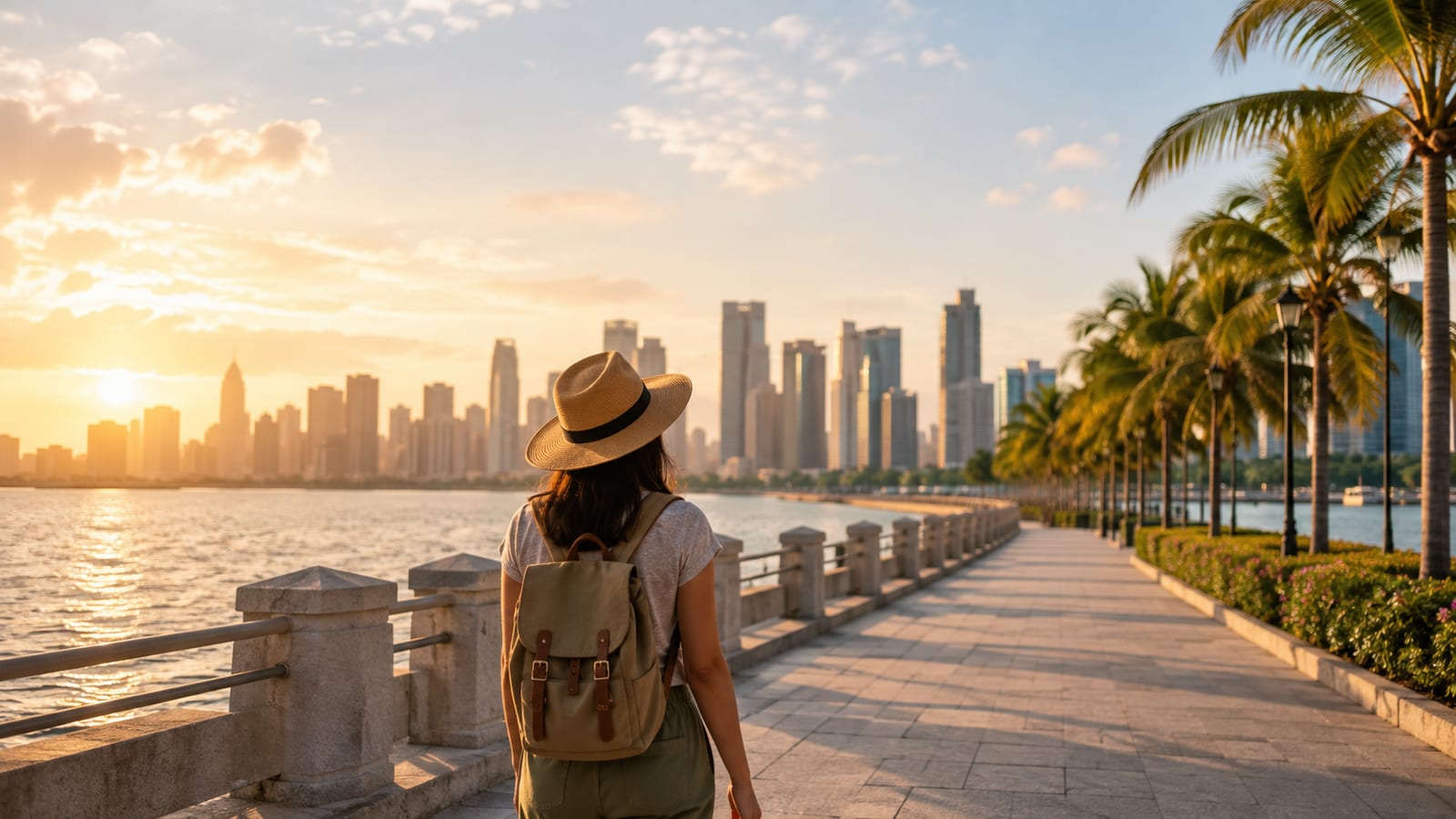
The Amador Causeway is the easiest good view in the city. It runs into the water on a spit built from Canal excavation rock, with the skyline behind you and ships queuing at the Pacific entrance ahead. Rent a bike or walk it, and time the return for sunset when the heat breaks.
Ancon Hill is the other one, and it costs you a climb of about 1.5 kilometres up a paved road. Go at first light. You get cooler air, better odds of seeing sloths and toucans in the trees, and the whole Canal entrance laid out below.
Cinta Costera, the waterfront park strip, is where the city actually exercises. Nobody would call it a sight. Still, it makes a pleasant hour on foot with the skyline on one side and the bay on the other, best in the evening when families come out.
For a shorter version of that view-hunting habit in a very different city, my notes on finding the good vantage points in San Juan use the same approach: go early, go on foot, ignore the marked overlook.
Tropical wildlife without leaving the city
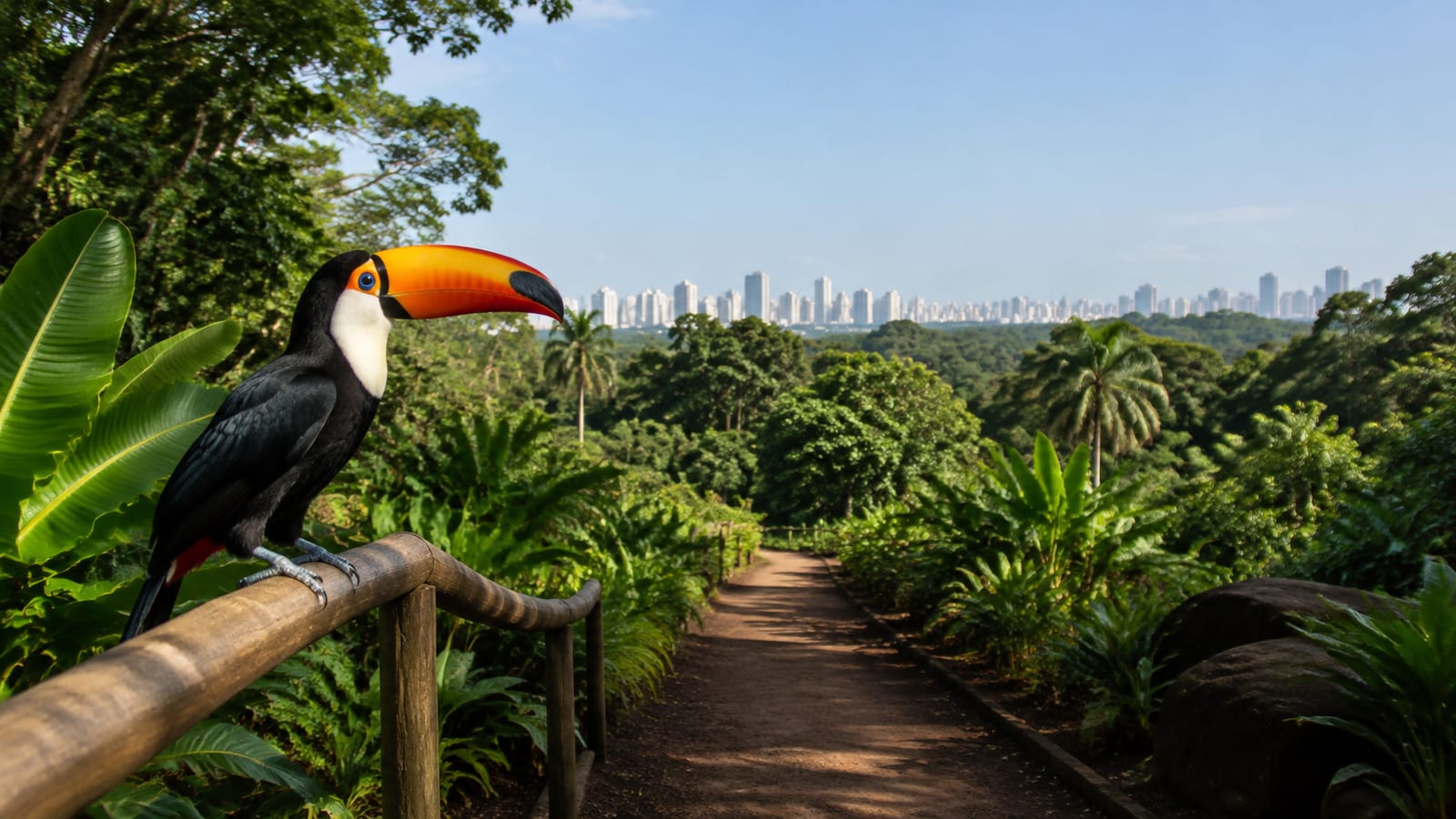
Metropolitan Natural Park is the smart choice when you have half a morning. It covers 232 hectares of dry tropical forest inside the city, with marked trails and a viewpoint over the skyline. Titi monkeys, sloths and a long list of birds live there, and the trails are short enough to get you back for lunch.
Go at opening. Wildlife moves early, the trails have real climbs, and by mid-morning the humidity turns a pleasant walk into a slog. Bring water and mosquito repellent, both of which cost more at the gate.
For the serious version, the Soberanía area north of the city is where the birders go. That is a half-day minimum with transport, so treat it as an alternative to a day trip. Meanwhile, if all you want is a monkey sighting and a photo of the forest against the towers, the city park delivers.
Manage expectations. Wildlife shows up when it feels like it. Some mornings you get howler monkeys overhead and a sloth just off the path. Other mornings you get leafcutter ants and a very good walk.
Eating, drinking and the tourist-trap tax
Walk one block off the plaza before you sit down. Casco Viejo prices track foot traffic almost perfectly, and the tables with the best square views charge for that view. The quieter street behind them serves the same food for noticeably less.
Eat at the Mercado de Mariscos at least once. Downstairs is fish. Upstairs and around the side, the stalls do ceviche in plastic cups and whole fried fish. Go at lunch, when everything is fresh and the crowd is local office workers as much as visitors.
Beyond that, look for a fonda, the small no-frills lunch counter serving a set plate of the day. That is where you find sancocho, the chicken and root-vegetable soup people actually eat at home. Panamanian coffee is excellent and increasingly well roasted in Casco Viejo cafés, and geisha beans from the highlands are worth trying at least once.
Nightlife concentrates in Casco Viejo rooftops. They are fun and they are expensive. As a result, my usual pattern is one rooftop drink for the skyline, then down to a street-level bar for the rest of the evening.
Which island day trip should you choose?
| Trip | Getting there | Water and beaches | Best for | My call |
|---|---|---|---|---|
| San Blas (Guna Yala) | Very early start, long 4×4 ride, then a boat | The clearest water of the three | Guna culture, postcard islands | Worth it only with a full free day |
| Taboga | Ferry from the causeway | Decent swimming, easy sand | A relaxed half-day escape | The sensible choice on a short trip |
| Isla Contadora | Flight or a long boat ride | Quiet, good beaches | A longer, calmer stay | Better as an overnight than a day trip |
San Blas is the standout and also the hardest. Transport starts in the dark, the road over the mountains is rough, and the boats bounce. Because of that, do not attempt it the day before a flight.
Taboga is the low-effort option. You board at the causeway and you are on an island with a beach, a church and a hill walk, back in time for dinner in the city. If your trip is short, take it.
Anyone comparing island logistics against other Caribbean bases will find the same trade-offs in my rundown of day trips worth taking from San Juan: the best water is always the furthest away.
Day counts that actually work
One day: Miraflores in the morning around a transit, then Casco Viejo from late afternoon into the evening. Nothing else. That is a full day, and it covers the two things people come for.
Two days: Add the Amador Causeway with the Biomuseo on day two, plus a sunset walk out on the point. Keep one museum.
Three days: This is the right length. Day one Canal and old quarter, day two causeway and museums, day three Metropolitan Natural Park at dawn followed by the fish market and Ancon Hill for the evening view.
Four days: Use the fourth for the islands. Book Taboga if you want it easy, San Blas if you want the memory and can handle the early start.
Sequence matters more than the count. Group anything near the Canal together, group anything in the old quarter together, and stop bouncing across the city at rush hour.
Mistakes that quietly ruin a Panama City trip
Heat is the main one. The forecast says warm, the humidity means you move at half speed, and an itinerary built for a European city will break by lunchtime. Plan mornings and evenings hard, and give the middle of the day to a museum, a long lunch or a nap.
Rain is the second. Panama runs a dry season and a green season, so check which one you are booking into before you plan outdoor days. In the wet months, afternoon downpours are heavy and short. Move outdoor plans early and keep an indoor option ready.
Cash is the third. Panama uses the US dollar alongside the balboa, and taxis, fondas and market stalls do not want large bills. Carry small ones. Meanwhile, agree the taxi fare before you get in, or use a ride app and skip the negotiation.
Safety here is ordinary city safety, done calmly. Stick to well-lit blocks in Casco Viejo at night, avoid the unrestored edges, and keep your phone in your pocket on the street. Ride the short distances after dark rather than walking them.
The biggest mistake is volume. Two neighbourhoods a day is plenty in this climate.
Where to stay so sightseeing stays easy
Casco Viejo is the best base for a short trip. You walk out of your door into the good part, and the restaurants and bars are downstairs. The trade-offs are noise, cobblestones and higher rates. Light sleepers should ask for a room off the street.
Obarrio and El Cangrejo suit longer stays. El Cangrejo has the better independent restaurant scene and feels lived in, while Obarrio is the business district and delivers modern rooms at fairer prices. Both put you near the metro line, which matters more than any of the marketing does.
Punta Pacífica gives you glass towers, ocean views and a mall. Comfortable, slightly sterile, and you will be taking a taxi or the metro everywhere. Choose it for the view, not for the walking.
If you like a base you can leave on foot every morning, the same logic I applied to choosing where to land in Miami works here: pick the neighbourhood with the shortest walk to your first coffee.
FAQ
Is Panama City worth a long layover?
Yes, if the layover clears half a day and you can leave the airport. The airport sits east of the city, so budget generously for traffic in both directions. With that, a Miraflores visit or a Casco Viejo afternoon fits comfortably.
Do I need Spanish?
Not to survive, but it helps. Hotel and tour staff generally speak English, while taxi drivers and market vendors often do not. Learn greetings, numbers and how to ask the price, and you will get better service everywhere.
Can I drink the tap water?
Tap water in Panama City is generally treated and drinkable, and locals drink it. If your stomach is sensitive or you are heading out to the islands, filtered or bottled is the cautious call. Refill a bottle rather than buying new ones all day.
What should I wear in the heat?
Light, loose, quick-drying clothes and shoes you can walk cobblestones in. Bring a thin rain layer in the green season and something with sleeves for churches. Sandals fail on the old quarter's uneven stone, so save them for the island.
Is Panama City Beach in Florida the same place?
No. Panama City Beach is a separate destination in the United States, and searches for the two get tangled all the time. If you want white sand and beach bars, that is the Florida one, not the capital of Panama.