El Salvador is safe enough for most prepared travelers, and it’s worth the extra preparation. Use arranged airport rides, carry identification, and plan late arrivals before you land. San Salvador, established beach towns, and volcano routes are manageable with care. However, improved security doesn’t cancel ordinary crime, broad police powers, rough roads, or tropical weather.
Is El Salvador safe, and what should you know before you go?
Most prepared visitors travel through El Salvador without serious trouble. The country feels calmer than its old reputation suggests, especially around established beach towns, volcano routes, and central San Salvador districts.
However, the risk hasn’t vanished. Phone theft, bag snatching, card fraud, unsafe transport, and police detention still deserve your attention.
You don’t need to spend the trip looking over your shoulder. You do need to make sensible choices before the street gets empty, the bar closes, or your phone battery dies.
Choose accommodation with recent reviews. Arrange late arrivals before boarding your flight. Meanwhile, keep expensive jewelry at home and avoid walking alone through unfamiliar districts after dark.
Improved security makes El Salvador easier to visit. It doesn’t make carelessness clever.
2. What does the state of exception mean for your trip?
El Salvador has used emergency security measures known as the state of exception. These measures give police and military authorities wider powers to arrest and detain people suspected of gang connections.
The experience for most tourists is simple. You may see armed officers, roadside checks, and identity questions. Still, a misunderstanding can have serious consequences if you lack identification or cannot explain where you’re staying.
Foreign citizenship isn’t a free pass. Your embassy may help you find legal support or contact family. However, it cannot order local authorities to release you.
Before departure, check whether the measures remain in force and read your government’s current travel advice. Rules and enforcement can change faster than old blog posts.
Avoid gang signs, symbols, slogans, and jokes. Clothing or tattoos that resemble gang markings may draw attention even when they mean something harmless to you.
Also, stay away from demonstrations and political gatherings. A brief stop isn’t worth being mistaken for a participant.
3. Police, checkpoints, and detention
Carry your physical passport or another form of identification accepted by local authorities. Keep a paper copy and a secure digital copy elsewhere, but don’t assume a photocopy will satisfy an officer.
If police stop you, keep your hands visible and follow instructions. Answer basic questions clearly: your name, hotel, destination, and reason for being there.
Don’t argue on the roadside. Even if you believe the stop is unfair, that discussion belongs with a lawyer or embassy official later.
Photography is another easy mistake. Don’t photograph checkpoints, police, soldiers, prisons, government security sites, or officers making an arrest.
If you’re unsure, ask before taking the picture. A checkpoint isn’t the place to chase an interesting travel shot.
If officers detain you, stay calm and ask to contact your embassy or consulate. Don’t sign a document you cannot read without requesting an explanation or legal help.
Save your embassy’s contact details offline before the trip. A phone number trapped in your email account is no help when your phone has been taken for inspection.
4. Which areas and situations call for extra caution?
The wrong setting matters more than the country’s broad reputation. An isolated bus stop after dark is a worse plan than a busy café in San Benito during the afternoon.
Avoid wandering into unfamiliar residential districts just to see what is there. Some neighborhoods have no tourist services, and a wrong turn can attract attention from residents or police.
Crowded buses, markets, terminals, and festivals create a different problem. Keep your phone away, close your bag, and carry only the cash you expect to spend.
Be more careful in these situations:
- Empty beaches and beach roads after dark
- Bus terminals with luggage or an exposed phone
- Cash machines on quiet streets
- Nightlife districts near closing time
- Unmarked taxis waiting outside transport hubs
- Trails or volcano roads during poor weather
- Unfamiliar neighborhoods without a clear reason to visit
Nightlife needs a simple plan. Watch your drink, don’t accept drugs, and leave with the people you arrived with.
Meanwhile, save the address of your accommodation in Spanish. If your ride falls through, you can show the address without relying on a signal or a tired explanation.
5. Arriving in San Salvador
Your first arrival is easier if you book the ride before you land. El Salvador’s main international airport sits well outside central San Salvador. This isn’t the moment to improvise with buses and loose directions.
Use a prearranged hotel transfer, a known driver, or a ride-hailing app matched to the correct plate. Don’t follow someone through the arrivals hall because they say they are “official.”
San Benito and Escalón are common bases for visitors because they have hotels, restaurants, and easy access to rides. However, no neighborhood removes the need for ordinary city caution.
Carry some US-dollar cash in small notes. Cards work in many formal businesses, but small shops, food stands, and drivers may prefer cash.
Use a cash machine inside the airport, hotel, bank, or shopping center. A machine alone on a quiet pavement is easy to skip.
For mobile data, an electronic SIM card, or eSIM, is often the cleanest option. An eSIM is a digital phone plan built into your device. Otherwise, buy a local SIM card from a proper carrier counter and expect to show identification.
Here is what I do for any late arrival: book the first night, save the hotel pin offline, and arrange the ride before takeoff. The next morning is soon enough to work out the rest.
If this is your first large Latin American capital, the arrival habits in my Mexico City travel guide carry over well. Keep your arrival day small, learn your block, and grab a coffee before trying to cross the whole city.
6. Entry, visa, and exit requirements
Entry rules depend on your passport, route, and length of stay. Check them with the General Directorate of Migration and Foreigners and your airline before paying for a non-refundable ticket.
Your passport needs enough remaining validity for the rule applied to your nationality. Don’t assume a general rule from another Central American country will cover El Salvador.
You may also need proof that you plan to leave, an accommodation address, and evidence that you can support yourself. Keep these documents downloaded rather than buried in a cloud account.
If you’re planning an overland loop through neighboring countries, check how each border affects your permitted stay. Don’t assume crossing into another country automatically gives you more time.
At land borders, check that officials process your entry or exit correctly. Before leaving the counter, look at any stamp or digital record while the officer is still there.
Rules can differ for dual nationals, residents, children, and travelers arriving from countries with certain health risks. Confirm those details before booking, not at the airline desk.
7. How should you get around El Salvador safely?
Private transfers and ride-hailing apps are the easiest choices for a first trip. Rental cars give you more freedom, but they also bring rough roads, poor lighting, steep routes, and parking questions.
Public buses are cheap and useful. However, they can be crowded, slow, hard to read, and awkward with luggage.
| Transport | Best for | Main downside | Sensible choice |
|---|---|---|---|
| Prearranged driver | Airport arrivals and regional transfers | Costs more than a bus | Best after dark or with luggage |
| Ride-hailing app | Trips within larger cities | Coverage may thin outside urban areas | Match the driver and plate before entering |
| Rental car | Beaches, towns, and flexible routes | Road conditions and night driving | Drive in daylight and download maps |
| Registered taxi | Short city journeys | Price may require agreement | Ask your hotel to call one |
| Public bus | Daytime travel on known routes | Crowding, theft, and unclear stops | Carry little and avoid displaying your phone |
If you rent a car, photograph the vehicle before leaving the lot. Confirm insurance, tire condition, fuel rules, and roadside assistance.
Avoid long rural drives after dark. Potholes, animals, pedestrians, and vehicles without clear lights are harder to spot than they are during the day.
During heavy rain, don’t follow another driver through floodwater just because they made it across. Their vehicle, road knowledge, and luck may all be different.
For buses, ask your hotel which stop and route to use. Get off before the area empties, and move your wallet out of an easy pocket before boarding.
8. What health precautions are actually worth taking?
Buy travel insurance that covers medical care, emergency transport, and the activities you plan to do. A cheap policy that excludes hiking, surfing, or motorbikes may be cheap for a reason.
Mosquitoes can spread dengue, chikungunya, and Zika. Use repellent, wear light long sleeves when insects are active, and choose rooms with screens or air conditioning where possible.
Discuss routine vaccines and destination-specific advice with a travel clinic. Depending on your route, the conversation may include hepatitis, typhoid, rabies, or yellow fever requirements after travel through another country.
Bring enough prescription medicine in original packaging. Also, carry a copy of the prescription and check whether El Salvador restricts that medicine.
For food, pick busy places where ingredients move quickly. Food should arrive hot, while cut fruit should look freshly prepared and properly stored.
If you’re unsure about tap water at your accommodation, use sealed or treated water for drinking. Ask the hotel directly rather than trusting a general rule copied from another town.
Private medical care is easier to find in San Salvador than in small coastal or mountain communities. Therefore, serious illness may require travel back to the capital.
9. Local laws and customs
Drug laws are strict, and the state of exception makes casual risk-taking even less sensible. Don’t carry, buy, or hold drugs for anyone, including someone you met at your hostel that evening.
Keep identification available. Police checks can happen without the long explanation you might expect at home.
Ask before photographing people, especially children, vendors, police, and anyone working in a market. If someone says no, put the camera down without turning it into a debate.
Dress plainly in churches, memorials, and conservative communities. You don’t need formal clothes, but beachwear belongs at the beach.
Meanwhile, keep public conversations about gangs and national politics low-key. Visitors sometimes treat difficult local issues as dinner-table curiosities. The person serving you may have lived through consequences you only read about.
Spanish helps, even if you know only a few useful phrases. Learn how to ask for help, state your hotel address, and say that you don’t understand.
Respectful travel isn’t complicated. Watch what people around you do, then follow their lead.
10. Weather and natural hazards
Heavy rain is most likely during the wet season. Downpours can flood roads, slow traffic, close trails, and trigger landslides in steep areas.
The dry season usually brings easier road travel. Still, coastal heat can feel hard in the middle of the day. Highland areas can also be cooler than the beach forecast suggests.
Rain often arrives hard rather than politely. Keep an indoor option saved for each stop, such as a museum, market, café, or archaeological site.
Joya de Cerén Archaeological Park is in La Libertad Department. Check its opening status before setting out during poor weather. Don’t assume an outdoor site will operate as normal.
Surf conditions deserve respect as well. Ask local lifeguards or established surf schools about currents, and don’t judge the water by how calm it looks from a café table.
El Salvador also experiences earthquakes and volcanic activity. Follow local alerts and accommodation staff rather than social media speculation.
Santa Ana Volcano, El Salvador’s highest volcano, rises to 2,381 meters. Weather near the summit can differ sharply from conditions below, so check access and trail guidance before leaving.
For official weather, earthquake, and volcanic updates, check the Ministry of Environment and Natural Resources. If authorities close a route, skip it.
11. Packing and offline information
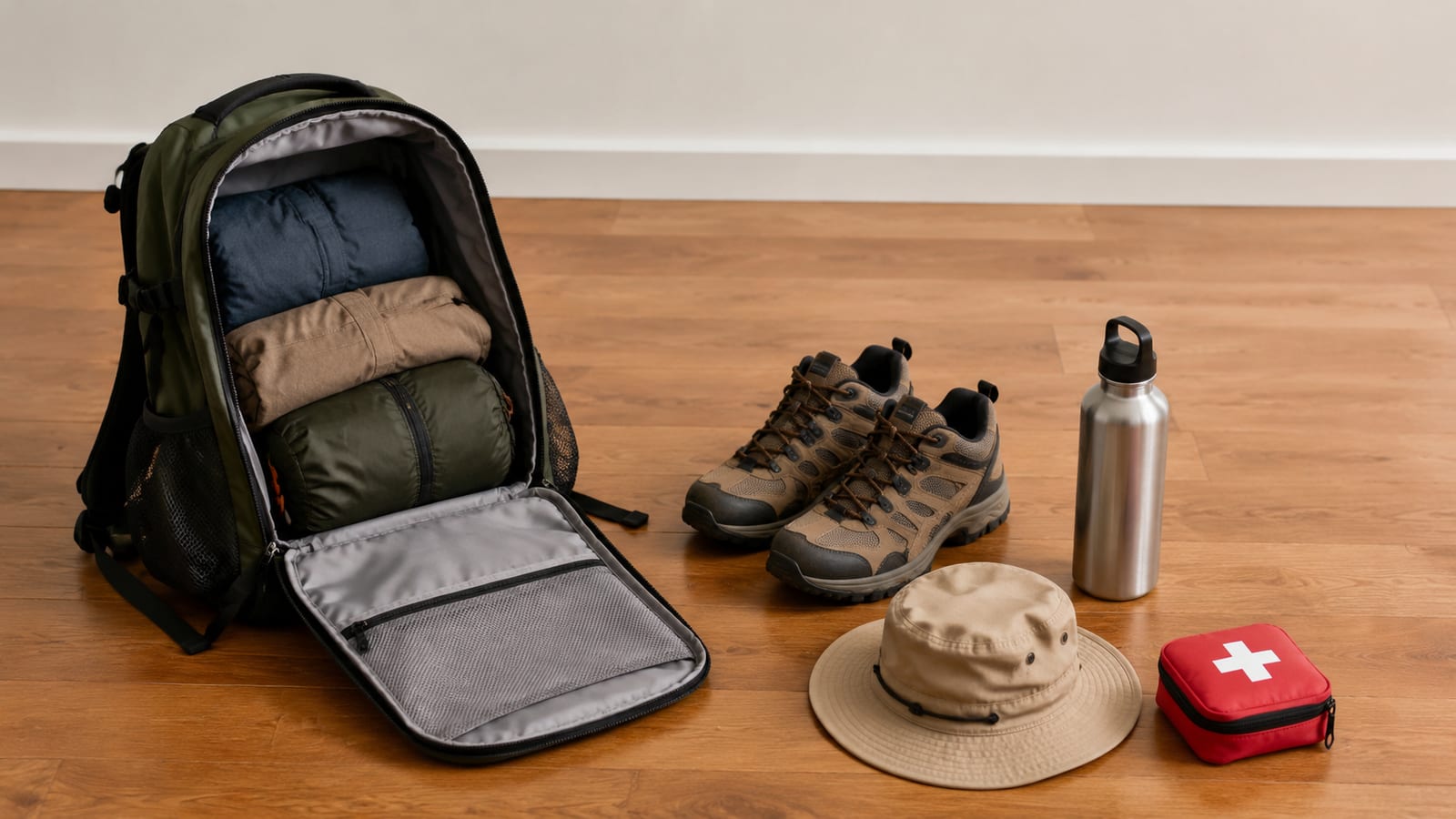
Pack for heat, rain, uneven streets, and the small failures that turn into long afternoons. You don’t need specialist expedition gear for a normal trip.
Save these items before departure:
- A digital copy of your passport and entry documents
- A paper copy stored away from the original
- Your embassy or consulate contact details
- Your insurer’s emergency number and policy details
- Offline maps for San Salvador and each overnight stop
- Your first hotel’s name, address, and map pin
- Flight and onward-travel documents
- Contact details for your airport ride
Bring sun protection, mosquito repellent, a light rain layer, and shoes with grip. A small dry bag or waterproof pouch also helps on boats, beaches, and wet travel days.
Carry a backup payment card separately from your main wallet. Meanwhile, keep some cash in a second secure place rather than putting everything in one bag.
A small power bank is useful on long transfer days. However, it won’t fix poor planning, so download tickets and directions before leaving Wi-Fi.
My solo travel confidence checklist covers the quiet preparation that matters most. Start by saving your documents and emergency contacts offline today.
12. If something goes wrong
For an immediate emergency, call 911. If you cannot make the call yourself, ask hotel staff, a restaurant employee, or a nearby family to help.
If your phone or wallet is stolen
Move somewhere staffed and well lit. Lock your cards, contact your bank, and use another device to secure your email and phone accounts.
Ask whether you need a police report for insurance. Don’t chase the person who took the item.
If you become ill
Contact your insurer before choosing a clinic when the situation allows. Your hotel can help locate a reputable medical facility and arrange transport.
For severe symptoms, call emergency services rather than waiting for an online doctor to answer.
If you lose your passport
Contact your embassy or consulate and ask what documents they require. A stored copy of the passport and a police report may help with replacement.
Don’t plan a border crossing until the replacement document is ready and accepted.
If police stop or detain you
Stay calm, provide identification, and ask why you’re being held. Request contact with your embassy or consulate and legal assistance.
Don’t resist physically, offer money, or sign something you cannot understand.
If there is an earthquake, eruption, flood, or landslide alert
Follow official instructions and your accommodation’s evacuation plan. Keep away from damaged buildings, blocked roads, river crossings, and closed volcano routes.
Send a short message to family once you’re safe. Then conserve your battery and wait for confirmed information.
FAQ
Is El Salvador suitable for a woman traveling solo?
Yes, with a firm transport and nightlife plan. Choose established accommodation, use arranged rides after dark, and avoid isolated beaches or streets when few other people are around.
Street attention can happen. You don’t owe anyone a conversation, so step into a hotel, pharmacy, or busy restaurant if someone makes you uncomfortable.
Can I visit El Salvador without speaking Spanish?
You can, especially in established hotels and surf towns. However, English becomes less common with bus staff, drivers, market vendors, and police.
Download Spanish offline and save a written explanation of any allergies or medical needs. A few direct phrases will carry you further than speaking louder in English.
Do I need a guide for volcano hikes?
It depends on the volcano, current access rules, weather, and trail conditions. Some routes may require registered guides or operate under controlled entry arrangements.
Check locally shortly before the hike. Old trip reports are poor evidence for an active volcanic area.
Should I reserve tours before arriving?
Book anything tied to an airport transfer, limited trail access, or a fixed travel day. Leave ordinary city walks, beach time, and café stops open.
El Salvador is compact, but traffic and weather can upset a tight schedule. A little empty space keeps a delayed morning from ruining the rest of the trip.
Is El Salvador a good choice for a first trip to Central America?
It can be, especially if you prefer shorter travel distances and a simple route. However, the state-of-exception rules demand more care around identification and police encounters than some first-time visitors expect.
Start with San Salvador, a beach base, and an inland stop. There’s no prize for turning a manageable trip into a transport puzzle.