Book fewer tours in New Zealand, and choose the ones that solve a real problem. The Hobbiton Movie Set Guided Tour, Waitomo Glowworm Caves Guided Tour, and RealNZ Milford Sound Signature Cruise are worth considering because access or context is hard to arrange alone. The Waitomo tour costs NZD$81 per adult. Skip the package that rushes you through both islands with a different hotel every night.
The New Zealand tours worth booking
The best tours in New Zealand give you something you can’t easily arrange alone. Milford Sound cruises, Māori cultural visits, glowworm caves, and guided film-set tours fit that test. A generic city bus loop usually doesn’t.
For most first trips, book a small-group day tour for the place that is hard to reach, then travel the easy stretches yourself. That gives you local knowledge without handing over the whole itinerary.
Some days should stay empty. You’ll want time to walk a quiet street, grab a coffee, or stop when the weather clears. A tour schedule rarely leaves much room for that.
Match the tour style to your trip
The format matters more than the glossy itinerary. A good route with the wrong group size can still make for a long week.
| Tour style | Best for | Main downside |
|---|---|---|
| Escorted package | Travelers who want transport, hotels, and planning handled | Fixed schedules and frequent hotel changes |
| Small-group tour | Solo travelers and anyone who wants more guide access | Higher cost and less anonymity |
| Independent coach trip | Travelers who don’t want to drive | Timetables shape the day |
| Day tour | Hard-to-reach sights and guided cultural visits | Pickup routes can waste time |
| Scenic train | Slow travel and bad-weather days | Limited stops along the way |
| Sightseeing cruise | Fiords, wildlife, and water-level views | Weather can flatten the scenery |
| Self-drive with selected tours | Independent travelers who still want expert guidance | You handle the road, parking, and daily plan |
Escorted packages remove work, not trade-offs
A full package handles the annoying parts. Transport is waiting, hotels are booked, and someone else deals with a wet-weather change.
However, read the route line by line. “See Queenstown” may mean an evening arrival and an early departure. Long destination lists often hide short visits.
Also check the solo room charge before getting attached to a package. Some tours price the route for shared rooms, then add a real cost for sleeping alone.
Small groups are usually the better compromise
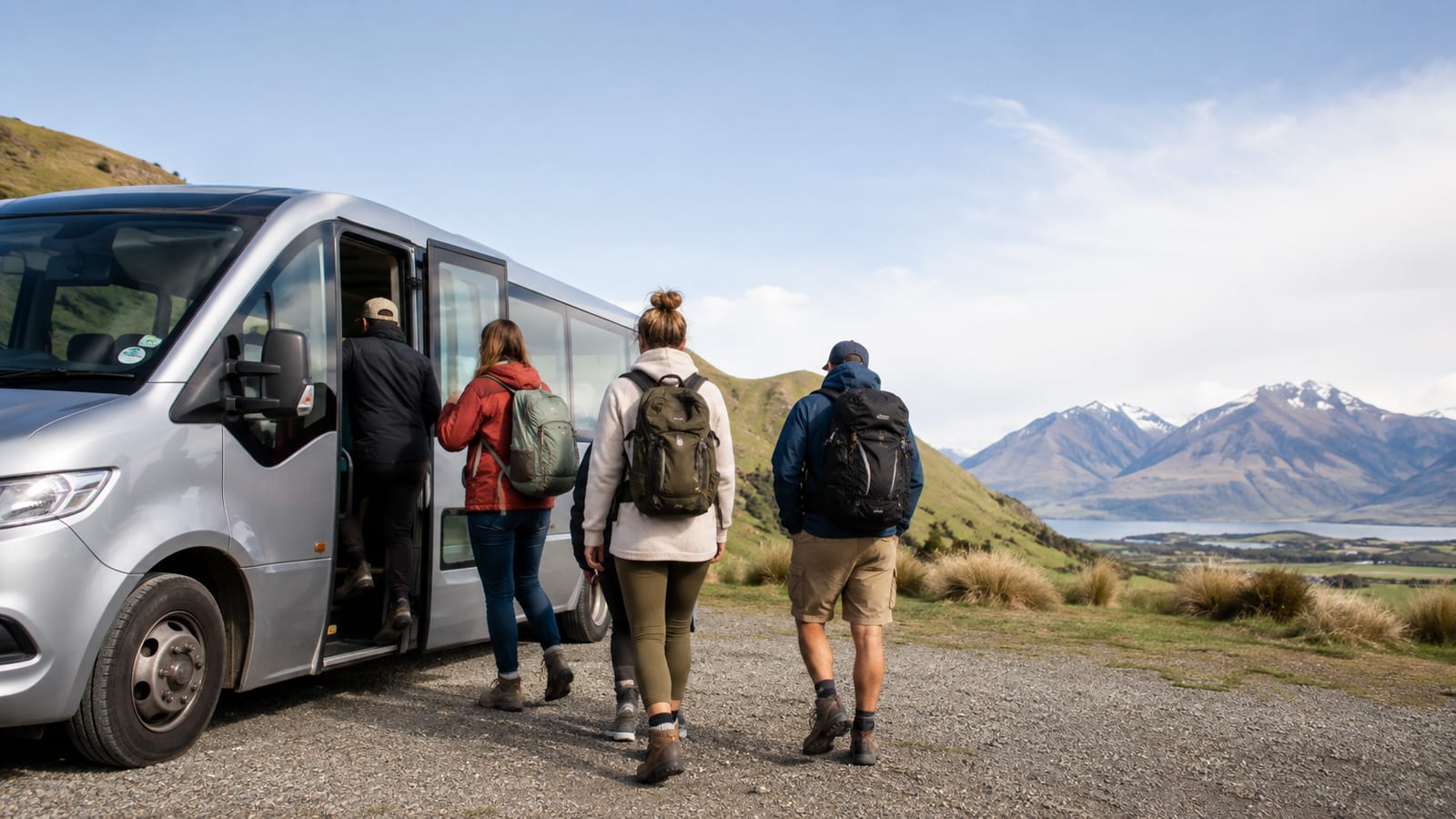
Small-group tours suit solo travelers because conversation happens without much effort. You can join dinner when you want company, then take a quiet walk when you don’t.
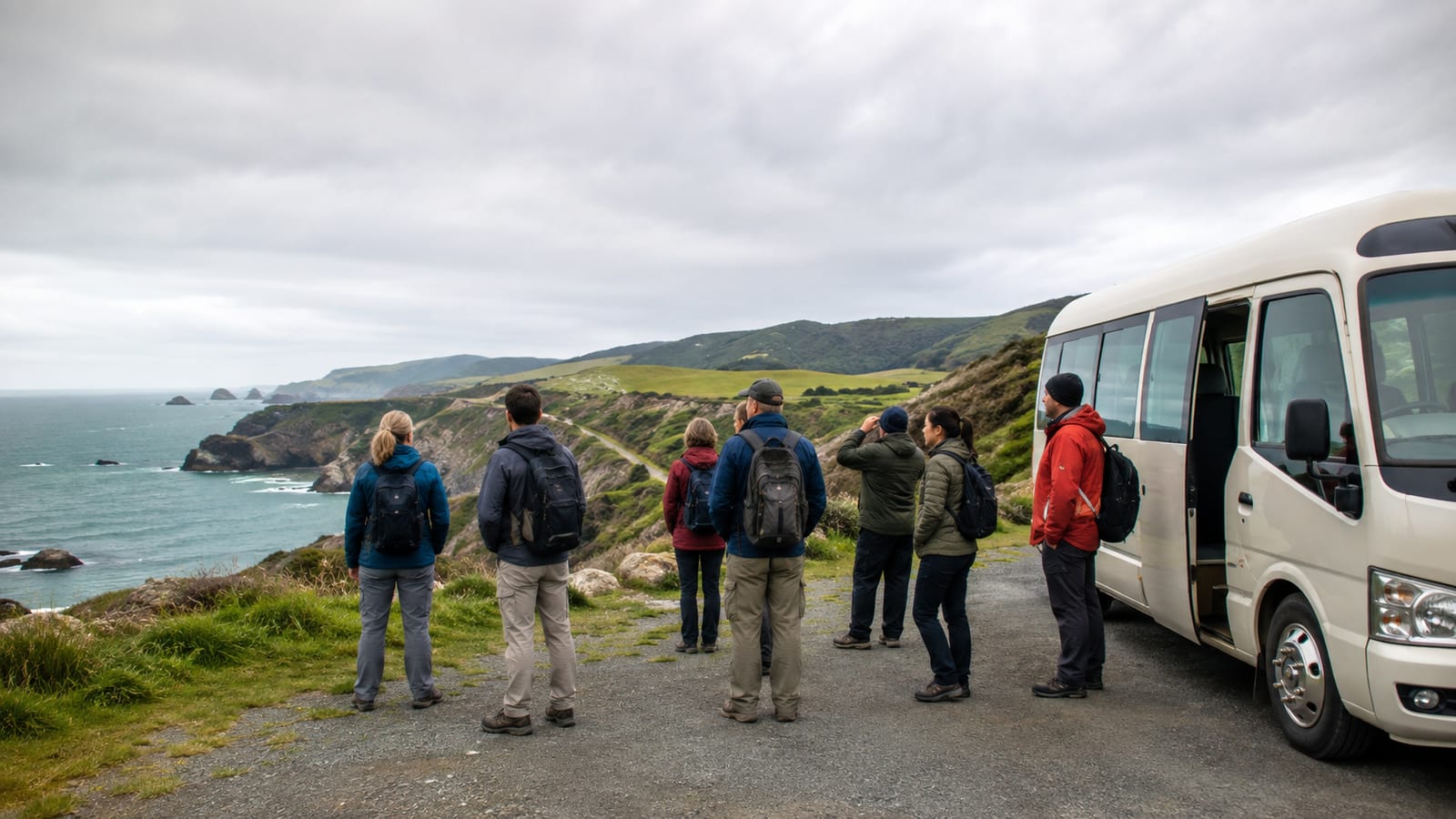
Still, “small group” means nothing unless the operator states its maximum size. Ask what vehicle it uses and whether every seat may be filled. A cramped van turns scenic driving into a test of knees and patience.
Independent coach travel gives you more space
Independent coach travel works well if you want help with the long road sections but don’t want a guide following you through every town. You choose your accommodation and decide how to use each stop.
The catch is simple. Miss the coach, and the coach doesn’t care. Keep your accommodation within easy walking distance of the pickup point, especially in places where local transport is thin.
Choosing between the North Island and South Island
Choose the North Island for Māori culture, geothermal landscapes, Auckland, Waitomo, and Hobbiton. Choose the South Island for mountain roads, scenic rail, Queenstown, and Milford Sound. Trying to cover both quickly gives you a fine collection of bus windows.
If you have a shorter trip, stay on one island. With more time, connect the islands but keep the route simple.
The North Island works well without constant touring
Auckland is a useful arrival point, but don’t book a full schedule before you have slept. A compact walking tour on your first morning can help you read the city. After that, the waterfront and central neighborhoods are straightforward on foot.
Farther south, guided experiences make more sense. Waitomo requires a formal cave visit, while Hobbiton is built around a guided set tour. Rotorua also rewards a good cultural guide because the place makes less sense when reduced to steam vents and souvenir shops.
The South Island punishes rushed itineraries
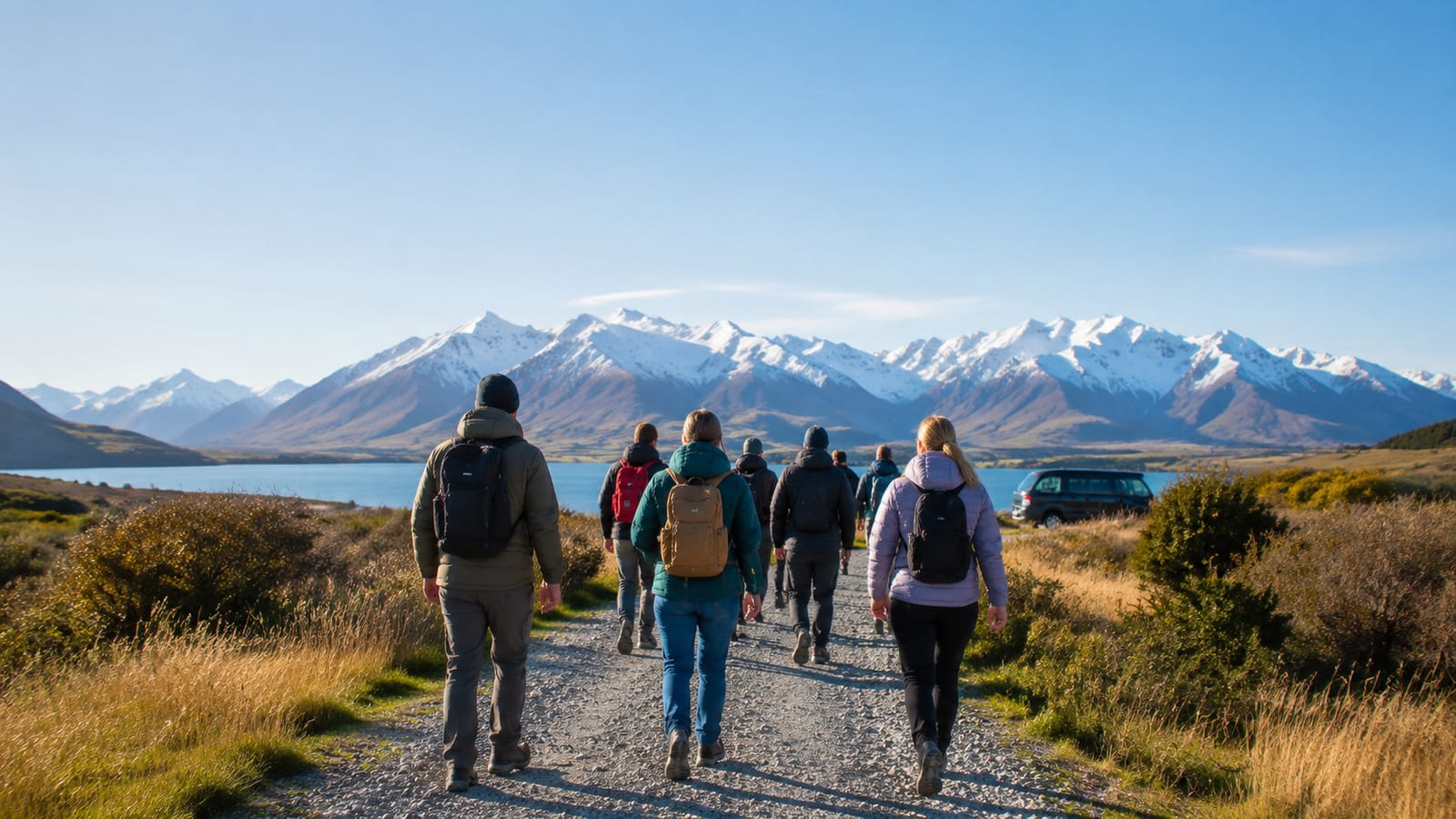
Distances on a map can look manageable. Then rain, roadworks, and photo stops stretch the day.
Pick a route with breathing room around the West Coast, Queenstown, and Fiordland. If you want smaller stops between the headline places, this guide to quiet South Island places for solo travelers is a better starting point than another packed coach itinerary.
The South Island also has excellent short walks. Build some into your route rather than watching every valley through glass. These easy short walks across New Zealand give you practical stops without turning the trip into a hiking holiday.
Guided experiences that earn their place
Some famous tours are famous because access is controlled or the setting needs a boat. Others survive because people have already traveled too far to turn around. Know which one you’re booking.
Auckland sightseeing is useful once
Auckland city tours work best as an orientation, not as the main event. Look for a route that explains the city’s volcanic landscape, waterfront, and Māori history rather than one built around shopping stops.
Afterward, wander independently. Central Auckland doesn’t need repeated guiding, and free time will show you more than another loop past the same landmarks.
Hobbiton is polished and tightly managed
The Hobbiton Movie Set Guided Tour is in Matamata, Waikato. It suits serious film fans, families, and travelers who enjoy production detail.
However, this isn’t a quiet wander through empty countryside. Visits move on a managed route, and the guide sets the pace. If you have no interest in the films, skip it without guilt.
Waitomo is short, controlled, and hard to replace
The Waitomo Glowworm Caves Guided Tour is a short visit, so don’t book it expecting a long underground expedition.
You’re paying for controlled access to the cave and the glowworm display. The setting is the point. Travelers who need more physical adventure should compare the cave options carefully rather than assuming every Waitomo tour is the same.
Māori culture needs a host, not a script
Choose an experience led by Māori hosts who name their iwi, meaning tribe, or hapū, meaning sub-tribe. Good tours explain the land, language, food, and local history as living parts of the community.
Be wary of listings that sell “Māori culture” as a brief performance attached to a buffet. Culture isn’t decoration for the coach schedule. Read about Māori culture through Te Papa before you book, then look for a host who explains whose land you’re visiting.
During the visit, watch what people do and follow their lead. Ask before taking close photographs, and don’t treat sacred spaces as sets.
The TranzAlpine is about the journey
The TranzAlpine runs between Christchurch and Greymouth across the South Island. Book it because you want a slow scenic day, not because it is the quickest way across.
Cloud can hide the higher views. However, the river valleys, gorges, and changing weather still make the route worthwhile. Keep a layer and a snack within reach rather than buried in your luggage.
Milford Sound is worth the awkward journey
RealNZ’s Milford Sound Signature Cruise lasts approximately 2 hours. The cruise itself is easy. Getting to Milford Sound is the tiring part.
A coach-and-cruise trip makes sense if you don’t want to drive the road back after a long day. A self-drive gives you more control over stops, but the return journey can feel heavy. Don’t plan an ambitious evening after it.
Rain isn’t a reason to cancel. Waterfalls appear across the fiord walls, although low cloud may hide the peaks. Both versions are honest Milford Sound.
Guided packages for solo travelers
Guided tours in New Zealand can work well for a solo trip, especially where transport is awkward. You get company without arranging every meal or transfer with strangers.
However, check how the tour handles room sharing. Some operators match solo guests. Others charge extra for a private room. Neither policy is wrong, but finding out after payment is.
Also ask where the trip begins and ends. An itinerary may list Auckland or Christchurch while using a hotel far from the center. That leaves you paying for another transfer before the tour has properly started.
Here is what I do when comparing solo options:
- Check the room policy before the daily itinerary.
- Find the first pickup point on a map.
- Ask for the likely group size and age range.
- Read the cancellation terms for optional activities.
- Keep an unscheduled day after the tour ends.
That final free day matters. It lets you revisit a place you liked, do laundry, or sit somewhere with morning light and no name badge.
How active are these tours?
“Easy” can still mean vehicle steps, uneven paths, wet boat decks, and standing while a guide talks. Marketing labels are too vague to trust on their own.
Ask the operator what a normal day involves. You need to know about luggage handling, toilet access, stairs, walking surfaces, and time spent getting in and out of the vehicle.
Older travelers should also check the pace between stops. A route can require little walking yet still feel tiring because it starts early and changes hotels often. Staying in fewer places usually helps more than choosing a coach with softer seats.
For a mixed-ability group, keep optional walks separate from the main route. One person can take the track while another has coffee near the pickup point. Nobody needs to turn a holiday into a fitness test.
When should you book?
Summer brings long days, strong demand, and busy roads. Winter brings quieter towns but fewer departures in some regions. The shoulder seasons often give you the best balance, although the weather remains changeable.
Book controlled-access experiences first. Hobbiton, Waitomo, popular cultural visits, scenic rail seats, and Milford Sound trips can shape the rest of the route. Leave ordinary city tours until later.
Meanwhile, check the official MetService forecasts as the date gets closer. A general seasonal guide won’t tell you what the next front is doing.
Don’t build the whole trip around clear skies. Keep an indoor option in Auckland, Wellington, Christchurch, or Dunedin, and treat rain as part of the country rather than a planning failure.
What a tour package leaves out
Packages often leave out lunches, optional activities, arrival transfers, and the solo room charge. The headline price can look neat because the awkward costs sit farther down the page.
Before paying, mark each day as included, optional, or free. Then read the free days carefully. A “free day in Queenstown” can become expensive once you add the activity that made you want to go there.
This guide to budgeting for an expensive New Zealand trip helps with the costs beyond the booking page. Keep a separate amount for food, local transport, and weather changes.
Also protect some genuinely free time. New Zealand has beaches, public gardens, waterfront walks, and lookouts that don’t need a guide. Use this list of free things to do in New Zealand to fill the gaps without adding another booking.
How do you spot a bad tour?
A bad tour hides the practical details behind a long list of place names. If you can’t tell where you sleep, how long you travel, or what costs extra, keep looking.
Watch for these warning signs:
- The group size isn’t stated.
- The vehicle type is vague.
- Every day includes a different town.
- Optional activities dominate the itinerary.
- Cancellation terms are hard to find.
- Cultural experiences don’t name the hosts.
- Reviews praise the scenery but say little about the guide.
Scenery can rescue an average day, which is why weak operators still collect cheerful reviews. Read for details about pacing, communication, and what happened when weather changed.
Then contact the operator with one plain question about your biggest concern. A clear reply tells you more than another page of polished photos.
FAQ
Do tour guides in New Zealand expect tips?
Tipping isn’t generally treated as an obligation. If a guide handles a difficult day well or gives unusually thoughtful help, you can offer something. Don’t let a booking page pressure you into treating it as a fixed fee.
Can New Zealand tours handle dietary requirements?
Many can, but tell the operator before the trip rather than at the first group meal. Be precise about allergies and cross-contact concerns. In small towns, choices may be limited even when the guide is trying to help.
Is a private tour worth the cost?
A private tour is worth considering if you have limited mobility, a strong interest in photography, or a family group that needs flexible stops. For ordinary sightseeing, a well-run small group usually gives better value.
Should I carry cash on a guided trip?
Cards cover most routine spending, but a little cash can help at small stalls or in places with connection trouble. Keep it separate from your main wallet, along with a backup card.
Can I bring a large suitcase on a coach tour?
Sometimes, but luggage rules vary by vehicle and route. Ask before you arrive, especially if the trip uses small vans. A soft bag is often easier to fit than a hard case, and you’ll appreciate it when hotels have steps.