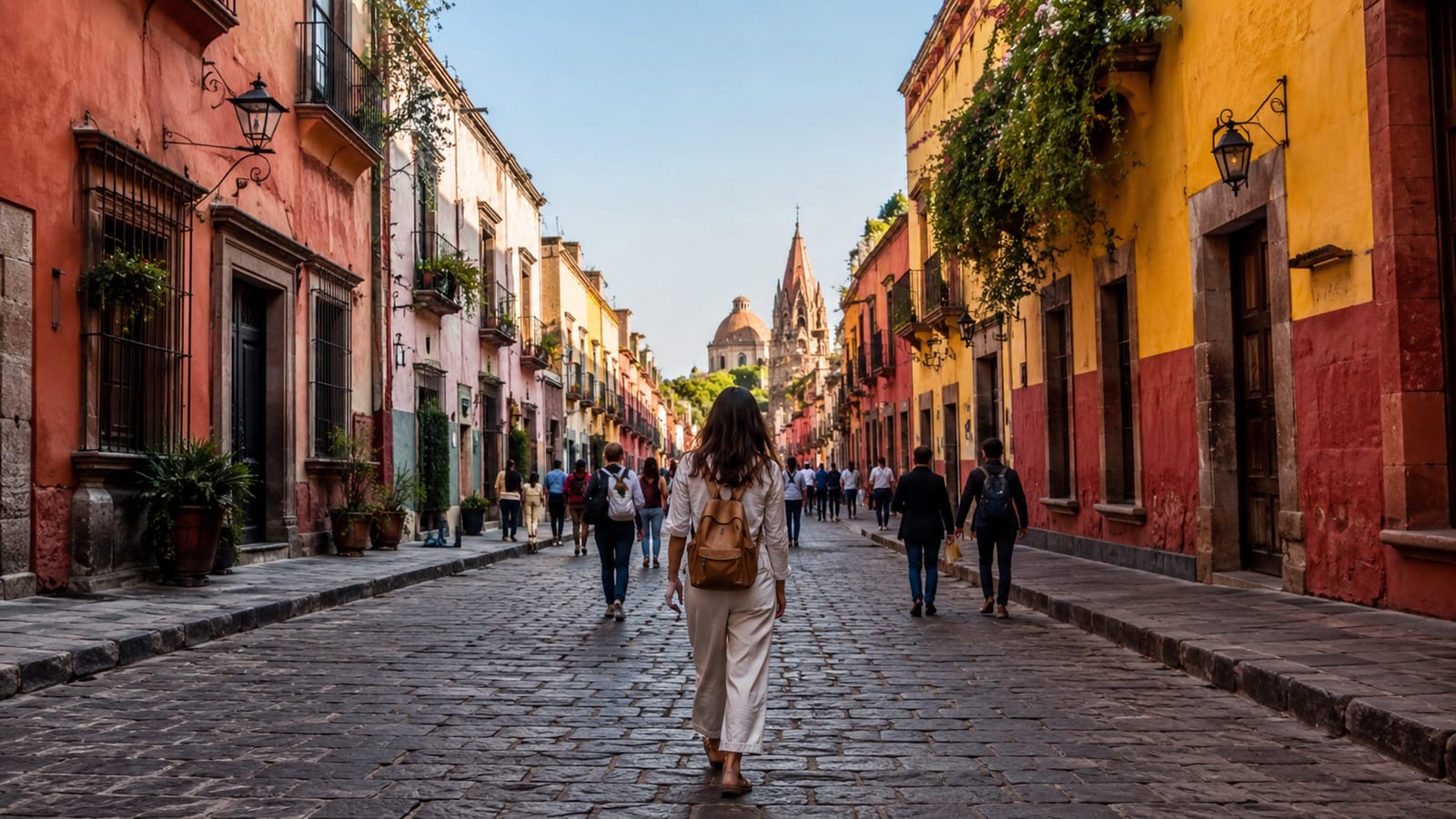

The rental car is usually the most expensive, most stressful part of a trip you never needed to book. For most destinations, the answer to how to get around without one is a plain mix of trains between cities, local metros and trams inside them, a ride-share for the awkward late-night gaps, and a bike for the last mile. That combination is almost always faster, cheaper, and less hassle than steering an unfamiliar car down streets you can't read. I've done it across dozens of cities, and the car sits unbooked nearly every time.
Why skipping the rental car is almost always the right call
The sticker price on a rental is the small part. Add fuel, insurance you barely understand, the airport pickup counter line, and parking that eats twenty of your euros a day in any old city center. Then add the real cost nobody prices in: the stress of driving on the wrong side, missing your exit, and circling a one-way grid while your passenger reads the map badly.
A car also traps you. You park it, and now every plan orbits back to where you left it. On foot or on transit, you finish a walk wherever you finish it and grab the next train home. That freedom is worth more than the convenience a car promises and rarely delivers in town.
There's a fair exception. Some places genuinely need wheels, and I say so in my guide to traveling New Zealand without a car, where the gaps between towns are real. But that's the outlier, not the rule. Most of the time the car is a habit, not a need.
How do you get between cities without a car?
Trains win for medium distances between well-connected cities. They drop you in the center, not a field by the airport, and you can walk out of the station straight into your neighborhood. In Europe and Japan especially, the train is faster door to door than driving once you count parking and traffic.
Long-distance buses win on price and on routes trains skip. They're slower and less comfortable, but for a few hours between two cities they're hard to beat on cost. I take the bus when the train price jumps or when I'm moving between smaller towns off the main rail line.
Flights only make sense past a certain distance, roughly when the train would eat most of a day. Book those and you trade a scenic ground trip for airport security lines and a taxi at both ends. For long hops it's worth it. For anything under a few hours by rail, skip the flight and take the train.
What is the fastest way to book trains and buses on the fly?
Book from your phone, at the platform if you have to, and stop overthinking the pass math. Here is what I do when I need a ticket today:
- Open a route app like Rome2Rio or Google Maps to see which trains, buses, and ferries actually connect the two points.
- Buy the train ticket on the national rail operator's own app or site, not a reseller that tacks on a fee.
- For buses, check FlixBus or the local intercity line directly; their apps show live seats.
- Screenshot the ticket and the confirmation code before you lose signal on the train.
A rail pass only pays off if you're taking many long trains in a short window. For two or three trips, point-to-point tickets are usually cheaper. Buy them a few days ahead when you can, because last-minute fares climb fast on popular routes.
How do you get around a city once you arrive?
Every city's transit looks confusing for about twenty minutes, then it clicks. Buy the day pass or the stored-value card at the first station and stop paying per ride. In most cities one card covers metro, tram, and bus, and it saves you fumbling for change at every stop.
Decode the system fast with one trick: find the line map, note the last stop in each direction, and you'll always know which platform you want. Trains are labeled by their final destination, not by "eastbound," and that trips up newcomers every time. Learn your line's two end stops and you're set.
Walk more than you think you should. Half the trips people take transit for are ten minutes on foot through the part of the city you actually came to see. My guide to finding reliable local transport abroad goes deeper on reading unfamiliar systems without getting fleeced.
When does a ride-share beat every other option?
Late at night, from the airport, or out to a suburb transit forgets. Those are the three times I stop being precious about it and just call a car. When the metro's stopped running at 1 a.m. and you're a mile from your bed, a ride-share is the calm choice, not the lazy one.
Price it honestly against a taxi first. In New York, short Manhattan taxi trips of two to three miles run about $10 to $18, while the same ride on UberX runs roughly $12 to $25. The gap swings by city and hour, so check both apps before you tap.
Where street taxis are metered and honest, they often beat the app on a short hop. Where they aren't, the app's upfront price saves you the argument at the curb. Know which kind of city you're in before you decide.
Is renting a bike or scooter worth it at your destination?

For the last mile and flat-city sightseeing, yes. Bike-share is everywhere now, and the pricing is friendly for short hops: a single ride on a system like New York's Citi Bike runs about $4.99 for 30 minutes, which covers most cross-town trips with time to spare. Grab one, ride it to the next neighborhood, dock it, and walk from there.
The gotchas are real, though. Docking stations fill up, so a station that's full leaves you circling to find an open dock while your clock runs. E-scooters get banned or geo-fenced in whole districts, and the app cuts the motor without warning at the boundary. Read the coverage map in the app before you rely on one.
Skip the bike in hilly cities, in heavy rain, or where the traffic has no room for you. It's a tool for flat, calm, short trips, not a way to see everything. Bike-share is a genuine bike-sharing system with real coverage limits, so treat it as one option, not the whole plan.
How do you handle luggage when you have no car?
Pack lighter, and use the storage that already exists. The luggage objection is really an over-packing problem. One bag you can carry up a metro staircase changes the whole trip, because every train, bus, and stair stops being a negotiation.
When you do have bags to park, most big stations have lockers or a staffed left-luggage counter, and app-based services like Bounce or Radical Storage let you stash bags in a shop for a few hours. That covers the gap between checkout and your evening train. For a one-way move of heavy gear, luggage shipping services will send a bag ahead so you travel empty-handed.
My rule: if I can't carry it up a full flight of stairs without stopping, it doesn't come. That single test kills more packing regret than any list.
What do you do when public transit genuinely does not reach your destination?
Some places transit just won't take you, and pretending otherwise ruins a day. When the route runs out, the car-free move is a carpool, a taxi for the awkward leg, or a car by the hour, not a week-long rental.
Carpooling networks like BlaBlaCar fill the gaps between towns for the price of splitting fuel. A short-hop membership like Zipcar runs about $9 a month, so you can grab a car for the two hours you actually need one and hand it back, instead of paying airport rental rates for a week. That's the difference between using a car and being owned by it.
For the true edge of the map, a local taxi for a single leg out and back is often cheaper than any rental once you count the parking and the days you'd leave it idle. Ask your guesthouse to call the driver they trust.
How much money do you actually save going car-free?
Enough that it usually pays for a nicer room or a few good dinners. A rental with fuel, insurance, and city parking runs a car's daily cost into a real number fast, and the parking alone in an old center can rival the rental itself.
Stack the car-free tools against that. A transit day pass, the occasional short bike ride, and a ride-share or two costs a fraction of a driving day, with no parking and no fuel. Over a week the difference funds a chunk of the trip. I break the wider math down in my basic budget travel tips.
The hidden saving is time, not just money. No pickup counter, no fuel stops, no hunt for parking. That's an hour a day back, spent walking a quiet street instead of a garage ramp.
What should you plan before you leave so nothing catches you off guard?
Do a short research pass before you fly, and the trip runs smooth from the first morning. Here's the checklist I run through the night before:
- Download the local transit app and a route planner, and save your hotel as a pin offline.
- Check whether the city sells a day or multi-day transit pass, and where to buy it at the airport.
- Confirm the airport-to-center option and its last departure time, so a late flight doesn't strand you.
- Note one bike-share or ride-share app that works in the country.
- Get a little local cash for the machines and buses that still refuse cards.
Book only your first two nights and leave the rest loose, the same way I plan a first solo trip. Learn hello and thank you in the language while you're at it. Then stop planning and go; the transit part is easier than the internet makes it sound.
FAQ
Is it realistic to travel completely car-free in rural areas?
Mostly, but not always, and honesty helps here. Well-connected countryside with regional trains and village buses is fine on transit. Truly remote spots need a carpool, a single taxi leg, or a car rented by the hour for one day, then handed straight back.
How do I avoid getting ripped off by taxis abroad?
Use the meter where it exists, and agree the price before you get in where it doesn't. In cities with a trustworthy ride-share, the upfront app price removes the guesswork entirely. When in doubt, ask your accommodation what a fair fare to your destination should be.
Are ferries worth using instead of buses or trains?
Often, when water is in the way. A ferry across a bay or between islands can be faster and far prettier than the long road around, and it counts as transit in many coastal cities. Check the schedule, since ferries run less often and stop earlier than buses.
What if I get lost on an unfamiliar metro system?
Get off at the next stop, find the wall map, and reset. Every platform shows the line and its end stations, so you can always work out which direction you need. Staff and station names in the local language are easier to match than you'd fear.
Do I really need to speak the language to use local transit?
No. Ticket machines almost all switch to English, and route apps handle the rest. Learning the words for the station types and a few polite phrases smooths things, but plenty of travelers cross whole countries on transit with none of it.