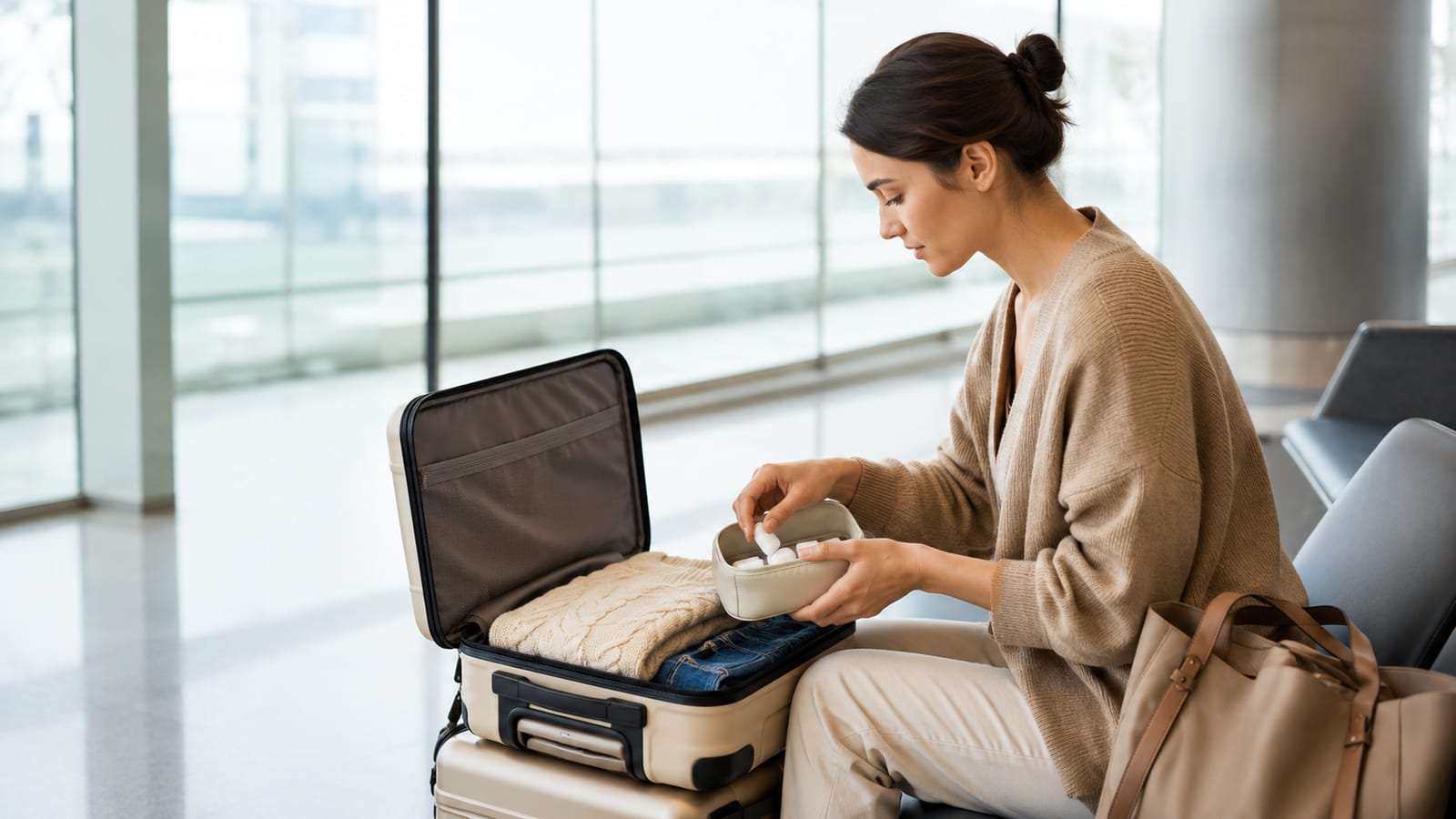
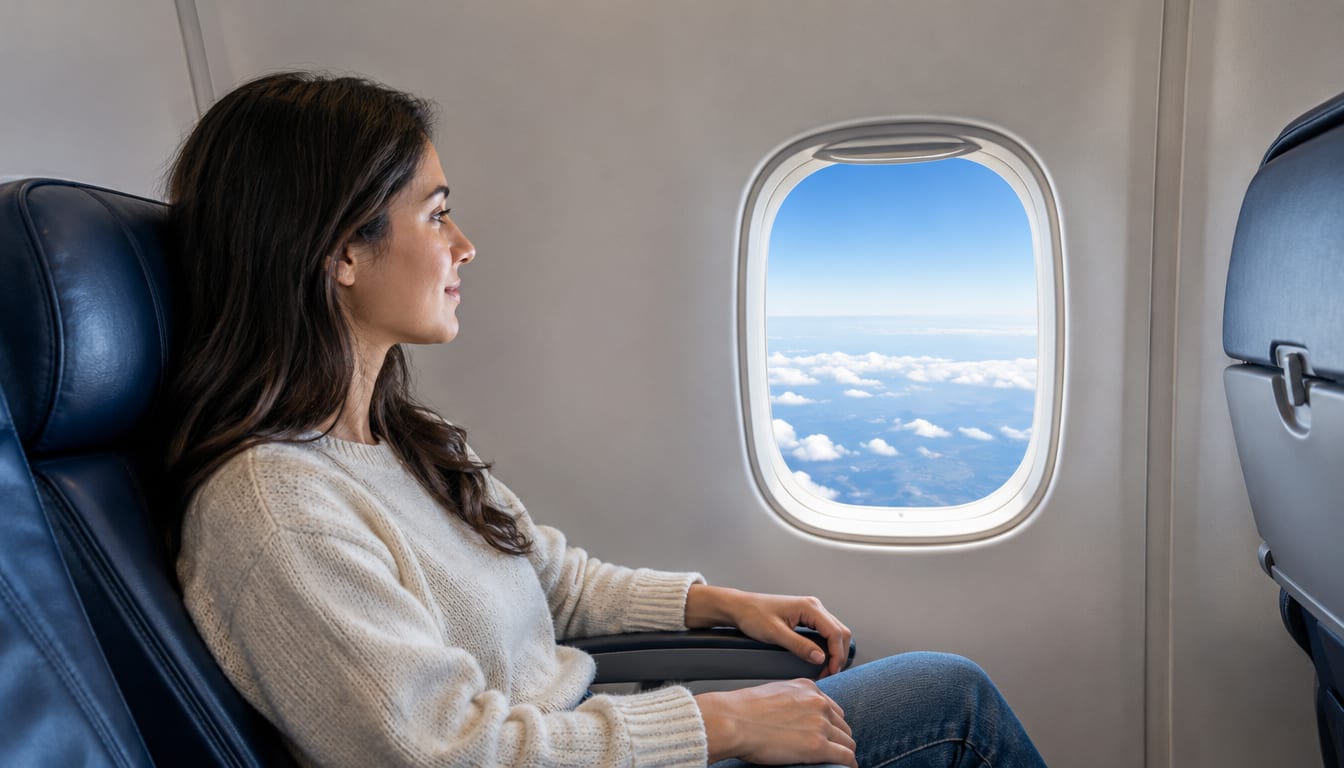
The worst time to deal with motion sickness is after it starts. That is the core of how to travel with anxiety and motion sickness: do the work before you board. Make the trip smaller, take the seat that moves least, and keep your eyes on a fixed horizon. Keep your stomach lightly fed, and settle a medicine plan with a pharmacist or doctor before travel day. Then the winding bus ride is something you planned for, and that alone takes the edge off the nerves.
Why anxiety and motion sickness feed each other
Motion sickness starts with a mismatch. Your inner ear feels the bus swing round a bend. Meanwhile, your eyes are locked on a phone and report that you are sitting still. Your brain gets two stories that don't agree, and it answers with nausea.
The usual signs come in a rough order. First you yawn and feel warm, then come a cold sweat, a pale clammy face, and a heavy stomach. Some people also get dizziness or a headache.
Anxiety joins in fast. Fear of being sick makes you watch your stomach closely, and stress can bring on nausea, a racing heart, and shallow breathing all on its own. As a result, the dread and the queasiness start to feed each other.
None of this means the sickness is in your head. The nausea has a real physical cause. Anxiety turns the volume up, though, and that is good news, because calming down can turn it back down a notch.
If crowds, noise, and busy stations bother you more than motion does, my guide on how to avoid overstimulation while traveling covers that side. This page sticks to the moving vehicle and the knot in your stomach.
How do you travel with anxiety and motion sickness?
Six steps cover most of it. The first three happen at home in the days before you go. The last three happen on the day, in your seat.
Step 1: Build a low-stress travel plan before you leave
Anxious planning tends to grow. There's always one more review to read, one more backup route, one more tab open at midnight. My rule is to plan the route, not every minute of it.
Make the trip physically smaller. Choose one direct train over two buses and a ferry. Pick one base with day trips instead of a new town every night. Travel in daylight when you can, because seeing the road ahead helps your stomach as much as your nerves.
Build in slack so a late connection is an annoyance and not a crisis. Book flexible tickets where the extra cost is small, since knowing you can change plans calms the what-ifs. Then write down three things you control and do them:
- Book or choose your seat.
- Pack your comfort kit in your day bag.
- Write the route and your accommodation address on paper, in case your phone dies.
Everything else can wait. For more on drawing that line, I wrote about how to set trip expectations around what you control.
Step 2: Pack a calm-and-comfort kit
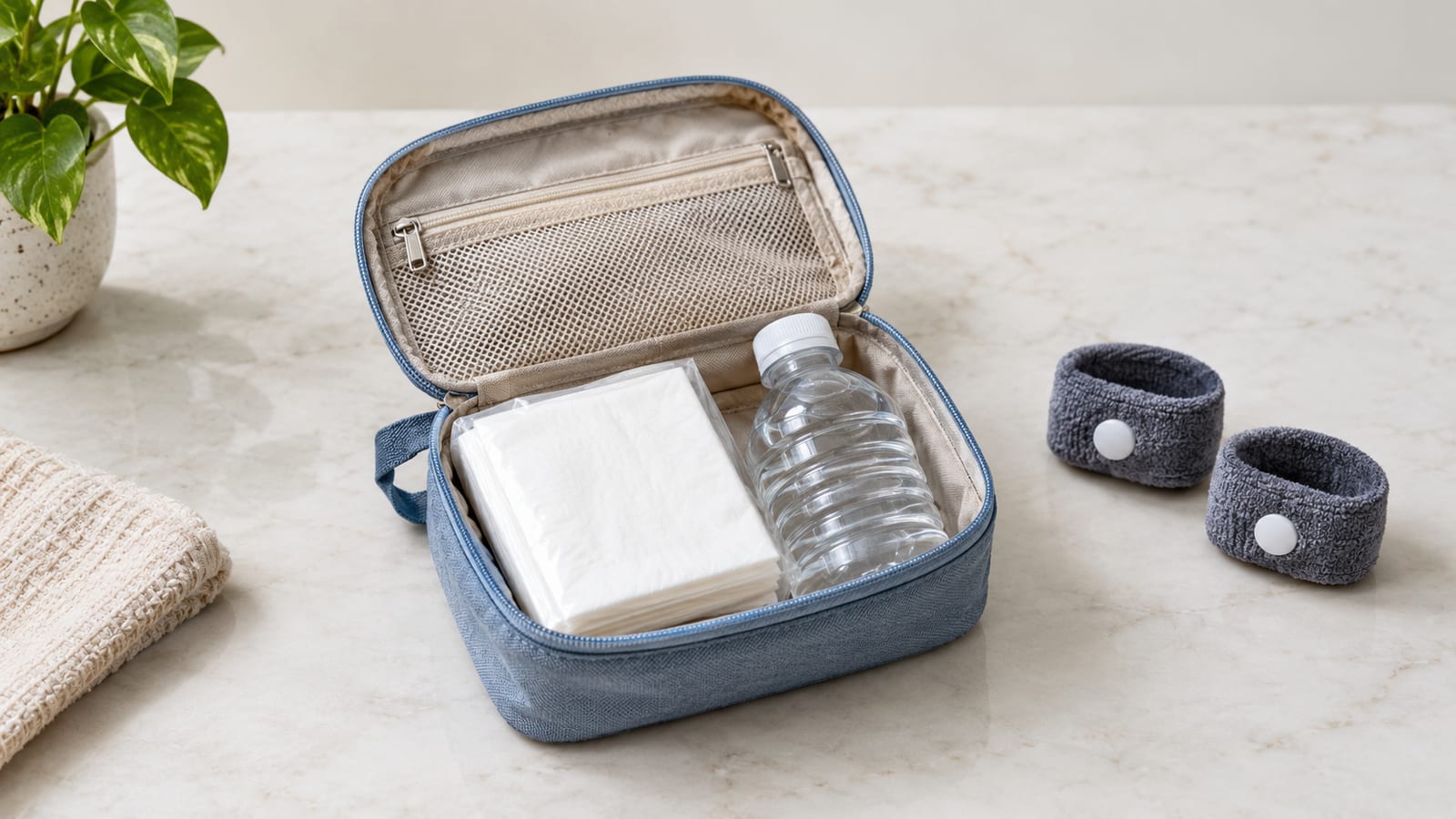
This kit costs very little and does a lot of quiet work. Here is what goes in mine:
- A full water bottle
- Bland snacks: plain crackers, pretzels, a banana
- Ginger chews or crystallized ginger
- Tissues and a small pack of wet wipes
- Two sealable plastic bags, plus a spare top
- Headphones, with a calm playlist or podcast downloaded ahead
- Something cooling: mints, a small fan, or a damp cloth in a bag
- Your prescriptions in their original packaging
- Any motion sickness treatment your pharmacist approved
The small detail people miss is where the kit lives. On a plane it goes under the seat in front of you, never in the overhead locker. A kit you can't reach when the plane drops into turbulence won't help you.
Step 3: Eat and drink for a steadier stomach
Eat a light, familiar meal a little before you leave. Travelling on an empty stomach often makes nausea worse, and so does a big greasy breakfast. Toast, rice, oatmeal, or a plain sandwich are all safe bets. Travel day is the wrong time to try the street food you've been reading about.
Sip water steadily instead of gulping it all at the station. Skip alcohol the night before and on the way, because it dehydrates you and many motion sickness medicines don't mix with it. Coffee is a judgment call. If it makes you jittery, grab one coffee in the morning and skip the second.
Ginger is worth packing, but keep your expectations modest. Some people find it takes the edge off, while the research is mixed. Peppermint is similar. A mint or peppermint tea feels fresh and settles some stomachs, so use both as helpers next to your medicine plan.
Step 4: Choose the seat with the least motion
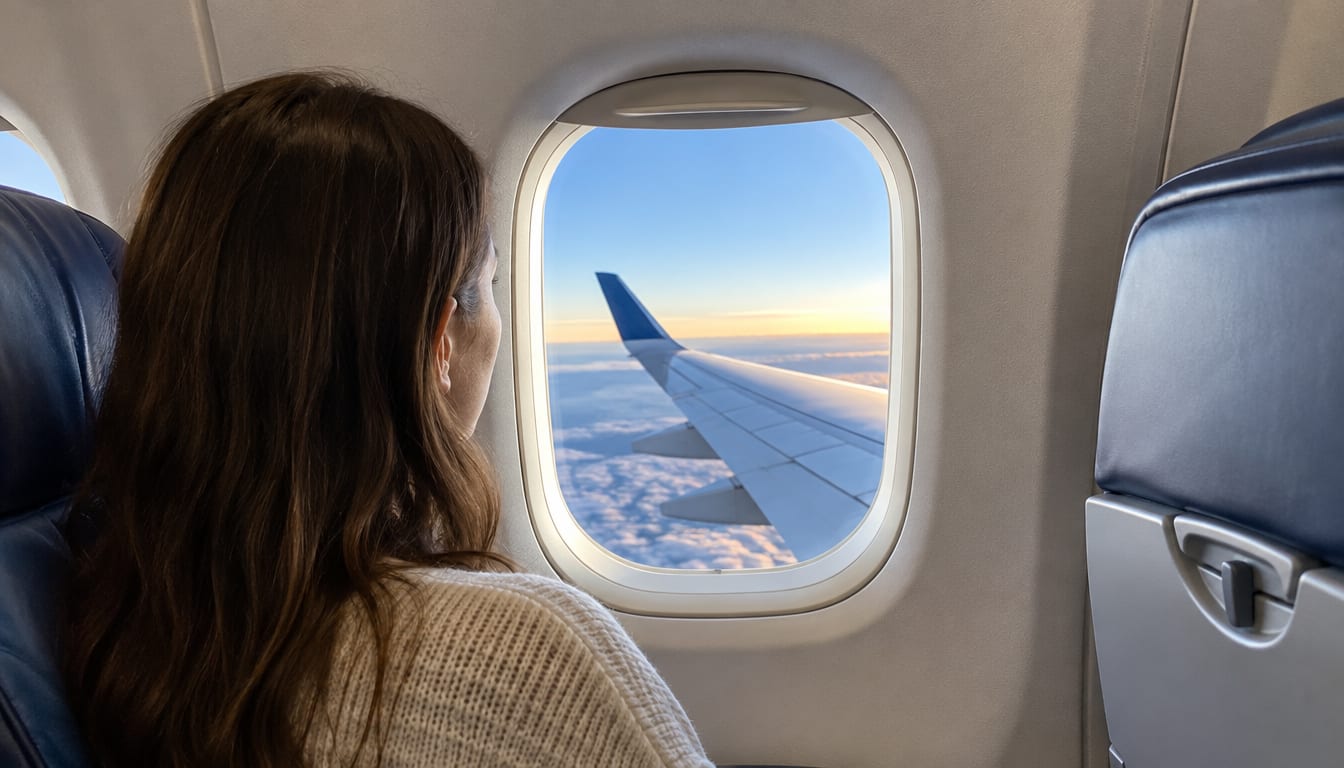
Seat choice is the cheapest fix there is. It costs nothing, and it often matters more than any remedy you buy.
| Transport | Best seat | Why it helps |
|---|---|---|
| Car | Front passenger seat, or drive yourself | You see the road and can feel turns coming |
| Plane | Over the wing, by the window | The middle of the plane moves least, and you get a view |
| Ferry or boat | Middle of the ship, lower deck, or outside on deck | Less rocking, plus fresh air and a horizon |
| Train | Forward-facing window seat | Facing backwards confuses your eyes and inner ear |
| Bus | Front rows, facing forward | The back swings hardest on every bend |
The bus is where most people get it wrong. On a twisty road like the Amalfi Coast drive in Italy, the back rows swing wide on every hairpin. Get to the stop early so you board first and take a front seat.
Overnight trains are a different case. Lying flat with your eyes closed in a couchette (a shared sleeping berth) can be easier than sitting up. If you're weighing a night train, my notes on overnight train safety cover the practical side.
Step 5: Give your eyes a stable horizon
Look outside at something far away and still. A line of hills, the horizon at sea, or the road far ahead all work. A fixed distant point tells your eyes the same story your inner ear is feeling, so the mismatch shrinks.
Reading, scrolling, and close-up phone games do the opposite. Your eyes stare at a still screen while your body sways, which is the exact conflict that causes the sickness.
Here is what I do on a long bus day. I download a podcast the night before, put the phone face down, and pick something distant to watch. If there's no view, as on most of a flight, I close my eyes and rest my head firmly against the headrest so it moves less.
Step 6: Use your breathing to interrupt the panic-nausea loop
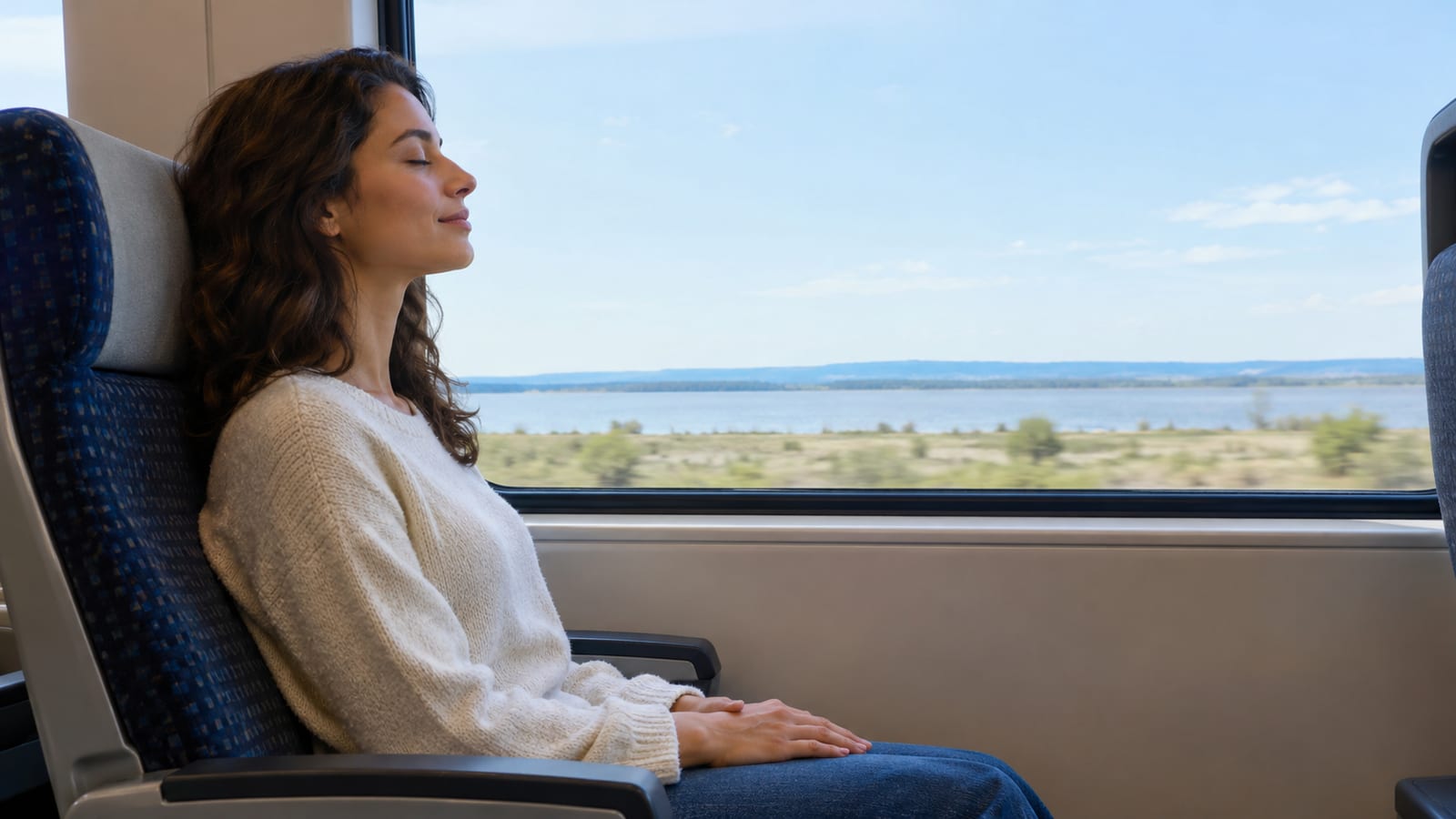
A slow breath is the one tool you can use in any seat, and nobody notices. The NHS breathing exercises for stress take just a few minutes and can be done anywhere. That includes a middle seat with a stranger's elbow in your ribs.
Try this when the first wave hits:
- Breathe in gently through your nose.
- Breathe out through your mouth a little longer than you breathed in.
- Repeat, letting your shoulders drop each time.
- Press your feet flat on the floor and name three things you can see.
- Hold your cold water bottle against your wrist.
Then give yourself permission to manage only the next few minutes. Forget the whole long ferry crossing. Just get to the next stop, the next song, or the next bend in the road.
Plan motion sickness medicine before travel day
Talk to a pharmacist or doctor a week or so before you go, not at the airport. Tell them the trip type, how long you'll be moving, and every medicine you already take, including anything for anxiety. Common options include antihistamine tablets such as dimenhydrinate or meclizine, and a prescription skin patch called scopolamine.
Most of these work best as prevention. Swallowing a pill once you're already pale and sweating is the most common wrong turn, because by then your stomach may not absorb it well.
The patch suits longer trips like ferries and cruises. According to MedlinePlus guidance on scopolamine transdermal, you apply the patch at least 4 hours before you need it. One patch can stay in place for up to 3 days. It's usually worn behind the ear, and you should wash your hands after touching it, since it can blur your vision if it reaches your eyes.
Read the label every time. It tells you how far ahead to take a dose, the most you can take in a day, and whether it's safe for children. Don't double up on two drowsy products. Finally, test any new medicine on a quiet day at home first, so travel day isn't your first reaction to it.
Do not drive when your motion sickness medicine makes you drowsy
Many motion sickness medicines cause drowsiness. Some also slow your reactions, and you may not feel it. If a medicine makes you sleepy, don't drive. There's no grey area here.
Here's the catch on road trips. The driver rarely gets carsick, because they can see and anticipate every turn, so driving can be the best fix for some people. That only works if you skip sedating medicine. If you're the only driver, ask your pharmacist about a less-drowsy option and test it beforehand.
Also avoid alcohol, sleep aids, and other sedating medicines alongside your motion sickness treatment unless a clinician has said the combination is fine. On a shared road trip, arrange for someone else to take the wheel on the days you need the drowsier medicine.
What to do when nausea or anxiety starts mid-trip
Act at the first yawn or warm flush. Waiting to see if it passes usually means it gets worse. Work through this in order:
- Get cool air on your face. Open the air vent, crack a window, or step out on deck.
- Recline and steady your head. Lean back and press your head against the headrest.
- Find the horizon. Look far away, or close your eyes if there's no view.
- Sip water slowly and nibble a plain cracker.
- Use your planned treatment, if the label allows a dose mid-trip.
- Tell someone early. A travel companion, flight attendant, or ferry crew member can bring a bag, find you a better seat, or open a door.
- Breathe out slowly while you wait for it to ease.
Crew on ferries and planes see seasick passengers all the time. Telling them early saves you a scramble later.
If you do vomit, it often brings a short wave of relief. Rinse your mouth, sip water, wipe your face, and change your top if you need to. Then return to the horizon and your breathing.
How to handle the what-if thoughts
Anxious minds rehearse disasters. What if I'm sick in front of everyone? What if the train stops in a tunnel? Rehearsal feels like preparation, but it only drains you.
Swap each what-if for a concrete backup. Then you're done with that thought:
- A delay: snacks, water, and downloaded audio are already in your bag.
- Being sick: you have two bags, wipes, and a spare top.
- Needing a break: choose trains, where you can stand up and walk, and plan stops on road trips.
- Needing help: learn how to say "I feel sick" in the local language, or save it on your phone.
Also, check whether the feeling is anxiety or excitement. A racing heart and fluttering stomach show up for both. Telling yourself "this is my body getting ready for something new" can turn a scary signal into a neutral one.
Solo travelers have one extra step. Send your route and arrival time to someone at home. Then if you feel rough on the road, a single message is enough. You can handle this. Trust yourself, and let the backup plans carry the worry.
When should you get medical advice before you travel?
Some situations need advice tailored to you, not general tips. See a doctor or pharmacist before you go if any of these apply:
- Your motion sickness is severe, or you vomit and can't keep fluids down.
- You feel dizzy or sick even when you're not moving.
- You're pregnant or breastfeeding.
- You have a long-term condition, especially of the eyes, heart, or bladder, since some motion sickness medicines can affect these.
- You take other medicines, including anything for anxiety, sleep, or allergies.
- The traveler is a young child or an older adult.
- Anxiety is stopping you from making trips you need, like seeing family or getting to work.
That last one deserves attention. Travel anxiety responds well to support from a doctor or therapist, and you shouldn't have to grit your teeth through every journey alone.
Your first step today is simple. Write down your next trip, how you're getting there, and what you already take. Then bring that list to a pharmacist this week.
FAQ
Do acupressure wristbands work for motion sickness?
The research on them is mixed. They're cheap and harmless, so try one if it appeals, but don't rely on it as your only plan. Be wary of packaging that promises a guaranteed, drug-free cure.
Will I get used to the motion on a longer trip?
Often, yes. Many people find that on a cruise or a long sailing their body adapts over a few days, which sailors call finding your sea legs. The first day is usually the hardest, so that's when to lean on your seat choice and medicine.
Is flying or taking the train better if I get motion sick?
Trains tend to be the gentler choice. The ride is smooth, you can walk around, and you can watch the countryside. Flights are mostly calm too, though turbulence can catch you out. A seat over the wing helps.
Can I still feel sick after I get off a boat?
Yes. Some people feel a rocking sensation on dry land after a long sailing. It usually fades within a short while. If it lingers for days, or keeps coming back, mention it to a doctor.