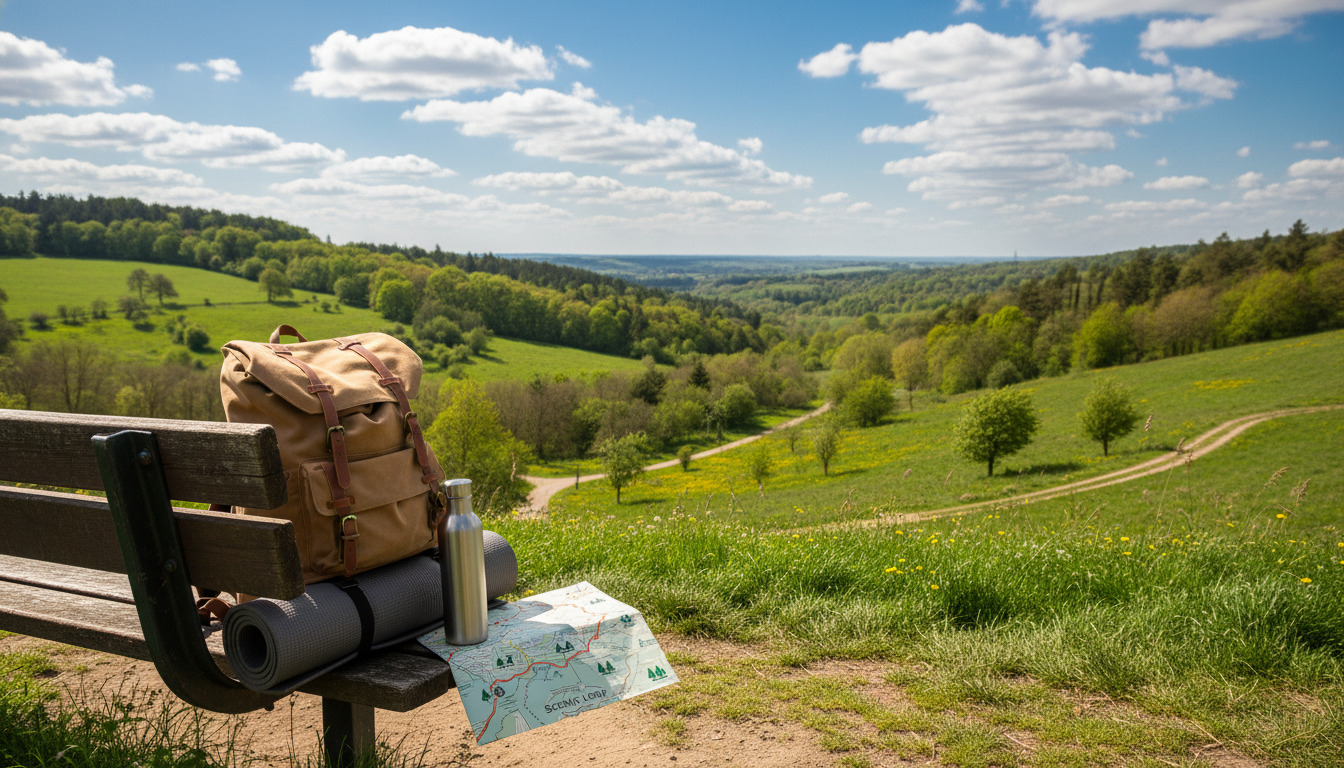

You don't need to quit your job, sell the couch, or wait for some clean break to start living this way. Learning how to turn short trips into a long-term travel lifestyle is an engineering problem, not a savings problem. The lever is not money or nerve. It's the boring systems you build at home before you leave, so that one two-week trip stacks onto the next until the gaps between them disappear.
Most guides sell you the leap. I'd rather you build the ramp. Below is how the ramp actually gets built, and where people fall off it.
What actually separates a long trip from a travel lifestyle?
A long trip has an end date you're counting down to. A lifestyle doesn't. That's the whole shift, and it's structural, not emotional.
On a long trip, home stays frozen and waiting. You come back, unpause your life, and the trip becomes a story. A lifestyle means home stops being a fixed place and becomes a set of systems you carry: how you earn, how you get mail, how you stay legal, how you keep friends. The trip is no longer the event. It's the default.
So the question is never "can I afford six months off?" It's "can my income, my paperwork, and my relationships survive me being gone with no return date?" Answer that and the length takes care of itself.
How do you test the lifestyle before you commit to it?

Use the short trips you already take as rehearsals, not vacations. You have a long weekend or a two-week window coming up. Stop treating it as a break and start treating it as a dry run.
Here is what I do. On the next trip, I don't switch to holiday mode. I work a normal half-day from the room, then go out. I want to know if I can actually think in a strange bed with bad wifi.
Test one variable at a time so you learn something:
- Work setup. Do a real day of your actual job from a café and a rental, not a beach photo. See what breaks.
- Accommodation type. Try a private room, a hostel, and a month-long apartment on separate trips. Notice which one you can stand for weeks, not nights.
- Daily rhythm. Keep your normal wake time and one anchor habit. If the trip only works when you abandon all routine, that's a warning.
The point is to fail cheaply, close to home, while you still have a job to go back to. A trip that exhausts you after four days tells you more than any blog. Better to learn it on a Tuesday in Lisbon than eight months into a lease you can't break.
What does your home base setup need to look like before you leave?
Sort the unglamorous stuff first, because it's what silently sinks people. Nobody quits the road over a sunset. They quit because a card got frozen and the bank needed a letter mailed to an address they no longer have.
Set up a permanent mailing address you trust, ideally a family member or a paid mail-scanning service. Tell your bank you'll be abroad, and carry two cards from two different banks on two different networks. One will get blocked at the worst moment. The second is the whole reason you're not stranded.
Sort storage before you're sentimental about it. A small unit or a corner of a relative's garage beats hauling everything or dumping it in a panic. Keep your important documents scanned and stored somewhere you can reach from any phone.
Check your health cover and get real travel insurance, not the free card kind. Read what it does when you're gone longer than a normal trip, because many policies quietly stop covering you past a set number of days. This back-home layer is dull to build and brutal to skip. Get it wrong and the lifestyle ends over admin, not adventure.
How do you structure your income so travel doesn't drain it?
Audit the income you already have before you chase remote gigs online. Most people skip this and go straight to "find a laptop job," which is backwards. Look at what you earn now and ask which parts could happen anywhere.
Rank your income by risk, then move up the ladder slowly:
- Lowest risk: convince your current employer to let you work remotely, even part-time at first. You keep the pay and the relationship while you test the road.
- Medium risk: freelance or contract the skill you already sell, so you're not learning a new trade and a new lifestyle at once.
- Highest risk: anything that pays nothing for months, like a product, a channel, or "passive" income. Treat it as a bonus, never the plan.
The mistake is leading with the risky stuff because it sounds free. Passive income is rarely passive and almost never fast. Build the boring, reliable stream first and let the moonshots grow behind it.
Watch your spending on the road too, because a good month of income can vanish into flights and constant moving. I've written more on realistic spending habits for long-term travel if you want the detail. The short version: moving less costs less.
How do you actually keep working on the road without losing your mind?

Pick your base by its internet and its time zone, not its beach. This is the operational layer most lifestyle guides wave past, and it's where output quietly dies.
Sort connectivity before you arrive. Buy a local eSIM the day you land so you have data before the apartment wifi disappoints you, which it will. I always check a place has a backup: a café, a coworking spot, a second neighborhood. One dead router shouldn't cost you a workday.
Time zones decide more than you think. If your clients or team sit eight hours behind you, you'll live at night and never see the city in daylight. Match your destination's clock to your work hours where you can, or accept a fixed overlap window and guard it.
Protect one routine that travels with you. Same start time, same first task, same shutdown. The city changes constantly, so your workday shouldn't. If you want the fuller version of settling in, how to adjust to life on the road covers the first weeks in detail.
What's the honest cost of a continuous travel life?
It costs more than the frugal blogs promise and less than the fear voice in your head says. The real number depends almost entirely on how fast you move, not where you go.
Think in three rough tiers rather than fake precise figures. Cheaper regions like much of Southeast Asia, parts of Central Europe, and Latin America can run low if you stay put and rent monthly. Mid-tier places sit higher. Expensive cities in Western Europe and the coasts of wealthy countries will eat a budget fast, especially in high season.
The hidden costs are what surprise people. Travel insurance every month. Visa fees and the occasional flight just to reset a legal clock. Gear that wears out. And the flexibility premium: the last-minute booking, the taxi because you're tired, the unused half of a lease you left early.
Speed is the single biggest line item nobody puts on the budget. Two weeks in each place is far cheaper than two nights, because flights, first-night dinners out, and airport transfers repeat every time you move. Slow down and the numbers calm down. For the in-between stretches, saving money between travel stops has the tactics I use.
How do you handle visas, entry limits, and staying legal?
Plan the whole route around legal stay limits from day one, instead of discovering them at a border. The classic trap is the 90-day rule. Many regions, the Schengen Area in Europe most famously, let most short-stay visitors stay only 90 days in any 180. Overstay and you risk fines or a ban.
Learn the rules of the Schengen Area before you book a long Europe run, because the clock counts days across the whole zone, not per country. Hopping from France to Spain does not reset it.
For staying longer, you have better options than sketchy border runs. There are now around 73 digital nomad visa programs worldwide, made for exactly this: remote workers who want months, not weeks, and a legal way to get them. They vary wildly in income requirements and paperwork, so read each one directly.
At the long end, some countries sell straight-up stay time. Thailand's Privilege Visa, the program people still call the Thailand Elite visa, sells membership tiers that grant residence for 5, 10, 15, or 20 years. It isn't cheap, but if you want one base you can return to for years without visa math, it's a real answer.
Build your itinerary as a legal calendar first, then hang the fun on it. Know your entry and exit dates before you fall for a place.
When does slow travel beat fast travel, and vice versa?
Match your pace to your income model and your head, not to whichever one looks better online. Slow travel wins for most people doing this long-term, for money and for sanity.
Slow travel means weeks or months in one place. It's cheaper, you work better, and you actually meet people instead of collecting airports. The downside is honest: you'll get restless, and some months will feel like ordinary life with a different view out the window.
Fast travel earns its keep in short bursts. Use it when a visa is closing, when a place clearly isn't working, or when you've saved up and want a run of new cities on purpose. Just don't run it as your default. Constant motion is the fastest way to burn out and the fastest way to spend.
The tell is your energy. If you're tired, homesick, and behind on work, you're moving too fast, full stop. Slow down before you decide the whole lifestyle is broken.
How do you maintain relationships when you're never in one place?
Schedule your close relationships like they're appointments, because on the road they will not happen by accident. This is what sinks people far more often than money does, and most guides skip it or hand you a platitude.
Loneliness on the road isn't a lack of people. Hostels and coworking spaces throw new faces at you constantly. It's the lack of people who knew you last year. Those bonds fade quietly unless you defend them.
So I do a few unromantic things. I keep two or three standing calls a week with home, same day, same time, worked around the zones. I tell people my next city early, so anyone nearby can plan to overlap. And I stay somewhere long enough to become a regular at one café or gym, because familiarity beats novelty for feeling settled.
Accept the trade honestly. You'll miss weddings, birthdays, and ordinary Tuesdays. Pick the few relationships you refuse to let slide and pour into those, rather than pretending you can keep everyone.
What are the clearest signs it's working, and when should you recalibrate?
Watch three simple gauges: your bank balance, your energy, and your sleep. If all three hold steady over a few months, it's working. If any one slides for weeks, recalibrate before it drags the others down.
Working looks like this. Your income covers your months without you draining savings. You're excited to explore a new place but not exhausted by the moving. You still talk to the people who matter, and you sleep in a strange bed without dread.
The warning signs are just as plain. Savings quietly leaking. Dreading the next flight. Skipping the calls home. Counting days until you can "stop." That last one means you built a long trip, not a lifestyle, and it's time to slow the pace, extend a base, or go home for a stretch on purpose.
Recalibrating is not failure. It's the whole skill. Check these gauges monthly, adjust early, and you avoid the classic crash where someone burns out at the one-year mark and decides the life doesn't work. It works. It just needs steering.
FAQ
How long should my first "test" trip be before I commit?
Long enough to hit a normal week, so at least ten days. A weekend hides the hard parts. You need to feel the Monday slump in a strange place, deal with a dull chore abroad, and see whether you still want it on day eight.
Do I need a lot in savings to start?
You need a buffer, not a fortune. Aim for a few months of expenses so a slow work month or a surprise flight doesn't panic you. The bigger safety net is a reliable income you can run from anywhere, which matters far more than one big pile of cash.
Is it cheaper to keep my home or give it up?
Almost always cheaper to give it up, if you plan to be gone most of the year. Paying rent on an empty place while paying to sleep elsewhere is two housing bills for one body. Sort out storage and a mailing address instead, and only keep a home base if you genuinely return for months at a time.
What's the single most common reason people quit?
Loneliness and relationship strain, not money. People assume the budget will break them, then leave because they feel disconnected from everyone who knew them. Build the relationship systems before you go and you'll outlast most.
Can I do this with a normal job, not a laptop business?
Often, yes. Ask your current employer for remote or hybrid work before you assume you need to reinvent your career. Plenty of ordinary jobs can be done from another time zone if you handle the overlap hours and stop treating "remote" as a beach cliché.