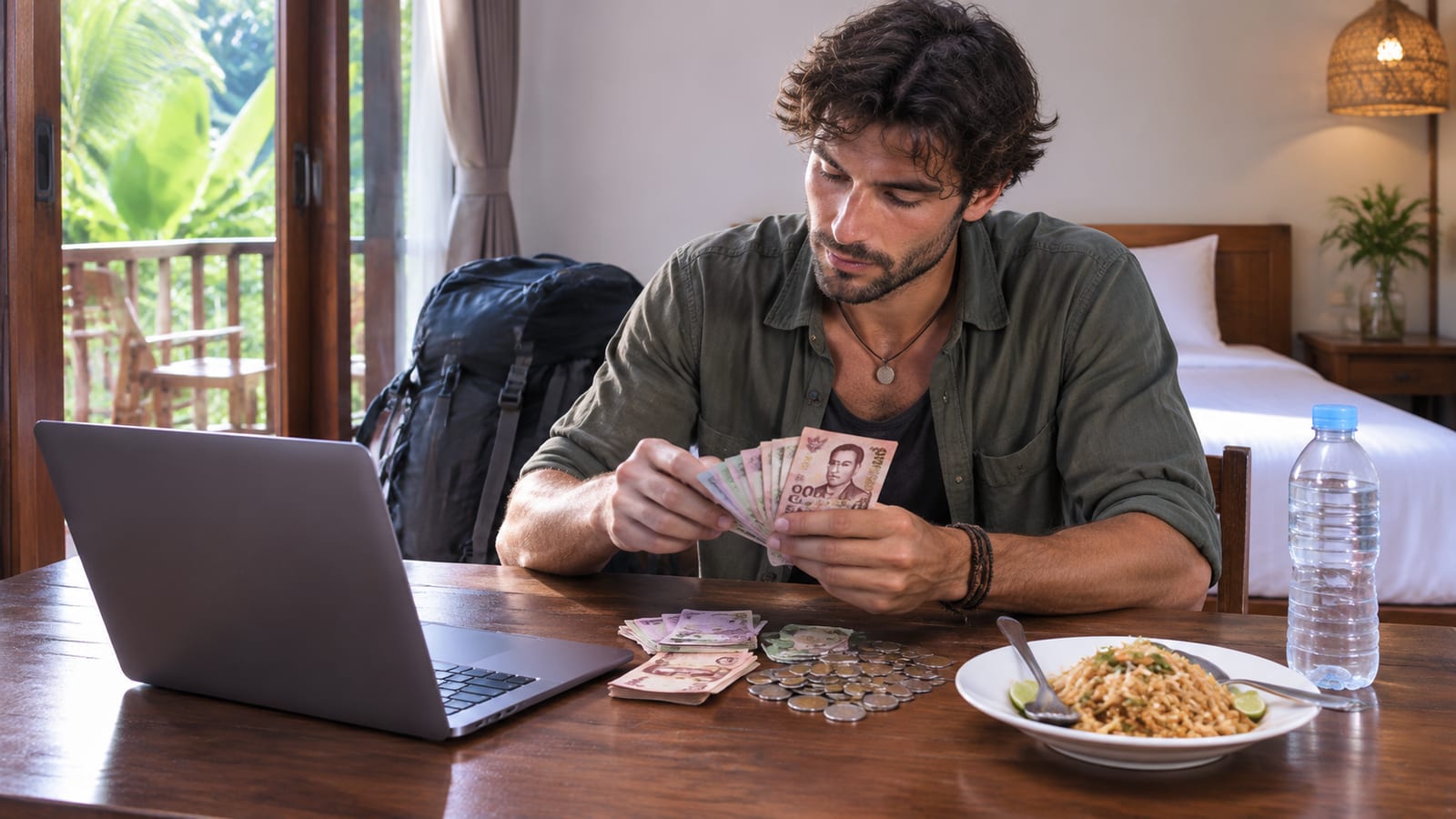
How much does a month in Thailand cost? For most travelers who want air-con, a scooter, and the odd sit-down meal, plan for a comfortable middle of one to two thousand dollars and change. Grinding backpackers can push it down toward a thousand, and people chasing beach bungalows and cocktails will clear three thousand without trying. The mistake nearly everyone makes is underestimating island prices and overestimating how long their willpower holds against comfort.
How much does a month in Thailand really cost?
Your number depends almost entirely on how you sleep and where you eat. Here is the quick read before the detail.
| Tier | Monthly total | What it buys |
|---|---|---|
| Shoestring | $800 to $1,000 | Fan rooms, street food, overnight buses |
| Mid-range | $1,500 to $2,000 | Air-con room, one restaurant meal a day, scooter, a few day trips |
| Comfortable | $3,000 to $4,500 | Private bungalows, domestic flights, cooking classes, rooftop drinks |
| Luxury | $6,000 to $10,000+ | Five-star hotels, private longtail charters, restaurant dinners nightly |
A budget traveler living in Thailand can average around $30 a day, which lands squarely in that shoestring band. It works. It just leaves no slack for a bad guesthouse run or a motorbike repair.
The luxury tier is real, by the way. Thailand delivers genuine five-star for the money. You are simply paying near-European rates at the top, not the bargain the brochures imply.
Where your rent money really goes
Accommodation is the biggest lever you have, so pull it first. A basic fan room in a Chiang Mai guesthouse runs a few hundred baht a night. An air-con room with hot water and decent wifi costs roughly double that.
The trick most travelers miss is the monthly rate. Guesthouses and small apartments cut the nightly price hard when you commit to weeks, not nights. Walk in, ask for the monthly price in person, and you will often pay half the online nightly rate.
Islands break this rule. In Phuket, a one-bedroom apartment in the heart of town averages about $498 a month, and beachfront pushes well past that. That is the gap nobody plans for: mainland cities are cheap, tourist islands are not.
Here is what I would do. Book two nights online, arrive, then negotiate the month face to face once you have seen the room and the water pressure.
What food actually costs over a month

Street food keeps you fed for almost nothing, and it is not a sacrifice. A plate of pad kra pao or a bowl of noodles costs less than a coffee back home. Eat this way and your food bill for the month stays tiny.
The problem is drift. Week one you love the plastic-stool noodle stall. By week three you want a burger, a proper coffee, and air-con while you eat. That single Western meal a day is where mixed budgets quietly double.
Three honest daily food figures:
- Street food only: a handful of dollars a day
- Mixed, one restaurant meal daily: two to three times that
- Full Western and cocktails: more than your room some days
Bangkok has the best cheap eating in the country. To learn where locals actually queue, my guide to Bangkok street food and where to find it covers the stalls worth the walk.
The cheapest place to base yourself
Chiang Mai wins on cost, and it is not close. Rooms, food, and long-stay deals all run cheaper than Bangkok, and far cheaper than the islands. Quiet northern towns like Pai or Chiang Rai go lower still, though you trade choice for savings.
Bangkok sits in the middle. Rent is higher, but street food and public transport are cheap, so a careful month costs less than people expect.
Phuket and Koh Samui are the expensive end. Island rent, ferry-in groceries, and tourist-priced restaurants add up fast. A beach week is worth it. A beach month will cost you like two mainland months.
So base yourself inland and travel out to the coast for a week or two. That single decision saves more than any daily penny-pinching.
Getting around without bleeding your budget

Transport is cheap if you avoid the lazy options. A scooter rental runs a modest monthly rate and unlocks a whole region, but only rent one if you can genuinely ride. Thai roads are unforgiving and the hospital bill is the real cost, not the daily hire.
For long hops, overnight trains and buses double as a bed and save a night's accommodation. Domestic flights between Bangkok and the south are cheap when booked ahead and quietly expensive last minute.
Island ferries add up. Every hop between islands costs real money and half a day. In Bangkok, skip the tuk-tuks waving you over near temples; the metered taxis and the train cost a fraction and never haggle.
Budget a modest monthly total for local transport if you stay put, more if you island-hop. The hopping, not the daily riding, is what drains the account.
Activities are where budgets quietly die
The big-ticket experiences are the real budget-killers, because travelers treat them as free extras. A diving certification course, a full-day cooking class, an elephant sanctuary visit; each one costs more than a week of rooms.
None of them are overpriced. They are just not the pocket change street food trained you to expect. Two or three of these in a month, and you have added a whole tier to your spending.
Temples are the cheap win. Most charge a small entry fee, some are free, and a day wandering them costs almost nothing. Full-moon parties cost little to enter and a lot once the buckets start.
Here is my rule. Pick the two experiences you actually flew here for, budget them properly upfront, and treat the rest as optional. Do not let them ambush you in week three.
Does a full month save you money?
Yes, but less than the internet promises, and only after week two. The savings are real: monthly apartment rates, a local SIM with a cheap data plan, and a routine that kills the tourist markup on everything.
The catch is the front-loaded cost. Your first days are the expensive ones. You take taxis before you learn the train, you eat near the sights, you say yes to pricey day trips while the novelty is high.
Real monthly living only starts once you settle. You find the cheap laundry, the local market, the noodle place that remembers you. That is when the daily number drops.
So a month is cheaper per day than a week. Just do not expect the discount before you have earned it by slowing down.
Hidden costs first-timers always miss
These are the line items that wreck a tidy budget, and they are all avoidable. Visa fees come first: most travelers get a stamp on arrival, but longer stays and extensions cost money and paperwork. Check the current rules on the official Thai e-Visa site before you fly, because they change.
Travel insurance is not optional here, and a scooter clause matters more than anything. Many policies refuse motorbike claims unless you hold the right license. Read that clause before you rent.
The quiet drains:
- ATM withdrawal fees on every cash pull, charged by Thai banks on top of your own
- Airport taxis at three times the metered rate if you do not walk to the rank
- Tourist-trap restaurants with photo menus and a person waving you in
- A clinic visit for the standard traveler's stomach bug
None of these are huge alone. Together they add a few hundred dollars a first-timer never budgeted for.
A realistic daily budget by tier
Divide the month and watch it week by week, because your spending shifts as the novelty fades. Week one always runs hot. Weeks three and four settle once you have a routine, cheap or expensive.
Daily targets to self-monitor without a spreadsheet:
- Shoestring: aim for around $30 a day, the budget-traveler average, and treat any overspend as a warning
- Mid-range: $50 to $65 a day covers an air-con room, mixed meals, and a scooter
- Comfortable: $100 to $150 a day, once flights and bungalows enter the picture
- Luxury: $200 and up, capped only by how good the hotel is
Track the daily number, not the monthly one. If your average creeps up two days running, you know before payday, not after. For the wider region, my guide to traveling Southeast Asia on a budget puts these figures in context.
Timing changes the math too. High season on the islands costs more for the same room, so check when each season actually lands before you book the beach half of your trip.
FAQ
Can two people share a month cheaper than one?
Yes, and it is the biggest saving available. A double room costs barely more than a single, so splitting rent roughly halves your largest expense. Food and transport stay per-person, but couples routinely run a shared month for less than two solo budgets combined.
Do I need cash or will cards work everywhere?
Carry cash for daily life and keep a card for hotels and flights. Street stalls, markets, and small guesthouses are cash-only, and rural areas have few working ATMs. Pull larger amounts less often to soften the per-withdrawal fee.
How much should I set aside for emergencies?
Keep a few hundred dollars untouched beyond your monthly budget. A clinic visit, a lost phone, or a last-minute flight change all land without warning. This buffer is separate from insurance, not a replacement for it.
Is the rainy season actually cheaper?
Rooms and flights drop in the wet months, sometimes sharply on the islands. The rain usually comes in short bursts, not all-day washouts, so an indoor-friendly plan makes it workable. You trade some beach certainty for a noticeably smaller bill.
What is the single fastest way to cut my monthly cost?
Base yourself inland and negotiate a monthly rate in person. Chiang Mai rent plus street food is the cheapest combination in the country. Every other saving is small next to fixing where you sleep and what you pay for it.
Related: Thailand Travel Seasons: When to Go for Sun and Value