
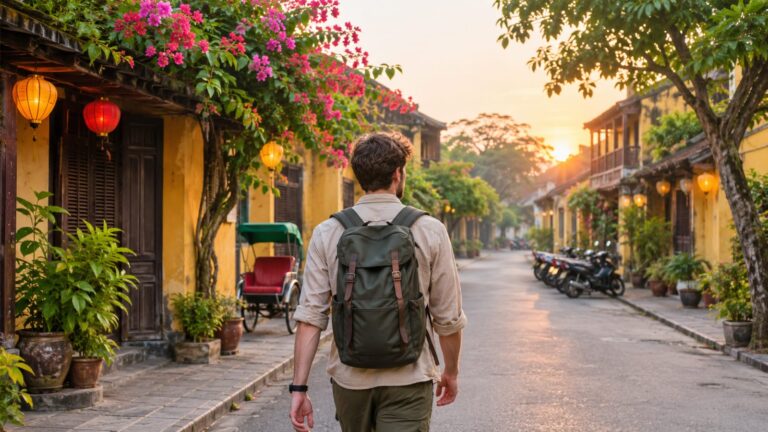
A trip to Vietnam costs your return flight plus a low daily spend: a backpacker budget runs about 600,000 VND per day, and it climbs from there as you trade dorms and street food for private rooms, trains, boutique hotels and drivers. The flight is usually the biggest single bill. On top of that, add the US$25 single-entry e-Visa, travel insurance, and one big tour such as a Ha Long Bay cruise. Price the flight for your dates first, then multiply one typical day at your comfort level by your nights, and you have your total.
Even the middle level costs well below the same comfort in Europe or Japan, and the top end has no real ceiling. Backpackers can go much lower still.
The catch is that squeezing every transfer and every hotel is where a cheap Vietnam trip gets tiring fast.
How much does a trip to Vietnam cost?
Expect two bills, and the first one is the big one. The flight depends on where you live and when you book. Everything you spend once you land is cheap at every comfort level, from a dorm bed to a boutique hotel.
Here is the simple formula I use. Start with the flight, then add the e-Visa fee and insurance. Next, multiply your daily spend by your nights, then add one or two big tours and a buffer. Fill in each line for your own dates, and you have a real total.
Price the flight first because it changes with your route and dates. After that, decide how comfortable you want to be on the ground.
Why longer trips cost less per day
Trip length changes the math in a way people miss. Some costs arrive only once. You pay for the visa, a SIM card, airport transfers, and usually one splurge while you find your feet.
Stay longer and those fixed costs spread across more days. You slow down, eat where the locals eat, and stop paying the tourist price for things. The total rises with every extra night, but the daily average can fall.
What goes into the total
Every Vietnam budget is built from the same handful of lines. Some you pay once before you fly. The rest you pay every day you're there.
| Cost | When you pay it | How big it is |
|---|---|---|
| Return flight | Before you go | Usually the biggest single bill |
| E-Visa | Before you go | A small fixed government fee |
| Travel insurance | Before you go | Depends on your age and cover |
| Beds | Every night | The biggest daily cost, from dorm to boutique |
| Food and coffee | Every day | Low at every level |
| Getting around | Every leg | Sleeper buses cheapest, flights fastest |
| Big tours | Once or twice | A Ha Long Bay cruise is the largest |
| Entry tickets | As you go | Mostly small |
| Emergency buffer | Set aside | Enough for a missed flight or a doctor |
Add up the before-you-go lines once. Then price one typical day at your comfort level and multiply it by your nights. As a result, you get a real number for your own dates instead of a guess from a forum.
Daily budgets by travel style

Your daily spend comes down to three choices: where you sleep, how you move between cities, and how many paid tours you book. Food barely moves the needle, because good food in Vietnam is cheap at every level.
| Style | Where you sleep | How you eat | How you move | What it feels like |
|---|---|---|---|---|
| Backpacker | Hostel dorms, basic guesthouses | Street stalls and markets | Sleeper buses, motorbike taxis | Cheap and social, often tired |
| Comfortable independent | Private rooms in good small hotels | Street food plus sit-down dinners | Trains, budget flights, Grab | Easy, flexible, plenty of rest |
| Upscale | Boutique hotels, beach resorts | Restaurants and hotel bars | Private drivers, booked tours | Smooth, with no real ceiling |
The middle row is where I'd point most people. A private room with air conditioning and a hot shower costs little more than a dorm bed in much of Western Europe. That small upgrade buys you real sleep, and real sleep is what keeps a fast trip fun.
The costs that make or break your budget
Most daily costs in Vietnam are small. A handful of bigger ones decide whether you stay on budget.
Beds and hotels
Dorm beds are the cheapest option, and many hostels throw in breakfast. A clean private room in a family-run hotel costs surprisingly little in most cities. The price jumps at beach resorts and on popular islands.
Location matters more than stars. A plain hotel within walking distance of the old quarter saves you taxi fares every single day.
Food, coffee, and beer
A bowl of pho or a banh mi from a street stall costs about what a coffee costs at home. Sit-down restaurants in tourist areas cost several times more, and the food is often no better.
Vietnamese coffee is cheap and strong. Local beer costs less than bottled water at some street corners. Imported wine and cocktails are where a food budget quietly doubles.
Attractions
Most entry fees are small. In Hoi An, the Old Town ticket costs 120,000 VND, about US$5, for foreign visitors older than 15. Big paid experiences cost far more, and a Ha Long Bay cruise is the main one.
Visas, SIMs, and insurance
Many nationalities need an e-Visa, and you can apply on the official Vietnam e-Visa portal. Apply there rather than through an agency site.
Airport SIM kiosks charge more than shops in town, though the convenience is worth it on arrival day. Travel insurance is a real cost you should never skip. Check that your policy covers motorbikes before you ride one.
Solo, couple, or family: who pays more per head?
Solo travelers can't split room, private car, or taxi bills. Couples can share those costs, which gives them more room in the budget for private rooms and easier transport.
Here is what I'd tell a solo traveler: book hostels with private rooms. You get your own door and still have a common room for company. Join group tours for Ha Long Bay or Sapa so you aren't paying for a whole boat or guide alone.
Families of four flip the math again. A private driver can make sense when several people are traveling together. It also saves you from dragging tired kids through a station.
Trains and some attractions offer child fares, so ask at the counter. Family rooms and small apartments are easy to find in Da Nang and Hoi An, and harder in the old quarter of Hanoi.
A realistic budget for a family of four

Plan a family trip at the comfortable level, then add a cushion. Families rarely overspend on the big items. They overspend on the small, daily things nobody wrote down.
These are the costs families tend to forget:
- Connecting rooms or a family suite. Two cheap rooms often cost more than one good family room.
- Private transfers. You'll use far more of them than you planned, especially with luggage and a sleeping toddler.
- Bottled water, snacks, and juice. Small amounts, bought many times a day.
- A hotel with a pool. It costs more, and it saves the afternoon when everyone melts in the heat.
- Checked bags on domestic flights. Budget fares often leave them out.
- A spare day. Kids get sick, and a free day in the plan stops a cough from wrecking the trip.
Two weeks at a family pace means fewer stops and longer stays. That keeps transport costs down, and you won't spend every second day packing.
Where you go changes what you spend
The big cities are cheap for food and fair for hotels. Hanoi's old quarter is full of small family hotels, and you can eat well for very little. Ho Chi Minh City feels a little pricier, with more international restaurants and rooftop bars to tempt you.
Da Nang, on the central coast, has some of the best-value beach hotels in the country. Hoi An is close by, and it is busier and pricier because so many tour groups pass through. Stay on a quiet street off the main lanes and you'll pay less for a calmer room.
Ninh Binh, south of Hanoi, is cheap to sleep in. Your money goes on the boat ride and a bike to reach the countryside. Sapa, in the northern mountains, adds a trekking guide and a homestay to the bill, and both are worth it.
Phu Quoc, an island in the far south, charges a beach premium. Resorts cost more, food costs more, and you'll usually fly in. Ha Long Bay, near Hanoi in the north-east, is the single biggest line on many itineraries because of the cruise.
Smaller cities like Hue and Dalat are where your money stretches furthest. Fewer tourists means fewer tourist prices. For quieter places like these, see my guide to the quieter corners of Vietnam.
When is Vietnam cheapest to visit?
Avoid Tết, the Lunar New Year, unless you want to see it on purpose. Tết moves each year with the lunar calendar. Trains, buses, and domestic flights sell out, prices climb, and many family-run restaurants close for days.
Vietnamese school summer holidays push up prices at beach towns, because so many local families travel. Weather sets the rest. The north has cool, damp winters, and the south has distinct wet and dry seasons.
The central coast gets a stormy rainy season late in the year. Rooms are cheaper then, but seas get rough and some boat trips get cancelled. When it rains, Hoi An's cafés and tailor shops make an easy indoor day.
Check domestic flights early, especially near holidays. Hotels outside peak weeks can usually wait until you're closer to your dates.
Getting around without blowing the budget
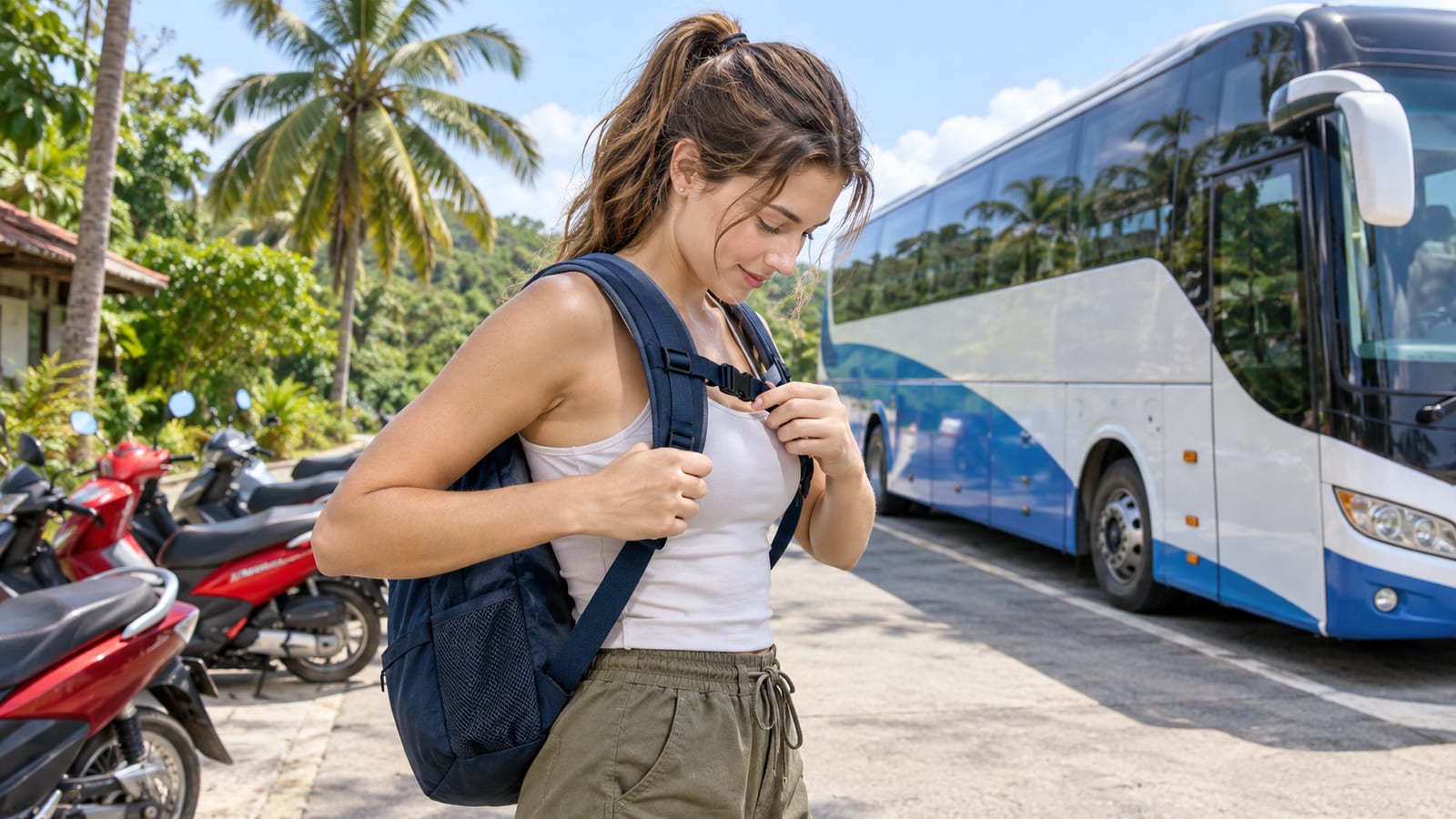
Choose transport by how much time you have, then by price. A cheap bus that kills a day can end up costing you more than a flight.
Sleeper buses are the cheapest way to cover long distances. The beds are short and narrow, which is hard on tall people, and the ride is bumpy. They suit backpackers with time and a good pair of earplugs.
Trains are slower than flying and more comfortable than the bus. The north-south line, known as the Reunification Express, runs along the coast. A soft sleeper cabin is a good mix of saving money and getting some sleep.
Domestic flights cover the length of the country fast and cheap if you book ahead. Watch the baggage rules, because the low fare often leaves bags out.
Private cars make sense for families and short scenic hops, like the road over the Hai Van Pass between Da Nang and Hue. Split between several people, the price is fair and you can stop where you like.
Motorbike rentals are cheap, but skip them if you don't hold a valid licence. Many travel insurance policies won't pay out if you crash without one. Grab, the ride-hailing app, is the easiest way around the big cities. It shows the price before you ride, so you never haggle with a driver.
Three sample trip budgets
These plans show where the money goes. The prices shift with your flights and your dates, but the shape of each budget holds.
A budget solo week in the north
Spend a few nights in Hanoi, then take a bus to Ninh Binh for the karst scenery. Sleep in hostels, eat on the street, and grab a coffee at a corner café every morning. Your one splurge is a group trip to Ha Long Bay. Most of your money goes on that cruise and on beds.
A comfortable two weeks for a couple
Start in Hanoi, add an overnight cruise on Ha Long Bay, then fly to Da Nang. Spend slow days on the beach and in Hoi An, then fly south to Ho Chi Minh City. Book private rooms in good small hotels and use Grab in the cities. Flights between regions and the cruise will be your biggest costs.
A family-friendly two weeks
Fewer stops, longer stays. Try Hanoi, a quiet day trip to Ninh Binh, then a flight to Da Nang for a pool hotel near the beach. Add Hoi An in the morning light, before the tour groups arrive. Skip sleeper buses with kids and use private transfers instead. Your budget leans on family rooms and drivers.
Should you book a tour package or do it yourself?
Do it yourself for most of the trip. Vietnam is easy to book on your own, with apps for rides, plenty of small hotels, and transport you can buy online. Packages add a markup for logistics you can handle.
A package is worth paying for in three cases. The first is a very short trip, where losing time costs you more than saving money. The second is a first trip to Asia where planning makes you anxious. The third is a family with small kids who need everything sorted in advance.
Even on your own, a few parts work better as tours. These include a Ha Long Bay cruise, a guided trek around Sapa, and a day in the Mekong Delta. A guide adds real value there. Skip paid walking tours in Hoi An and Hanoi's old quarter, because both are easy to wander on foot.
Easy ways to save money without ruining the trip
Book domestic flights early, with bags included. A cheap fare that adds bags at the gate stops being cheap. Use Grab in cities instead of hailing a street taxi, so the price is fixed before you get in.
Pick hotels in walking distance of what you want to see. A slightly pricier room in the right spot beats a cheap one that needs a taxi every time you leave.
Tourist traps cost more than anything else, and they are easy to dodge. Ask the price before you sit down at a stall without a menu. Agree on the fare before a cyclo ride, and check your change carefully. My guide to money, safety, and scams in Southeast Asia covers the common tricks.
Eat one street back from the main square. The plastic stools there usually serve better food for less. Trust yourself on this one, and follow the crowd of office workers at lunch.
What to budget before you book
Run through this list before you pay for anything else:
- Flights. Price these first, because they decide the whole budget.
- Entry rules. Check whether you need an e-Visa, and apply on the official portal.
- Travel insurance. Make sure it covers the activities you plan, motorbikes included.
- Cash. Vietnam runs on cash outside the big cities. The dong has a lot of zeros and some notes look alike, so count twice.
- Cards. Bring two from different banks, and expect ATM fees on every withdrawal.
- Tipping. It isn't expected at street stalls, but guides and drivers on tours appreciate it.
- An emergency buffer. Set aside money you don't plan to touch, for a missed flight or a doctor's visit.
Your first step today: price your flights for the dates you want. Every other number in your plan depends on that one.
FAQ
Can I pay in US dollars in Vietnam?
Some hotels and tour offices quote in dollars, but daily life runs on dong. If you pay in dollars at a stall or in a taxi, you'll usually get a poor rate. Withdraw dong from an ATM and spend that.
Is Vietnam cheaper than Thailand?
For most travelers, yes, especially on food and mid-range hotels. Thailand's islands and Bangkok have pushed prices up over the years. To see how the numbers stack up over a longer stay, read my breakdown of what a month in Thailand costs.
How much cash should I carry day to day?
Carry enough for a day of meals, coffee, and a couple of rides, and keep the rest locked in your hotel. Split it between a wallet and a second spot, so one lost pocket doesn't end your day. Refill at an ATM inside a bank or a mall when you can.
Is a cheap trip in Vietnam still comfortable?
It can be, if you spend on sleep and save on everything else. A private room and the odd train or flight make the biggest difference to how you feel. Street food and buses are easy to live with once you're rested.