
Bali is only cheap if you get the room and the rides right. A budget week on the ground, with homestays, meals at warungs (small family-run cafés), and app rides, runs to a few hundred dollars. A mid-range week costs noticeably more, mostly because of the room, while a splurge week of pool villas and a daily driver has no real ceiling. Your flight, a visa, and a small tourist levy sit on top.
Food, temples, and beaches stay cheap if you eat where Balinese people eat. Prices shift with the season and the exchange rate, so blanket daily figures go stale fast. Here is how the money splits, where it leaks, and how to price your own week in one evening.
How much does a week in Bali cost?
A week in Bali costs your flight, plus seven nights of accommodation, plus transport, food, and a handful of fees. Once you land, the bed and the driver take the biggest share. Meals are the smallest share unless you live at beach clubs.
This table shows what each budget style looks like on the ground. Use it to decide which column you're in, then price your own trip from there.
| Spending area | Budget week | Mid-range week | Splurge week |
|---|---|---|---|
| Where you sleep | Hostel dorm or simple homestay room | Private guesthouse room with a shared pool | Private pool villa or resort |
| How you eat | Warungs for most meals | Warungs by day, a nice dinner most nights | Restaurants, beach clubs, cocktails |
| How you get around | Rented scooter or ride-hailing apps | Apps plus one or two hired-driver days | Private driver most days |
| What you do | Free beaches, rice terraces, temples | A few paid tours or a cooking class | Spa days, guided trips, boat tours |
| Biggest risk | Spending more on transport than planned | Drifting into splurge prices at dinner | Paying resort prices for local experiences |
Pick your column honestly. Most people who blow their Bali budget planned a budget week, then booked mid-range rooms because the photos looked good.
What each kind of week costs
A budget week is the cheapest way to see the island well. Dorm beds and homestay rooms cost little, warung meals cost very little, and app rides keep short hops affordable. If you're flying long-haul, your flight will likely cost more than the whole week on the ground.
A mid-range week costs noticeably more, and the room is the main reason. A private guesthouse room with a pool and a couple of hired-driver days push the total up. Food still stays cheap if you keep lunch at warungs.
A splurge week has no real ceiling. Pool villas, a daily driver, spa days, and beach club afternoons can cost as much as a luxury week in Europe. That's a fine trip if comfort is the goal. Just know the temples and rice terraces look the same from a homestay porch.
Your bed sets the whole budget
Accommodation decides everything else. Bali's rooms run from shared hostel dorms to villas with a private pool, and the price gap is enormous. However, the jump in comfort isn't always as big as the jump in cost.
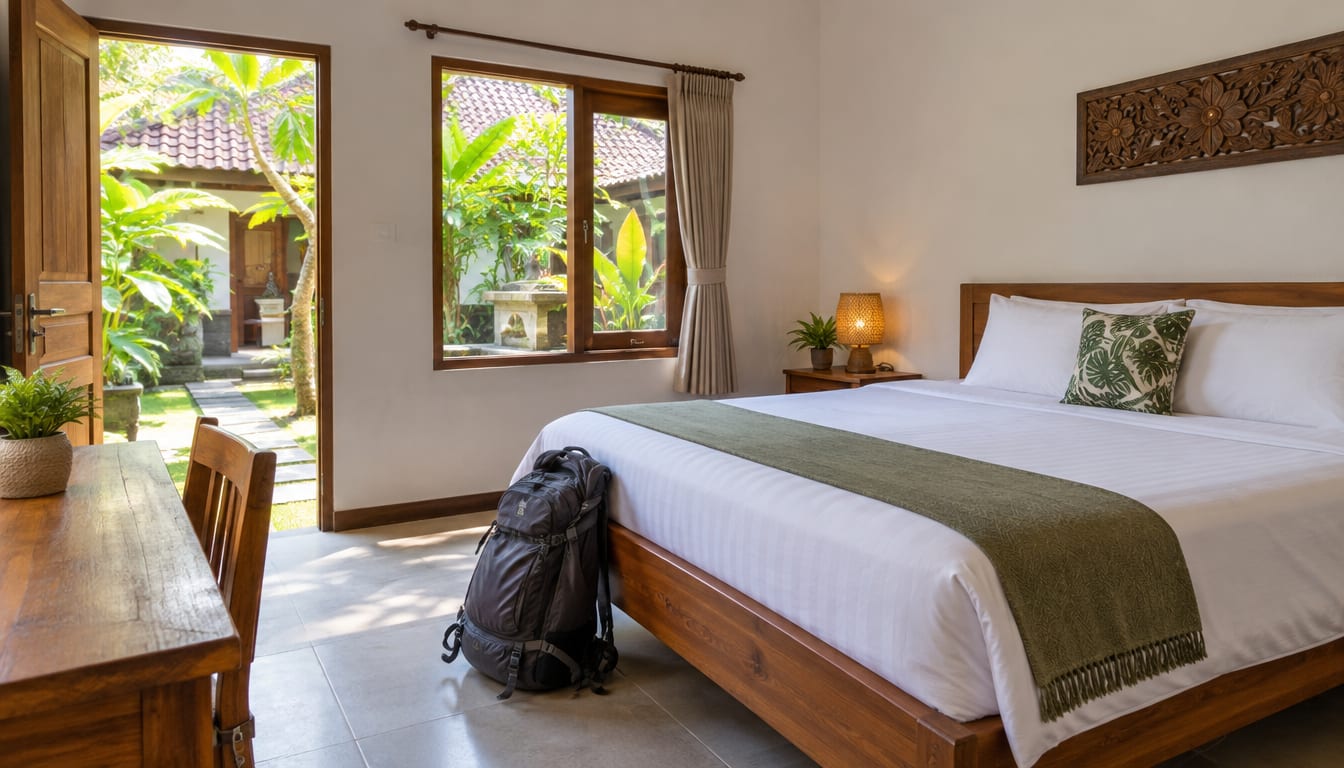
The best value usually sits in homestays. A homestay is a guesthouse run by a Balinese family, often inside their own family compound, with a small temple in the courtyard. You get a clean private room, breakfast on the porch, and hosts who will tell you which warung down the road is good.
Here is what I do: I filter for homestays with recent reviews that mention the hosts by name. That small detail tends to mean someone actually lives there and cares.
Area matters too. Canggu and Seminyak in the south charge more for the same room than quieter towns like Sanur or Amed. Ubud sits in between, with cheap rooms on the side streets and expensive resorts on the jungle edges.
The downside of the cheap pool villa
Private pool villas in Bali can look shockingly affordable online. Some of them are. Still, many sit at the end of a long, unlit lane, far from anything in walking distance. As a result, you pay for a ride every time you want dinner.
Check the map before you book. A slightly pricier room on a quiet street near the center often costs less by the end of the week.
Food is the cheap part, if you eat local

Warungs are where Balinese people eat, and they're where your food budget stays small. Order nasi campur (rice with a few small portions of meat, vegetables, and sambal) and you'll eat well for very little. Babi guling, the island's spit-roasted pork, is worth seeking out at a busy local spot around lunchtime.
The money leaks elsewhere. Smoothie bowls, flat whites, and brunch plates in Canggu and Ubud cafés cost Western prices, sometimes close to what you'd pay at home. I still grab a coffee at those places now and then. I just don't build every meal around them.
Alcohol is the other trap. Indonesia taxes imported wine and spirits heavily, so a bottle of wine at dinner can cost more than the meal. Local beer is far cheaper, and beach club cocktails sit at the top end of everything.
Getting around costs more than people expect
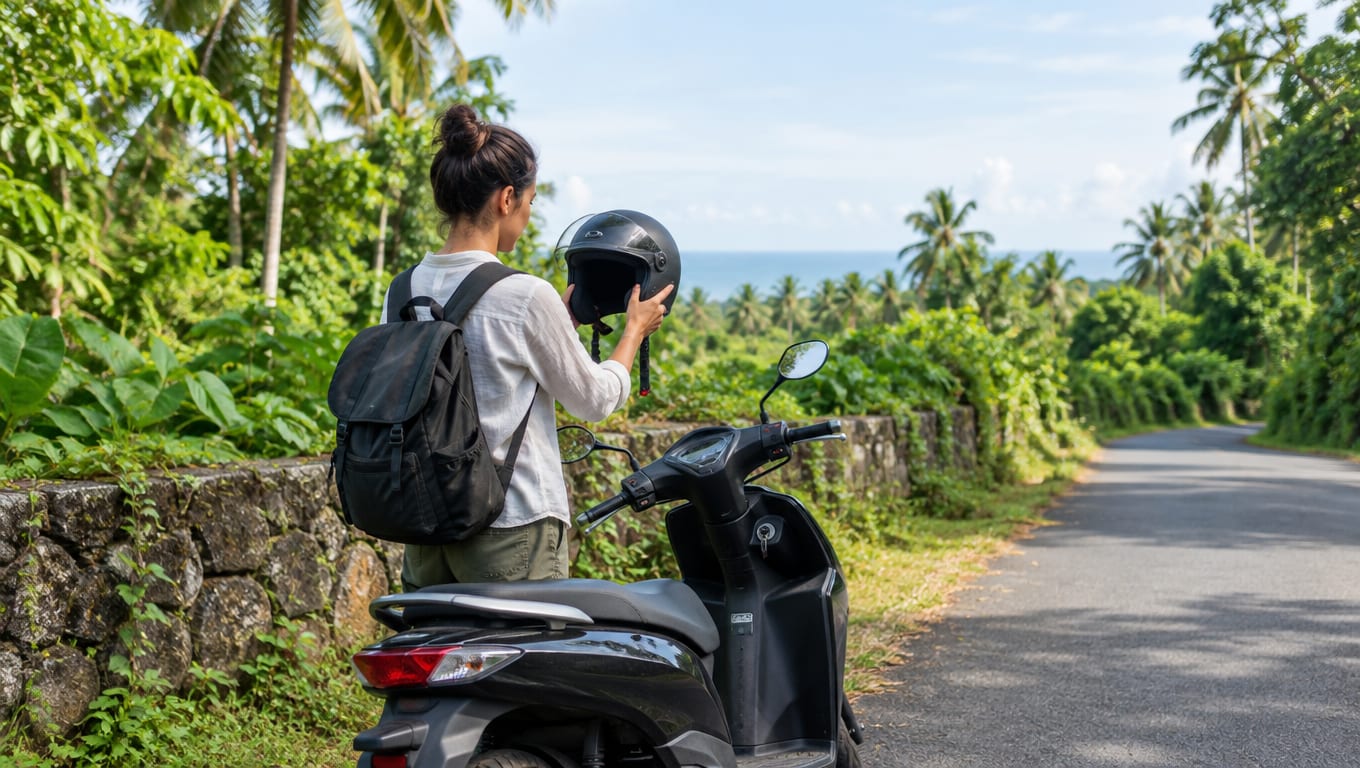
Bali has almost no public transport a visitor can rely on, so every trip is a ride you pay for. That's the line most first-timers underestimate. Distances look short on the map, but traffic between the south and Ubud can eat half a day.
You have three real options:
- Ride-hailing apps like Grab and Gojek, which show the fare before you book. Good for short hops in town.
- A hired driver for the day, which makes sense when you want to see temples or rice terraces spread across the island. Agree on the price and hours before you get in.
- Renting a scooter, the cheapest choice by far, and the one with real caveats.
On scooters, stay calm but clear-eyed. You need an International Driving Permit that covers motorbikes, plus a license from home. Without both, police can fine you, and many travel insurance policies won't pay out after an accident. If you've never ridden in heavy traffic, Bali isn't the place to learn, so skip it and use the apps.
Some popular areas, especially in Canggu and Ubud, have zones where local drivers limit app pickups. If an app ride won't connect, walk a few streets away from the main road and try again.
The fees nobody puts in the budget
Every international visitor now pays the Bali foreign tourist levy. It's 150,000 Rupiah per person, charged in Indonesian currency, which works out to around $10 USD. You can pay it ahead of time through the official Love Bali tourist levy site, which saves you a queue at the airport.
Most nationalities also need a visa. Indonesia offers an electronic visa and a visa on arrival, and the price and rules change from time to time. Check the current fee on the official Indonesian e-Visa portal before you fly, and only pay through that government site. Copycat sites charge extra for the same visa.
A few smaller costs add up across a week:
- Temple entry and sarongs. Most temples charge a small fee, and you'll need a sarong to cover your legs. Some include one, others rent them. Buying a cheap sarong early covers you everywhere.
- ATM fees. Local ATMs charge per withdrawal, and your home bank may add its own fee.
- Travel insurance. Don't skip it. Bali's roads, waves, and stomach bugs send plenty of visitors to clinics.
Flights are the wild card
For many people the flight is the biggest cost of the whole trip, bigger than seven nights on the ground. It depends almost entirely on where you're flying from. A short hop from Australia or Singapore costs a fraction of a long haul from Europe or North America.
Budget the flight separately from your daily spending. Then decide if a week is enough to justify the fare. From far away, I'd stretch it to ten days or two weeks if you can. The flight costs the same either way, and Bali gets cheaper per day the longer you slow down.
Cash or card?
Bring both, but expect to use cash most days. Warungs, small shops, drivers, and temple fees almost always want rupiah. Larger hotels, restaurants, and supermarkets take cards, though some add a surcharge.
Use ATMs attached to a bank branch or inside a minimart. They're less likely to carry card skimmers than a lone machine on a dark street. With money changers, stick to authorized counters, count your cash before you leave, and walk away from any rate that looks too good. Short-changing tricks are the most common scam on the island.
Rupiah notes carry a lot of zeros, and it's easy to hand over the wrong one at night. Keep big and small notes in separate pockets, and you'll stop making expensive mistakes.
When you go changes the bill
Bali's high season runs through the dry months in the middle of the year and spikes again over Christmas and New Year. Room prices climb, villas book out, and popular spots fill with crowds. The shoulder months on either side of the dry season give you decent weather and better rates.
The wet season is cheaper still. When it rains, it usually pours in heavy bursts and then clears, so you lose hours rather than whole days. For a month-by-month picture, see this guide to Bali's weather and when to go.
Check the date of Nyepi, the Balinese Day of Silence, before booking. The whole island shuts down for a day, including the airport, and you can't leave your accommodation. It's a remarkable thing to experience, but it needs planning.
A week that doesn't waste money
The cheapest week in Bali uses two bases at most. Every move costs you a transfer, a lost half-day, and often a new deposit. Trying to cover the whole island in seven days is how budgets and moods both fall apart.
Try this split:
- Days 1 to 4 in Ubud. Walk the rice fields in the morning light before the tour buses arrive. Visit a temple or two, and eat at warungs tucked away on the back lanes.
- Days 5 to 7 on the coast. Pick Sanur for calm water and lower prices, or Uluwatu for cliffs and surf breaks. Our Bali beaches for relaxing round-up can help you choose.
Book one hired-driver day for the move between bases and fit a couple of sights into the drive. That turns a transfer you'd pay for anyway into a day trip.
Where most people overspend
The biggest leak is moving around too much. The second is booking tours from home at inflated prices when a local operator runs the same trip for less once you arrive. The third is eating every meal in the café strip, which can quietly cost more than your room.
Beach clubs deserve their own warning. One afternoon is fun and worth it if you want the experience. A daily habit will eat a budget week faster than anything else on the island.
How to build your own Bali budget
Work through these in order and you'll have a real number by tonight:
- Price your flight for your actual dates.
- Pick your budget column from the table above, then price seven nights in the two areas you'll stay.
- Add the tourist levy and the current visa fee from the official sites.
- Add one hired-driver day plus app rides for every evening out.
- Set a daily food amount based on warung meals, then add a buffer for a few nice dinners.
- Add travel insurance and a small cushion for ATM fees and surprises.
Start with step two. Your room tells you which kind of Bali trip you're actually taking, and everything else falls into place around it.
FAQ
Is Bali cheaper than Thailand?
They sit in a similar range for daily spending, and both reward eating local. Thailand has better public transport, so getting around tends to cost less there. If you're weighing a longer stay, compare with our breakdown of what a month in Thailand costs.
Do I need to tip in Bali?
Tipping isn't expected everywhere, but it's appreciated. Many restaurants already add a service charge, so check your bill first. For drivers, guides, and spa staff, a small extra amount in cash for good service is a kind gesture.
Is Bali a good place for a solo traveler on a tight budget?
Yes, with one catch. Dorms and homestays make sleeping cheap, and warungs keep meals easy. However, transport costs don't split when you travel alone, so solo travelers feel driver prices more. Staying somewhere walkable, like central Ubud or Sanur, cuts that problem down.
Should I exchange money before I fly?
Usually not. Exchange rates at home and at the airport are rarely good. Bring enough to cover your first ride and a meal, then use a bank ATM or an authorized money changer once you're settled.