Late May through early June is the best time to visit Ireland, full stop. You get the longest evenings of the year, hedgerows thick with wildflowers, hotel prices that haven't spiked yet, and crowds that stay lively instead of crushing. Pub nights and cliff walks are all still on the table, and you can often book a bed a few days out without a small miracle. If those weeks don't fit your calendar, September into October is the close second, and I'll tell you exactly why below.
Here's the quick version before the weather odds and the crowds.
| When you go | What you get | Who it suits |
|---|---|---|
| Late May to early June | Long light, green everything, shoulder prices | Almost everyone |
| September to October | Cool air, dramatic skies, locals back in the pubs | Anyone who hates crowds |
| July to August | Best weather odds, every festival, packed everywhere | Planners who book six months out |
| March to April | Cheap flights, lambs, real rain gamble | Budget travelers who pack waterproofs |
| November to February | Short days, closed coastal spots, brooding coast | Only if you love empty landscapes |
Which season gives you the best odds of a dry day?
Summer wins on paper, and you should still expect rain. July and August give Ireland its warmest, driest stretch, with average temperatures of 14 to 16 °C (57.2 to 60.8 °F). That is mild at best. Bring a fleece even in August.
The wettest months sit at the far end of the year. October, November, and December each average around 120 to 129 millimetres of rain, and you feel every one of them. Met Éireann, Ireland's national weather service, tracks this if you want the raw numbers.
Late spring is the sweet spot for dry-ish days. May and early June tend to run drier than the deep-summer months, because the heaviest Atlantic systems usually hold off. No month is a safe bet, though. I plan every Irish day assuming rain will pass through, and I'm rarely wrong.
The weeks when crowds tip from lively to unbearable
The tipping point is the first week of July, and it holds until early September. Peak tourist season officially runs June through early September, but the genuinely painful crush lands in mid-July and August. That's when the Cliffs of Moher car park fills by mid-morning and the Ring of Kerry turns into a slow convoy of tour coaches.
The Dingle Peninsula suffers the same fate. In August I've seen its one main road back up behind rental cars stopping for every sheep. Go in late May and the same road is nearly yours.
If you must travel in July or August, book accommodation six months out. Not a suggestion. Coastal B&Bs and anything near Killarney sell out by spring, and the leftovers cost double. Restaurants in small towns start taking dinner reservations you didn't know you needed.
The daylight that makes or breaks a day out
This is the quiet reason season beats everything else. Around midsummer, Irish evenings stretch late. You're eating dinner in full light, and the sky doesn't go properly dark until well after ten. You can drive a coastal route after 8pm and still see it.
Winter is the opposite story, and it's brutal. In Dublin around the solstice, the sun sets just after 4pm. That gives you a short, grey working window before the streetlights come on. A single sightseeing day in December fits maybe half of what a June day fits.
So if you want to actually see Ireland, cliffs and valleys and all, come when the light is long. How far you drive and how many stops you make all follow from daylight.
Getting a decent room without paying peak prices
Aim for the shoulder weeks: May before the schools break, and September once they go back. Prices sit noticeably below the July and August peak, and you still get workable weather and long-ish evenings. This is the window where value and experience overlap.
March and April are cheaper still. Flights into Dublin can be almost nothing, and rural B&Bs practically wave you in. The catch is the weather gamble, which I'll get to. You're trading certainty for savings, and sometimes that's a fair deal.
Peak summer punishes anyone who books late. Rooms don't just cost more; the good ones are simply gone. If your dates are locked to July or August, treat booking as your first move, well ahead of everything else.
The rain matters less than you'd think
Rain is real and constant, and it matters far less than first-timers fear. It rarely pours all day. What you usually get is a shower that blows through in twenty minutes, then bright light and a rinsed-clean sky. That light is half the reason the country looks the way it does.
The gear makes it a non-issue. A proper waterproof jacket with a hood and shoes you don't mind getting wet, and you stop checking the forecast with dread. Skip the umbrella. Atlantic wind turns umbrellas inside out and leaves you holding a bent skeleton.
Rain only genuinely wrecks a plan when it arrives as a full Atlantic storm, mostly in the late-autumn and winter wet months. Those days, you swap the clifftop walk for a long pub lunch and lose nothing you'll regret.
The best season for pub sessions and live music
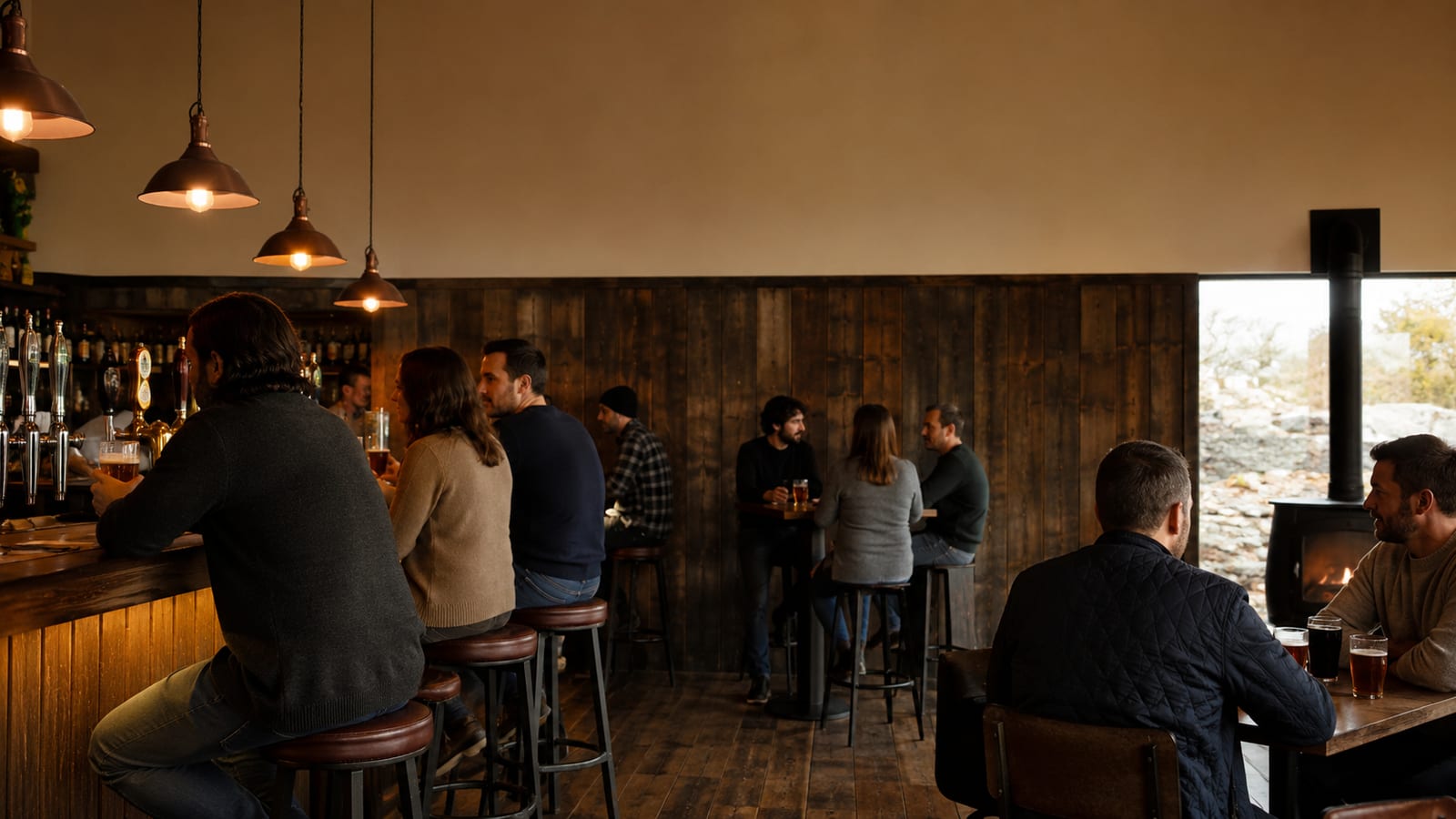
Off-peak, and it isn't close. In July the Temple Bar district in Dublin is loud, packed, and largely playing to tourists. You'll pay premium prices for a pint and hear the same crowd-pleasers on a loop. That's a show, not a session.
The real thing happens when locals reclaim their stools. September and October, and the quieter winter months, are when a traditional session, players sitting in a corner working through tunes, feels unforced. Smaller towns beat the Dublin tourist strip every time.
For music specifically, TradFest brings serious traditional players to Dublin in the depths of winter, using venues like St Patrick's Cathedral and City Hall. It's proof the off-season has its own draw. If a genuine pub night is your priority, don't come at peak.
Is Ireland worth visiting in winter?
For most travelers, winter is an honest skip. Days are painfully short, the Atlantic is throwing its worst at the coast, and a lot of rural and coastal attractions simply close for the season. You can drive to a headland and find the visitor centre shuttered and the car park empty.
Cities stay very much alive, though. Dublin, Galway, and Cork keep their pubs, restaurants, and museums running straight through. Fewer visitors means you get St Patrick's Cathedral and the good bars without a queue.
Come in winter only if you specifically want brooding, empty landscapes and don't care about ticking off coastal sights. If you love a grey sea with no one else watching it, you'll have the place to yourself. Everyone else should wait for spring. My guide to the best time to visit Iceland covers a similar trade if dark, dramatic winters are your thing.
Splitting your trip between cities and the coast
Timing changes only half of that decision. Dublin and Galway work in any season. Their pubs, galleries, and restaurants don't depend on daylight or weather, so a city break holds up fine even in a wet December.
The rural coast is a different animal. The Dingle Peninsula, the Ring of Kerry, and the western headlands live or die by season. Long light and open visitor centres make them; short days and closures break them. That's where your dates really matter.
So sequence it simply. Anchor the trip with a city or two you can enjoy regardless, then plan your coastal days for the months that actually reward them, ideally late spring or early autumn. That way a bad-weather stretch costs you a scenic drive, not the whole trip.
When is the best time to visit Ireland for festivals?
Late September, if seafood and a good crowd are what you're after. The Galway International Oyster Seafood Festival runs 25 to 27 September in 2026. It lands right in the sweet-spot shoulder season, when prices have eased and locals are back out. You get the event without the July crush.
Summer stacks up the most festivals overall, from music to food to town fairs. The cost is everything already covered: peak prices and packed rooms. Winter has fewer events, but the ones that run, like Dublin's traditional-music festival, feel local rather than staged.
FAQ
What is the cheapest month to fly to Ireland?
The late-winter and early-spring weeks, roughly February through April, tend to bring the lowest airfares into Dublin. You're paying less because the weather is a coin toss and the days are still short. If you can pack good waterproofs and stay flexible, it's a genuine bargain.
Is one week long enough to see Ireland?
It's enough for one region done properly. Pick either the southwest coast or Dublin plus Galway, and give it the full week. Trying to loop the entire country in seven days means most of it passes by a car window.
How cold does Ireland get in summer?
Mild at best. Even at the July and August peak, average temperatures sit around 14 to 16 °C, so a hot day is the exception. Pack layers and a light jacket regardless of the month; evenings by the coast cool off fast.
Will attractions be open in the shoulder season?
Mostly yes in May, June, September, and October. This is one more reason the shoulder months win: visitor centres, tours, and coastal sites are running, but without peak crowds. The real closures hit in the deep winter, when many rural and coastal spots shut down.
Is Dublin worth visiting on its own in winter?
Yes, if you keep expectations city-shaped. The pubs, museums, and traditional-music scene stay lively year-round, and you'll skip the queues. Just don't count on daylight for long walks, since the sun disappears not long after 4pm in December.
Related on this blog
- When to Visit Ibiza for the Best Experience
- Best Time to Visit Paris for Every Traveler
Related: Best Time to Visit Iceland: June vs Winter
Related: Best Time to Visit Costa Rica: What to Know First
Related: Portugal Travel Seasons: When to Go for Sun and Space