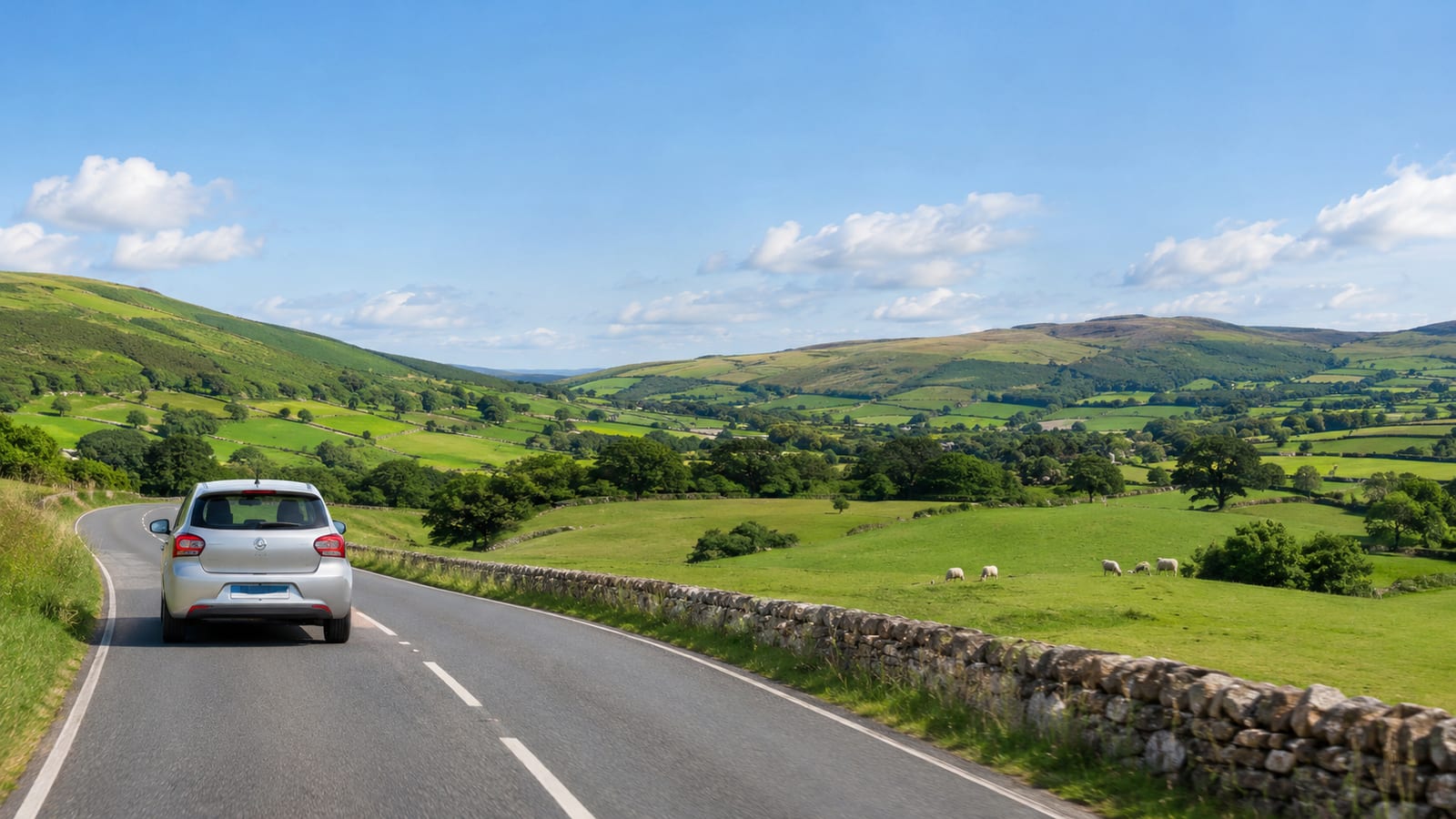
Driving in New Zealand isn't difficult for anyone who drives regularly at home, but it's far less forgiving than most visitors expect. You'll keep left on narrow, winding roads, cross narrow bridges where traffic takes turns, and move slower than any map promises. Plan short driving days and slow down on the bends. Treat weather and road closures as part of the trip, and a car becomes the best way to see the country.
Trouble rarely comes from a particular road. It comes from stacking long hours of bends on top of jet lag and a packed itinerary.
Is driving in New Zealand difficult for first-time visitors?
For a confident driver, mostly no. Outside Auckland and the bigger towns, traffic is light, signs are in English, and most local drivers are patient. You won't face big-city chaos once you leave the airport.
What wears you down is concentration. Every bend asks for your attention, and some scenic highways are bend after bend for most of a day. Add the effort of keeping left, and you tire faster than you would at home.
New Zealand is easy to drive and hard to rush. The drivers who struggle usually have too many places on their list. Skill is rarely the problem.
So who should think twice? People driving straight off a long-haul flight should, and so should anyone who gets anxious on narrow roads at home. Travellers trying to cover both islands in a short trip belong on that list too. Everyone else can handle it once they accept slower days.
Driving on the left becomes natural quickly
Most visitors stop thinking about the left side by the end of their first day. The steering wheel sits on the right, so you sit next to the centre line. Keep that picture in your head: the driver stays beside the middle of the road.
The classic beginner mistakes are small. You'll flick the wipers when you mean to signal, because the indicator stalk is often on the right in rental cars. You'll also drift toward the left edge, because your sense of the car's width is off. Neither is dangerous if you laugh and correct.
The real risk shows up when the road is empty. Pulling out of a petrol station, leaving a lookout, or starting the car early in the morning are the moments people end up on the wrong side. With no traffic to follow, your home habit takes over.
Here's what I do. Every time I pull out, I say "keep left" out loud, even when it feels silly. Many rental cars have a keep-left sticker on the dash for the same reason, so glance at it each time you start the engine.
Turns follow the same logic. A left turn is short and tight, into the nearest lane. A right turn crosses oncoming traffic and finishes in the left lane of the new road, so say it to yourself before the turn starts.
New Zealand roads take longer than the map suggests
Your phone's driving time is the best case. Navigation apps assume you'll hold the posted speed, and on many highways that's impossible for long.
The delays add up. Roads twist through hills and along coasts, while steep grades slow trucks and campervans. Roadworks bring stop-go crews who hold traffic for a while. Then come the stops you'll want: a lookout, a waterfall near the car park, a bakery in a small town.
So I treat the app's estimate as the floor and plan a lot more time on top. I'd rather arrive with daylight to spare and wander a quiet street than drive the last stretch in the dark on roads I've never seen.
The easiest fix for an ambitious itinerary is cutting a stop. Fewer bases and longer stays make every drive calmer, and they save money as well. My guide to slow routes and cheaper stays in New Zealand shows how that plays out over a whole trip.
Speed limits are limits, not targets
The open road speed limit in New Zealand is 100 km/h. Towns, schools, and roadworks have lower limits, and temporary roadwork limits are enforced like any other. Speed cameras and police patrols are common, and visitors get tickets too.
On a winding highway, the posted limit is often far too fast. Watch for yellow advisory signs before bends. They show a suggested speed for that corner, and they're worth following, because the bend is usually tighter than it looks.
Faster traffic will build up behind you. That's normal, and it says nothing bad about your driving. When a queue forms, pull into a slow vehicle bay or a safe gravel shoulder and let it pass. You'll drive better without a logging truck filling your mirror.
Overtaking is where tired visitors get hurt. Wait for a passing lane, which you'll find regularly on busier highways. Never cross solid yellow lines painted on the road, because they mean no passing. If you can't see far ahead, stay put.
Roundabouts, turning rules, and intersections need your full attention
Roundabouts run clockwise here. Give way to all traffic coming from your right, then enter. Signal left once you pass the exit before yours, so waiting drivers know you're leaving.
On larger roundabouts, painted arrows show which lane goes where. Pick your lane early and stay in it. If you miss your exit, go around again, because nobody minds.
Intersections have a rule that catches visitors from many countries. If you're turning left and an oncoming car is turning right into the same road, you give way to them. The official New Zealand Road Code explains this and every other give-way rule in plain language, and it's worth a skim before you fly.
The riskiest moment is pulling out from a side road onto a highway. The nearest traffic comes from your right, and it moves fast. Look right, then left, then right again. Then wait for a gap bigger than feels necessary.
Narrow bridges are simple when you read the signs
Many rural bridges are too narrow for cars to pass each other, so traffic takes turns. You'll meet plenty on the West Coast and across the rural South Island.
Signs before each bridge tell you who goes first. A blue rectangular sign with a large white arrow pointing ahead means you have priority. A red circular sign means you give way to oncoming traffic. Slow down well before the bridge so you have time to read it.
If you're giving way, stop before the bridge, at the line if there is one. Don't creep onto the deck while an oncoming car is still crossing. Wait until it's fully off.
Even with priority, never enter on an assumption. The driver on the other side may be a visitor who misread the sign, or a heavy campervan slow to stop. Look across first. If anything is already on the bridge or coming at speed, wait.
The routes that demand the most care
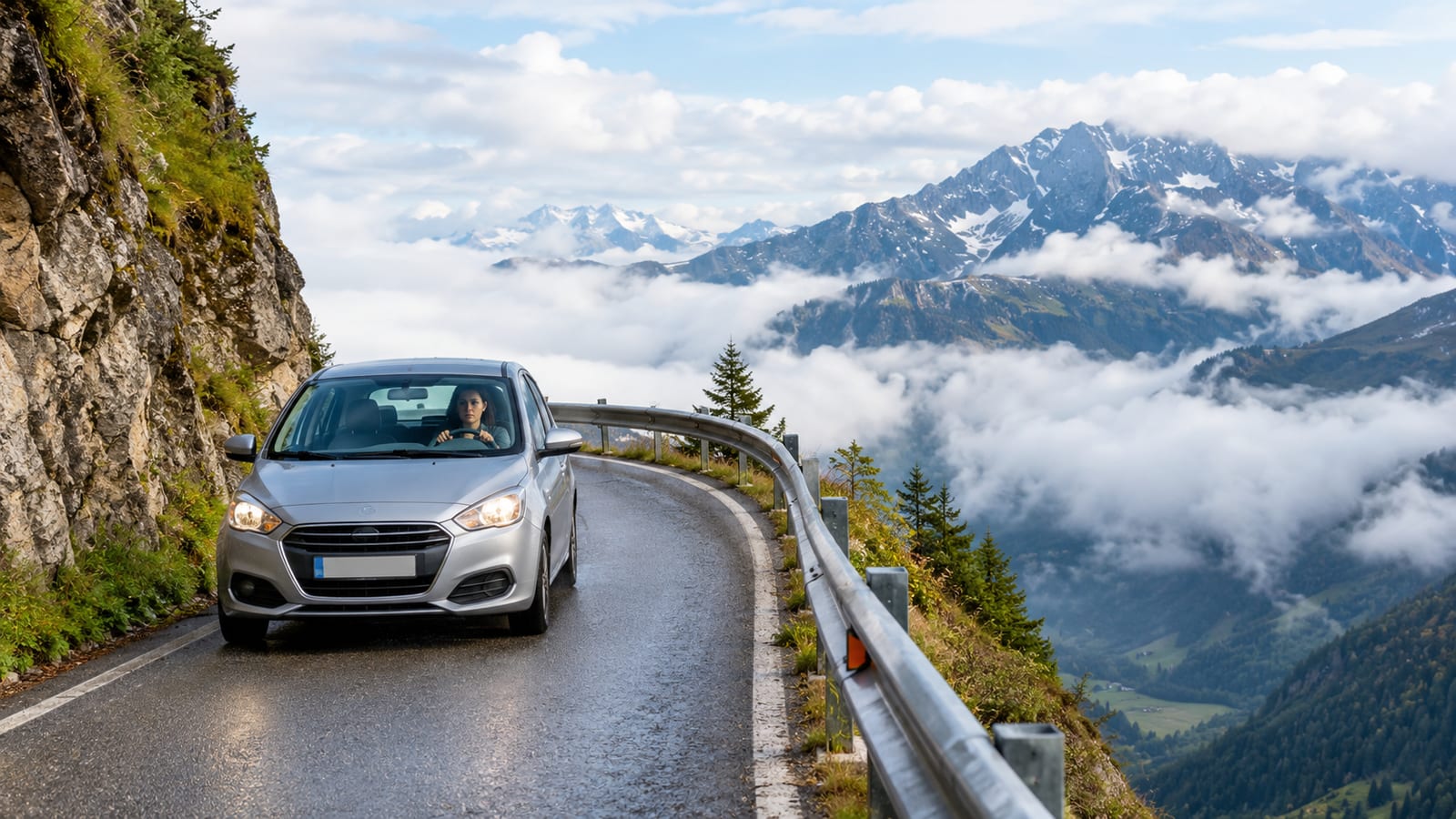
Some stretches deserve extra time, extra fuel, and an honest look at the forecast. None of them are reasons to skip a region. They're reasons to plan.
Mountain passes
Arthur's Pass, Lewis Pass, Haast Pass, and the Crown Range Road between Wanaka and Queenstown all climb steeply with tight bends. In winter, snow and ice can close them or make chains compulsory. Check conditions on the morning you cross, because they change overnight.
The Milford Road from Te Anau to Milford Sound needs its own plan. The Homer Tunnel is controlled by traffic lights, and the road runs through avalanche zones in winter. Fill up in Te Anau before you go. My guide to driving the Milford Road without rushing covers where to stop along the way.
Remote highways
The West Coast and the Haast area have long stretches with few towns, limited fuel, and patchy mobile signal. Fill up when you see a station, and download offline maps before you set off.
Gravel and coastal roads
Many rental agreements ban unsealed (gravel) roads, and some name specific roads you can't take. Gravel feels loose under braking and throws stones at windscreens. Coastal roads add strong wind and slips, the local word for landslides, which can close a road for days.
Wet and winter driving
Rain lengthens braking distance and fills dips with water. In winter, ice hangs on in shaded corners well into the day, even when the sunny stretches are dry. Low sun can also blind you in the morning light, so keep sunglasses within reach. When it rains hard, I'd rather grab a coffee and wait it out than push on.
Rental-car choices and preparation can make the drive easier
Pick a smaller car than you think you need. A compact car fits narrow bridges, tight car parks, and gravel lay-bys far more easily than a big SUV. Most rentals are automatic, which frees your attention for keeping left.
Campervans are tempting, but skip a big one unless you've driven something that size before. They catch crosswinds on exposed roads, crawl up passes, and feel huge on narrow bridges.
Insurance is a real cost, and it's worth paying. Basic cover usually leaves a high excess, the amount you pay before insurance kicks in. Reducing it makes sense on roads full of gravel and stone chips. Read the exclusions, though, because windscreens, tyres, the car's underside, and unsealed roads are common gaps.
Before you leave the rental lot:
- Photograph every scratch and dent
- Check the tyres and find the spare
- Confirm whether it takes petrol or diesel
- Find the indicator, wipers, and headlights before you move
- Download offline maps for your whole route
A first-time driver's no-regrets road-trip routine
The days that go well tend to follow the same shape. Here's the routine I'd hand any first-timer:
- Check the NZTA journey planner each morning for closures, roadworks, and snow.
- Set off early so you finish driving with daylight to spare.
- Stop in each small town you pass to stretch and grab a coffee.
- Fill up whenever you see a station on remote stretches.
- Stop for the day the moment you catch yourself yawning or drifting.
Fatigue is the quiet danger here. Jet lag tends to hit in the afternoon, often on a long, empty straight where nothing keeps you sharp. A short nap in a lay-by beats pushing through.
Animals are a small detail worth knowing too. Farmers move sheep and cattle along rural roads, so stop and let the herd flow around you. In alpine car parks near Arthur's Pass and the Milford Road, keas (cheeky native parrots) pick at rubber seals and wipers, so don't leave food or loose items on the car.
When should you not drive yourself?
Skip the wheel when you've just come off a long-haul flight. Landing in Auckland or Christchurch after a night in the air and driving straight out of town is a common mistake. Book a night near the airport and pick up the car the next morning.
If narrow roads make you anxious at home, New Zealand won't cure that. Long-distance coaches, domestic flights, and scenic trains cover the main routes. My guide to travelling New Zealand without a car shows how to piece them together.
Hazardous days are another reason. When heavy snow or rain warnings are out, or the journey planner shows closures, take a rest day. When it rains like that, the town you're in becomes the day's plan.
Finally, some itineraries need more driving than is sensible. If most days look long on the map, cut a stop or fly between the islands.
Before you book anything, open your route and count the long driving days. If too many look long, cut a stop today. That step alone makes driving in New Zealand easy.
FAQ
Can I drive in New Zealand on my overseas licence?
Yes, for a while. If your last arrival in New Zealand is before 1 November 2026, you can drive on your overseas car licence for 18 months from your arrival date. If your licence isn't in English, carry an approved translation or an International Driving Permit. Rules can change for later arrivals, so check the official guidance before you travel.
What is the drink-driving limit?
For drivers aged 20 and over, the legal limit is no more than 250 micrograms of alcohol per litre of breath. Younger drivers face a stricter rule. My own rule is simpler: if I'm driving that day, I skip the lunchtime wine, because winding roads punish slow reactions.
Is it safe to drive at night?
It's legal, but I'd avoid it on roads you don't know. Rural highways are mostly unlit, so bends appear late and animals on the road are hard to spot. Save night driving for short trips around town.
Are there toll roads?
A handful, mostly around Auckland and Tauranga. There are no toll booths, so you pay online after you drive through. If you forget, the rental company usually passes on the toll plus an admin fee, so pay it promptly.