Other people’s highlights are a rotten measure of your trip. To stop comparing your travel to others, mute accounts that make you feel behind, define success in your own terms, set a trip budget you can afford, and record your real days instead of their best photos. Their holiday isn’t a test you’re failing. Make your time meaningful to you, then leave their scorecard alone.
Last updated: 2026-08-11
A quiet week in one city can matter more than a packed itinerary across several countries. I’ve had better travel days sitting with coffee on a side street than chasing a famous view because someone online said I should. The difference is simple: one choice came from curiosity, while the other came from pressure.
Travel comparisons start with unfair conditions
Travel comparisons start with unequal conditions. You may be comparing your short break with someone else’s long sabbatical, your careful budget with their family money, or your limited mobility with their endless energy.
You also start from different places. For example, one person has a partner to split hotel bills with. Another has children, a demanding job, or a parent who needs care at home. Someone else may have spent years saving for the trip you saw in one post.
The itinerary hides these facts. You see the beach, while the unpaid leave that made it possible stays off camera. You see the luxury room, while the debt or family support behind it stays private. You see the mountain summit without the training, guide, or good health required to reach it.
So the comparison is crooked before it begins. Your circumstances set the real edges of your life, and a fair travel plan has to include them.
Social media sharpens travel envy
Social media turns unusual moments into a picture of normal travel. A person may post the quiet morning, perfect meal, or empty viewpoint from a trip filled with delays, heat, bad sleep, and expensive mistakes.
The feed also removes sequence. You might see Rome at sunrise, Kyoto in the rain, and a quiet train window in the same scroll. Meanwhile, your own Tuesday feels dull because you’re comparing one ordinary day with someone else’s best collection.
I treat travel feeds as brochures, not diaries. A brochure can show you an idea. However, it can’t tell you what the place cost, how crowded it was, or whether the person enjoyed the afternoon.
Try this before your next trip:
- Mute accounts that leave you tense or inadequate. You can still call the friend whose hotel posts make you feel behind.
- Move travel apps off your first screen so your thumb can’t open them by habit.
- Check social media at a set time instead of reaching for it beside every café window.
- Save useful posts for planning, then close the app before the feed starts choosing for you.
- Keep one private note for your own photos, meals, wrong turns, and memories.
Instagram’s mute feature lets you reduce someone’s posts without making a public statement. Use it. Protecting your attention is a quiet choice, and nobody else needs to approve it.
If your phone keeps pulling you away from the street in front of you, read my guide to traveling without social media pressure. The first step is small: move the app somewhere you have to search for it.
You’re comparing highlights with the whole trip
You probably are. Most people compare a polished image with the full, unedited record of their own travel.
You remember the missed train, the wrong room, the stomach trouble, and the hour you spent looking for a working cash machine. Meanwhile, someone else’s post shows a glass of wine beside a window. You don’t see the argument that came before it.
Even a good trip contains flat days. You get laundry done. You answer work messages. You sit in a café because your feet hurt. You take a bus through an unremarkable suburb and see nothing worth photographing.
Those days still belong to the trip. They give the memorable moments somewhere to sit.
I keep a fuller record than the camera roll. I write down the strange conversation, the meal that disappointed me, the street I took by accident, and the relief of finding my room again. As a result, the trip feels like a life I lived, not a display I failed to produce.
For more help, use these ordinary travel days as part of your measure. They’re where the pressure usually drops, often over laundry or a quiet lunch.
What would make your own travel a success?
Define success before you look at anyone else’s itinerary. Otherwise, the loudest person online will define it for you.
A successful trip might mean:
- sleeping well and returning rested
- eating the dish you kept seeing on handwritten menus
- spending unhurried time with someone you care about
- becoming more confident on your own
- learning which bus goes back to your neighborhood
- sitting still long enough to notice the street
- handling a missed connection without falling apart
- having one story you’ll still tell later
None of these requires a rare destination or an expensive hotel. However, they do require attention.
Before you book anything, finish this sentence: “This trip will be successful if I…”
Keep the answer plain. “I want to rest.” “I want to walk every morning.” “I want to spend time with my sister without rushing.” That sentence becomes your test when comparison starts.
I use this question when an itinerary looks impressive: would I want the actual days, or only the photos? If the answer is only the photos, I skip the plan.
You can also set realistic expectations before traveling with this pre-trip planning guide. Decide what the trip needs to give you. Then stop asking it to prove something.
Choose the travel values that matter to you
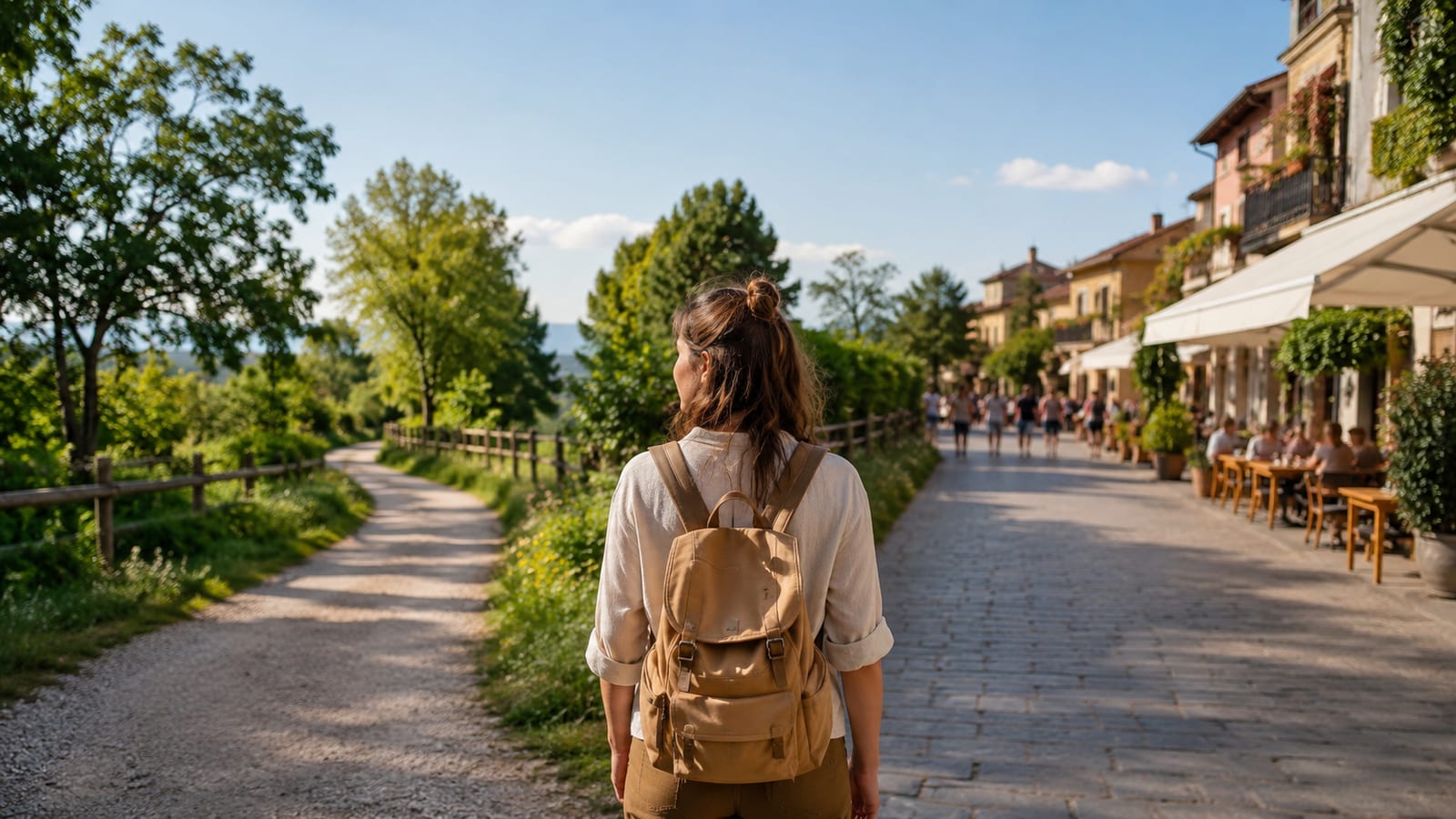
Your values should choose the trip. Other people’s plans can give you ideas, but they don’t get the final vote.
Some travelers want long meals and local markets. Others want mountain trails, museums, quiet rooms, or time with family. You may care most about comfort because your daily life is exhausting. That’s a valid reason to spend more on a direct train or a private room.
I like slow mornings and time on foot. Someone else may find joy in early departures and full days outdoors. Both styles work. Trouble starts when you perform a version of yourself you don’t enjoy.
Use this filter before you open a booking tab:
| If you value… | Build more of this into your trip | Skip more of this |
|---|---|---|
| Rest | late starts, fewer moves, comfortable lodging | packed schedules |
| Food | markets, neighborhood cafés, cooking classes | rushed sightseeing |
| Nature | parks, walks, quiet viewpoints | city-hopping |
| Culture | museums, local events, repeated visits to one place | collecting landmarks |
| Solitude | window seats, solo meals, open time | constant group plans |
| Connection | shared meals, visits, slower stays | chasing the next attraction |
| Adventure | unfamiliar routes, new skills, flexible plans | copying a fixed itinerary |
This list isn’t a personality test. It helps you spot the choice you already make when nobody is watching.
If you love food, don’t book a trip because the skyline photographs well. If you need quiet, a room above the party street will wear you down by breakfast. Your priorities should carry more weight than someone’s caption.
Different budgets need different trips
Name your limits without turning them into a verdict on your life. A smaller budget changes the train, room, or length of stay. It doesn’t drain the value from the days you can afford.
You may have enough money for a nearby city, a simple room, or a short stay. You may only have a few free days. You may need reliable transport, medication access, familiar food, or a companion. These details belong in the plan from the start.
The mistake is pretending they don’t matter. As a result, you build a trip for someone else’s circumstances and feel bad when your real life interrupts it.
Here is what I do:
- Write down the money, time, health, and care limits you can’t ignore.
- Choose the experience that matters most, such as a quiet room or one good meal.
- Cut extras that exist mainly to look impressive in photos.
- Leave room for rest, delays, and the cost of being human.
- Judge the finished trip against the plan you could actually afford.
A train to a nearby town can give you the same reset as a long flight. For example, a rented room with a good kitchen may serve you better than a hotel lobby built for photos. A return visit to a familiar place can hold more comfort and depth than a new destination chosen for status.
Making your life harder won’t make the trip more meaningful.
Travel status is a poor measure
Destination count, luxury, distance, and rarity are weak measures. They show what someone displayed, while the meaning of the trip stays out of frame.
A faraway destination can be lonely. A luxury hotel can still be noisy. A famous attraction can leave you cold. Meanwhile, a rare experience can become another task if you’re too busy proving you had it.
The same goes for “authentic” travel. People use that word to make simple choices sound superior. You don’t become a better traveler by refusing comfort, avoiding popular places, or pretending every bus ride is charming. Sometimes the main attraction is popular because it’s good. Sometimes it’s crowded and you should leave.
Status makes travel competitive. You start collecting places instead of noticing them. You rush through a market because the next landmark is waiting. You take the photo, then forget the smell of bread, diesel, rain, or orange peel that would have brought the day back.
Ask whether the experience gave you something you wanted. If it did, keep it. If it left you tired and unmoved, the impressive photo doesn’t improve the afternoon.
How do you stop comparing your travel to others?
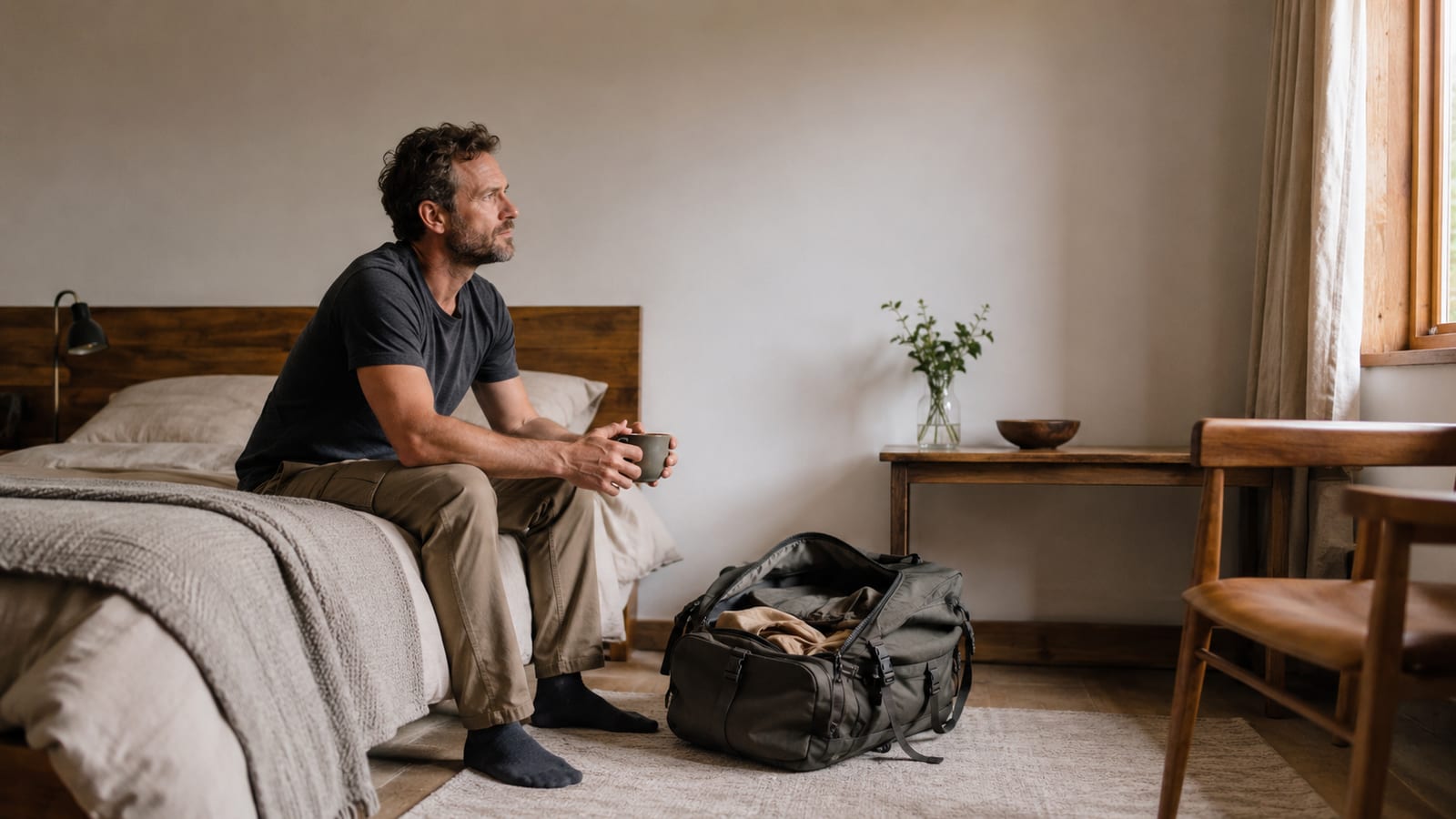
Comparison needs an immediate interruption. Don’t spend the next half hour arguing with the feeling while standing beside a view you paid to reach.
Follow these steps:
- Name it. Say, “I’m comparing my trip with someone else’s post.”
- Put away the phone. Zip it inside your bag or turn it off.
- Return to the place. Notice one sound, one smell, and one physical detail under your hand or feet.
- Check your travel goal. Read the sentence you wrote before leaving.
- Take one useful action. Order lunch, find a bench, call someone, or walk back slowly.
When I feel a trip turning into a performance, I stop taking pictures for a while. Then I buy a coffee, sit near a window, and let the day become ordinary again. The pressure usually fades once I stop feeding it.
You can also use this guide to staying present while traveling when your attention keeps sliding toward the screen. Your next action only needs to bring you back to this hour.
Gratitude without pretending every trip is perfect
Gratitude works when it stays specific. “I’m grateful for travel” is too broad to help when your room smells damp or your train has gone without you.
Write down one thing you noticed, one thing you learned, and one thing you were able to do. For example, a shopkeeper helped you find the right bus. Maybe you had enough money to sit through a long lunch. Maybe you discovered that you can handle getting lost.
You can appreciate a trip and still admit it disappointed you. A place can be beautiful and badly managed. A holiday can give you rest and leave you ready to go home. Gratitude doesn’t require you to call every moment special.
The National Institute of Mental Health treats gratitude as one possible part of caring for your mental health, not a cure for every hard feeling. That distinction matters. You don’t need to force thankfulness over grief, illness, money stress, or exhaustion.
Try this at the end of the day:
- One moment I want to remember, down to the sound or smell:
- One thing that was harder than expected:
- One choice I’m glad I made:
- One thing I’ll change tomorrow:
That record gives the trip its proper shape. The good parts stay visible, while the bad parts can remain true.
Compare today’s travel with your own past
Your best benchmark is the traveler you used to be. Look for growth in confidence, awareness, flexibility, and enjoyment.
Maybe you once needed every train booked in advance and now you can handle a changed platform. Maybe you used to rush through meals and now you give yourself an afternoon. Perhaps you’ve learned that a private room helps you sleep, and you no longer treat that choice as wasteful.
These changes won’t impress strangers online. However, they can change how the next trip feels from the moment you leave home.
Keep a short travel record after each trip. Note what you feared, what you managed, what you enjoyed, and what you’ll do differently next time. Then read it before you scroll through anyone else’s photos.
That is how you stop comparing your travel to others in a lasting way. You build evidence from your own missed trains, good meals, quiet mornings, and recovered plans.
A five-step reset for your next trip
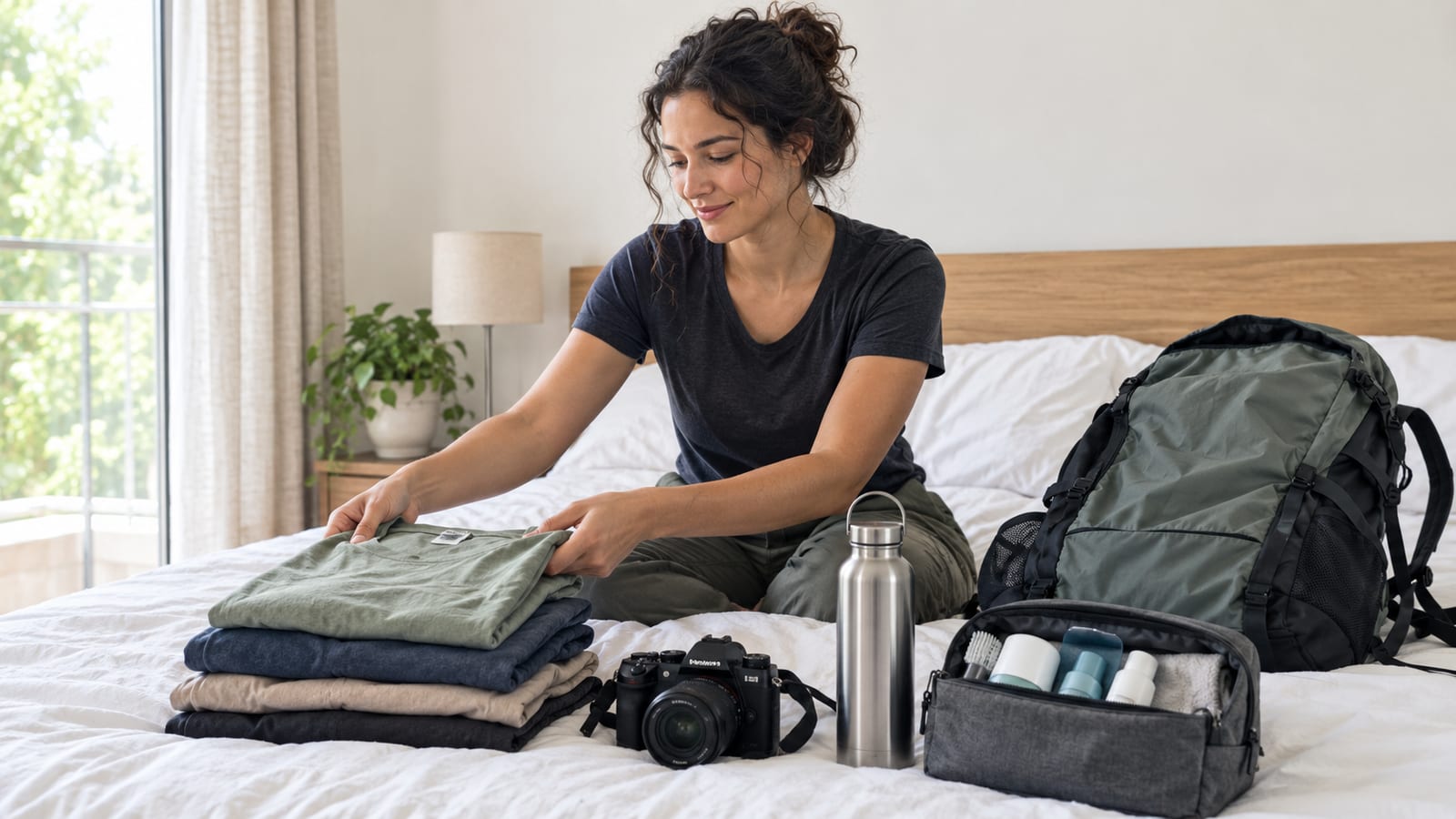
Use this before you book anything:
- Choose your reason. Write one sentence about what you want from the trip.
- Set your real limits. Include money, time, health, work, and family duties.
- Pick your measure. Decide what success looks like on an ordinary afternoon.
- Reduce the triggers. Mute accounts and move the apps that make you feel behind.
- Record the days honestly. Keep the small details, the mistakes, and the good parts.
Start with the first sentence today. You don’t need a new destination. You need a clearer reason for going.
FAQ
Is travel envy a sign that I’m unhappy with my life?
Sometimes, but don’t let one glossy hotel photo diagnose your whole life. Envy may point to a need you haven’t named, such as rest, freedom, nature, or time with friends. Work out which part you want before copying the trip around it.
Should I stop following friends who travel more than I do?
No. Start by muting their posts if every airport lounge or beach photo leaves you tense. You can still message your friend and care about the trip without handing every update control of your mood.
How do I enjoy a trip when it doesn’t match my expectations?
Let the original plan go once it clearly won’t work. Then choose the best available day, such as a long lunch when it rains, an indoor visit, or a slow walk near your room. Dragging a broken itinerary around only wastes more time.
Can planning less help with comparison?
Yes, if the open time has a purpose. Leave space for the café you notice, the market that runs late, or the afternoon when your feet need a rest. A schedule packed from breakfast onward leaves little room to choose for yourself.
What if I still feel jealous after using these steps?
Let the feeling pass without turning it into a verdict on your trip. Then name the need under it and make one small choice that answers it, such as calling a friend, finding somewhere quiet, or booking a later start. If the day still allows it, do that next.